- Home
- Comprehensive Guide to Yarn
- Stitch Definition in Knitting
What Is Stitch Definition in Knitting? How Yarn Twist Affects It
by Janice Jones, Last updated May 6, 2026
Many beginner knitters assume that if a stitch pattern does not look right, they must be doing something wrong. In reality, the yarn itself can completely change the way your stitches appear.
Some yarns create crisp cables and sharp texture, while others soften or blur stitch patterns. A lace design that looks beautiful in one yarn may almost disappear in another. Even simple knit and purl stitches can look more defined depending on the yarn twist, texture, and fiber.
When I was knitting my first project, my stitches were awful. I'll be the first to admit that I didn't understand the stitch definition until much later. In fact, many of the tutorials on this site mention it without providing a clear explanation of what it means and what can affect it.
In this guide, you will learn what stitch definition means in knitting, how yarn twist affects the appearance of your work, and how to choose yarns that help your stitch patterns stand out clearly.
What Is Stitch Definition in Knitting?
Stitch definition means how clearly you can see each stitch in your knitted fabric. Smooth, firmly twisted yarns usually show stitches clearly, while fuzzy, loosely spun, dark, or highly variegated yarns can blur the pattern.
Why Does Stitch Definition Matter?
There are several reasons why you might want your stitches to be more defined:
- Many stitch patterns rely on their appearance, and when they are well-defined, the fabric radiates beauty. Think elegant lace shawl.
- For beginners, well-defined stitches are easier to read, count, and identify mistakes within.
- Well-defined stitches can give the project a lovely professional look.
Factors that Influence Stitch Definition
Sometimes the difference is obvious. Smooth, tightly spun yarns will always have excellent stitch definition, whereas fuzzy, novelty yarns are not going to produce the same sharp, crispy stitches.
Color may also affect stitch definition. Dark colors, variegated yarns, and handspun yarns are not going to show the kind of definition that a simple, smooth, light colored yarn can display.
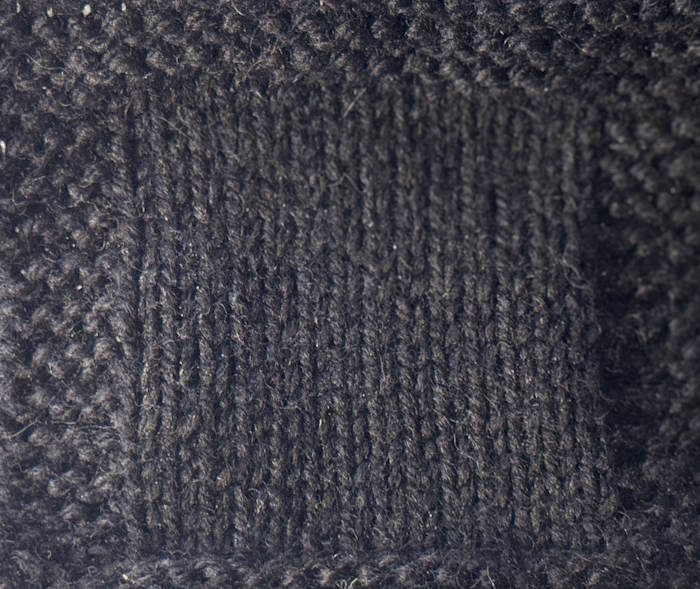 This swatch was knit in the stockinette stitch pattern with black yarn. It is difficult to see stitches.
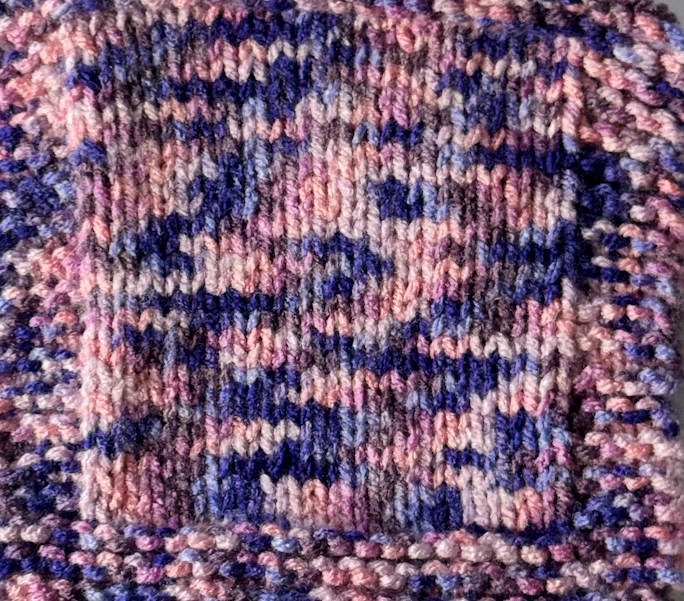 I knit this swatch using a variegated yarn, and some of the stitches are difficult to see.
The Role of Ply in Stitch Definition
Yarn ply is another factor that influences stitch definition. Multi-plied yarns will provide better definition than single-plied yarns, which look soft but blur the stitches. You might read on the yarn label that the yarn is 1-ply or 4-ply. These numbers refer to the number of twisted strands to make the yarn. A 2-ply yarn is made up of two strands twisted together, and a 4-ply yarn has four strands twisted together.
Finally, the way the yarn is spun affects stitch definition.
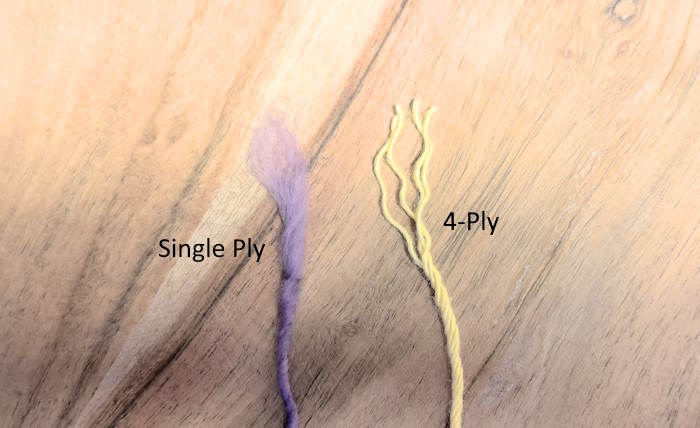
Why Don’t Most Yarn Labels List the Number of Plies?
If you have ever wondered why most yarn labels in the United States do not mention the number of plies, you are not alone. Years ago, when I first learned to knit in the 1960s and early 1970s, most yarn was sold by ply. Ply referred to the number of strands of fiber twisted together to create a yarn. Over time, however, yarn construction became much more complex, and the word “ply” began to cause confusion.
Many knitters assumed that more plies automatically meant a thicker yarn, but that is not always true. A lightweight yarn can contain many plies, while a bulky yarn may contain only one or two.
Today, most American yarn companies label yarn by weight category, fiber content, gauge, and recommended needle size because those details are usually more helpful to beginners. Modern yarns may also be made using unusual constructions such as singles, chainette yarns, blown yarns, or loosely spun fibers that do not fit neatly into traditional ply descriptions.
Even though ply is not commonly listed on labels, yarn structure still affects the way your knitting looks and feels. Tightly plied yarns often create sharper stitch definition that works beautifully for cables, textured stitches, and detailed patterns.
Loosely spun or fuzzy yarns tend to soften stitch patterns and create a blurrier appearance. Learning to recognize these differences can help you choose yarns that highlight your stitches rather than hide them.
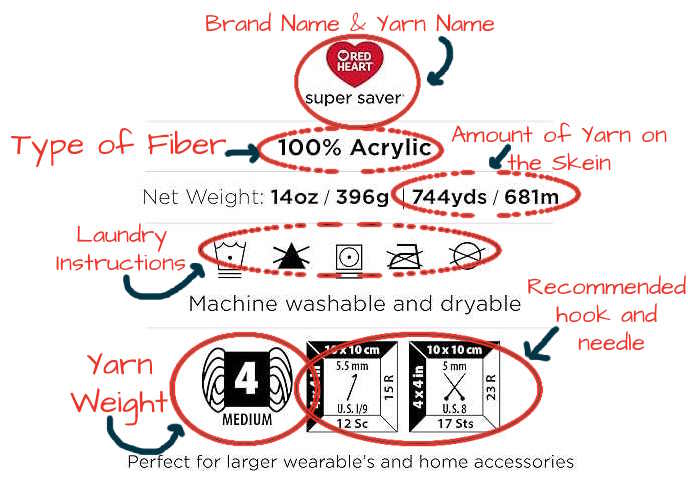 Most yarn labels in the US do not include the number of plies.
What Is Yarn Twist?
To create a balanced yarn, spinners often twist single strands (or "singles") in one direction, then ply two or more of these singles in the opposite direction.
For instance, if the singles are spun with an S twist (clockwise), they will be plied together with a Z twist (counterclockwise).
This counter-twisting balances the energy in the yarn, preventing skewing or distortion in the final knitted or crocheted fabric.
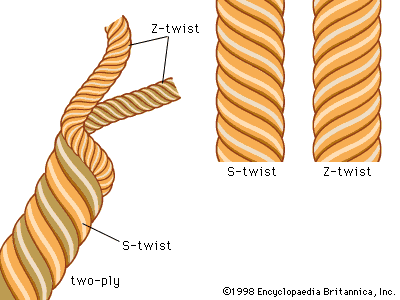
Yarn twist is just one reason why stitches may get an A+ grade, whereas others fail the test of stitch definition.
So, while ply refers to how many strands are twisted together to make the yarn, the S and Z twists refer to the directions of these twists during the spinning and plying processes.
But it's worth noting that not all yarns follow this standard. Some yarns might be spun and plied in the same direction, while others may employ different twisting methods, each resulting in different qualities in the finished yarn.
Moreover, while most commercially available yarns follow the S-twist/Z-twist convention, hand spinners can choose whichever twist direction they prefer for spinning and plying.
The direction of twist in a yarn will affect whether a yarn will split as you work, and yarn splitting is a real pain point for many knitters and crocheters.
Twisting the fiber during spinning makes it harder to pull apart the yarn and to break. Adding more twist to the yarn makes it stronger and less likely to pill. It also makes the stitches easier to make and less likely to split. When the number of twists is reduced, the yarn fibers separate and become more difficult to work with, as they are more likely to split.
How Yarn Twist Affects Stitch Definition
Highly twisted yarns will produce:
- Sharp stitches
- Crisp texture
Low twisted yarns will produce:
- Softer appearance
- Fuzzier texture
- Less defined stitches
Why Beginners Sometimes Struggle to See Their Stitches
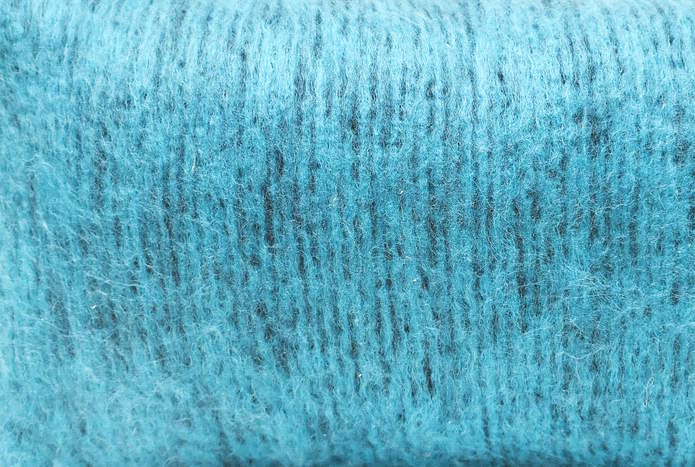 This swatch of stockinette stitch was knitted with mohair yarn, a soft and luxurious yarn, but not good for stitch definition.
Beginners are often enamored of the abundance of yarn available that they pick something that looks great and feels even better, only to struggle to see what they are knitting.
Any time that you knit with a fuzzy yarn such as mohair, alpaca, or brushed yarns, you won't be able to see mistakes.
Dark yarns such as black, navy blue, and charcoal gray will hide the stitch structure, making the stitches invisible. Slippery yarns make it harder to learn to control tension. So, what's left is smooth wool or cotton, which are ideal yarns for beginners just getting started.
When Soft or Blurry Stitch Definition Is Actually Helpful
Does this mean that your entire knitting career will center around smooth white, creams, and pastel colors? Absolutely not. Those yarn recommendations are only for beginners.
Some projects benefit from more exotic fabrics. Soft or fuzzy winter accessories feel much better when worn next to the skin than smooth wool or acrylic could. Garments where you want a soft drape, such as shawls and stoles, won't hang properly without the appropriate yarn. Even simple stockinette stitch projects, such as a beanie, will feel better without stiff yarns like cotton.
How to Choose Yarn for Better Stitch Definition
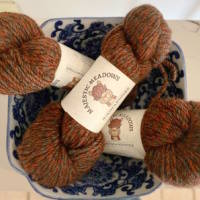
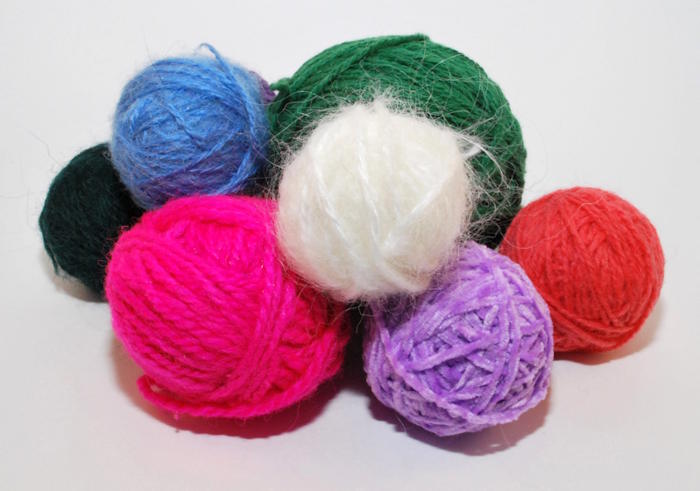 This assortment of yarn balls looks and feels soft, but doesn't offer the stitch definition that beginners need to feel successful.
If you are just getting started with knitting or crocheting, it is important to avoid potential problems beyond your control so you can focus on your technique. The best beginner-friendly yarns share certain characteristics.
- Smooth surface
- Lighter Color
- Plied Yarn
- Moderate Twist
- Fiber Considerations
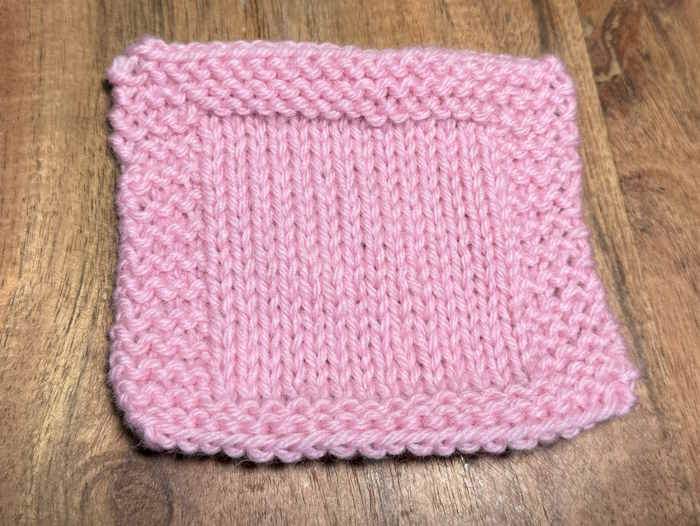
For information on beginner yarn choices, please visit my article about choosing yarn for beginner knitters or beginner crocheters.
| Yarn Type | Stitch Definition | Best For |
|---|---|---|
| Smooth plied wool | Excellent stitch definition with clear knit and purl stitches | Cables, ribbing, textured stitches, and beginner practice |
| Cotton yarn | Very clear stitch definition, but uneven tension may show | Dishcloths, stitch practice, texture patterns, and summer projects |
| Fuzzy yarn | Soft or blurry stitch definition because the halo hides details | Simple scarves, cozy accessories, soft garments, and plain stitches |
| Dark yarn | Harder to see individual stitches, especially for beginners | Simple patterns or projects for more experienced knitters |
| Variegated yarn | Color changes may distract from the stitch pattern | Simple stitch patterns, stockinette, garter stitch, and plain accessories |
What Beginners Actually Need to Notice About the Yarn They Use
So you've learned the basics of knitting or crochet and now are beginning to explore the many types of yarn on the market. Since Joann's closed, my favorite hometown store, most of my yarn purchases are made online. You may be able to see the yarn you are purchasing but not feel its texture. Here is a checklist that you might use when purchasing and working with a new yarn for yourself.
- Does this yarn look smooth or fuzzy?
- Are the strands tightly twisted or loose?
- Can I clearly see the stitches?
- Will this yarn hide texture?
- Does it split easily?
- Does it feel firm or airy?
- After knitting or crocheting a swatch, does the fabric feel stiff, like it would be perfect for a coaster, or drapy, like you would want for a scarf?
You are not going to fall in love with every yarn you purchase or try to work with. Some will split, some will feel too slippery, too rough on your hands, too difficult to insert your needle or crochet hook into. That is perfectly normal and expected. Everyone is different.
I could share my favorites, but they might not be yours.
Common Questions About Stitch Definition
What yarn gives the best stitch definition?
What yarn gives the best stitch definition?
Yarns with a smooth surface and a firm twist usually create the best stitch definition. Wool yarns with multiple plies often make knit and purl stitches look crisp and easy to see, which helps cables, ribbing, and textured patterns stand out clearly. Smooth cotton yarns can also show excellent stitch definition because the stitches appear sharp and clean. But not all cotton yarns fall into this category.
Avoid very fuzzy, loosely spun, or heavily textured novelty yarns if you want your stitch pattern to be the main focus. Those yarns tend to soften or blur the edges of individual stitches.
Does cotton have good stitch definition?
Does cotton have good stitch definition?
Yes, cotton yarn often has very good stitch definition because its smooth surface allows stitches to stand out clearly. Textured stitches, seed stitch, and simple lace patterns can look very sharp in cotton yarn.
However, cotton behaves differently from wool. It has less stretch and elasticity, which means uneven tension may be more easily visible. Some beginners love the crisp appearance of cotton, while others find wool easier to knit because it stretches and recovers more naturally.
Why do my cables look flat?
Why do my cables look flat?
Flat-looking cables are often caused by yarn choice rather than knitting skill. Fuzzy yarns, dark colors, loosely spun yarns, and very soft fibers can hide the raised texture that makes cables stand out.
Cables usually look best in smooth, light-colored yarns with good stitch definition. A tightly plied wool yarn often creates crisp cable stitches that are easier to see. Blocking and tension can also affect cable appearance, but the yarn itself plays a major role.
Is fuzzy yarn bad for beginners?
Is fuzzy yarn bad for beginners?
Not necessarily, but fuzzy yarn can make learning more difficult. Fibers with a halo, such as mohair or brushed alpaca, often hide individual stitches, making it harder to count rows, identify mistakes, or see where to place the needle.
Many beginners find smooth yarns easier to work with because the stitches are more visible. That does not mean fuzzy yarn is “bad,” only that it may be more frustrating while learning new techniques or stitch patterns.
Why can’t I see my lace stitches?
Why can’t I see my lace stitches?
Lace stitches can disappear when the yarn is too fuzzy, dark, textured, or loosely spun. Fibers with a heavy halo often blur the edges of yarn overs and decreases, making lace details harder to see. Lace is also easier to see if the yarn weight is not too thick.
For clearer lace patterns, choose lighter-colored yarns with a smooth texture and good stitch definition. Blocking also makes a huge difference because it opens the lace and reveals the stitch pattern more clearly.
What is the difference between smooth and fuzzy yarn?
What is the difference between smooth and fuzzy yarn?
Smooth yarn has a clean surface that allows individual stitches to appear clear and defined. It is often easier for beginners to knit with because the stitches are easier to see and count.
Fuzzy yarn contains fibers that stick out from the surface, creating a soft “halo” around the yarn. This can make projects feel cozy and warm, but it also softens stitch patterns and hides fine details. Smooth yarn highlights texture, while fuzzy yarn creates a softer, blurrier appearance.
Disclosure:
This post contains affiliate links. If you buy through them, I may earn a small commission at no extra cost to you.

Janice Jones is a Certified Knitting and Crochet Instructor who creates beginner-friendly patterns and tutorials, backed by a 389-page library of practical knitting and crochet content.
Most Popular Pages
Comprehensive Guide to Yarn

All Types of Crochet Stitches
36 Reversible Knit Stitch Glossary
How to Crochet the Second Row
Dog Sweater Patterns
Working with Alpaca Yarn
Free eBooks, Just for You
Get my beginner eBook guides to Knitting and Crocheting, just for signing up for my monthly newsletter.
Choose one or both when you sign up.
About the Author: Please allow me to introduce myself
Janice Jones is a Certified Knitting Instructor and Certified Crochet Instructor through the Craft Yarn Council who focuses on beginner-friendly patterns, stitch guides, and technique tutorials. She has built a library of 389 pages on her website, sharing practical instructions and patterns, and has completed projects ranging from crochet blankets to knit sweaters. You can explore her work on her website. She makes items for Warm Up America and often knits and crochets sweaters for her small dogs.
Thank you for visiting Smart-Knit-Crocheting. I hope this and all of my tutorials will give you the inspiration to continue your knit or crochet journey. For a complete list of all the pages on my site, please visit my table of contents.
I participate in the Amazon Services LLC Associates Program, an affiliate advertising program designed to provide a means for sites to earn advertising fees by advertising and linking to Amazon.com. “As an Amazon Associate I earn from qualifying purchases.” These earnings go towards supporting my website.
Home | Contact | About | Privacy Policy | Disclaimer
I DO NOT SELL ANY PERSONAL INFORMATION FROM THIS WEBSITE. PLEASE SEE MY PRIVACY POLICY FOR MORE DETAILS.
Copyright © 2006-2026 Smart Knit Crocheting. All Rights Reserved
Please Share
Remember, Sharing is Caring