- Home
- Make a Knit or Crochet Garment
- Drop Shoulder Sweater Pattern
Drop Shoulder Sweater Pattern Construction Explained
Re-written by Janice Jones, Certified Knitting Instructor, Updated December 2025
A drop-shoulder sweater is one of the simplest garment constructions used in both knitting and crochet.
Instead of shaping the shoulders or sleeve caps, the sweater body is worked as basic rectangles, with sleeves attached lower on the arm. This makes drop-shoulder sweaters especially popular for beginners and for relaxed, casual styles.
You don’t need to design your own sweater to understand how this construction works. Knowing how drop-shoulder sweaters are built helps you:
- Choose patterns that fit your body and style
- Understand pattern instructions more easily
- Make simple adjustments to length, width, or sleeves
In this guide, we’ll look at how drop-shoulder sweater patterns are structured, how the pieces fit together, and the pros and cons of this classic sleeve style. I also offer a couple of free patterns if you are ready to try this design.
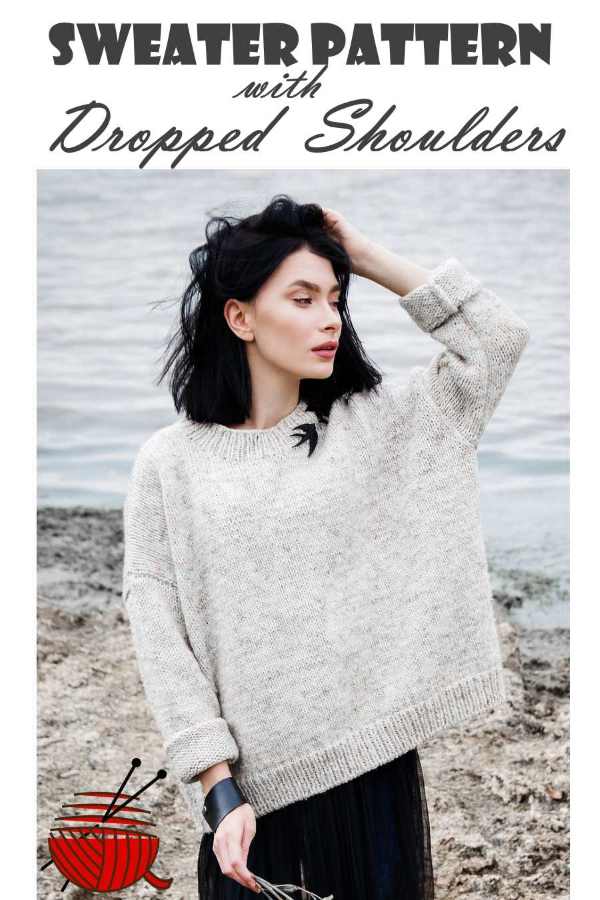
How Drop-Shoulder Sweater Patterns Are Constructed
Drop-shoulder sweaters are built from simple geometric shapes, which makes this construction style so approachable for beginners and adaptable to both knitting and crochet.
Rather than shaping the shoulders or sleeve caps, the sweater body is worked as rectangles, and the sleeves are attached lower on the arm. Understanding this structure makes it much easier to read patterns, check sizing, and make minor adjustments when needed.
The sections below explain how most drop-shoulder sweater patterns are laid out and how the measurements relate to each piece.
Step 1: Key Body Measurements Used in Drop-Shoulder Patterns
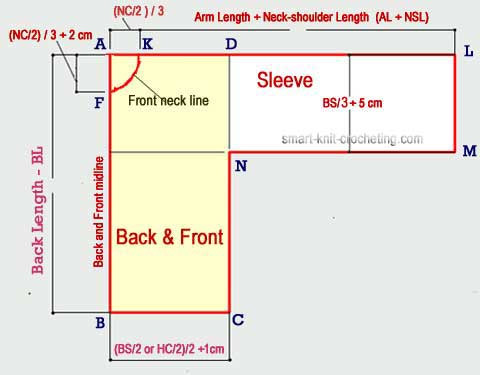
Most drop-shoulder sweater patterns rely on a small set of basic body measurements. These measurements help determine the size of the front, back, and sleeves.
Common measurements include:
- Half bust circumference (BS/2)
- Half hip circumference (HS/2)
- Half neck circumference (NC/2)
- Neck-to-shoulder length (NSL)
- Arm length (AL)
- Back length (BL)
Patterns typically use the larger of the bust or hip measurement to ensure comfortable ease through the body.
Tip: Even if you’re following a written pattern, knowing what these measurements represent helps you confirm whether the finished garment will fit as expected.
As an example we will use a few measurements from the Make a Garment page.
Step 2: Understanding the Body Pieces (Front and Back)
In a drop-shoulder sweater, the front and back pieces are usually identical rectangles, with shaping added only at the neckline.
- The rectangle's height is based on its back length.
- The width is based on half the bust or hip circumference, plus ease.
Neck shaping is typically shallow at the back and deeper at the front, but the shoulders remain straight and unshaped. This is what creates the dropped sleeve line.
Step 3: How Drop-Shoulder Sleeves Are Sized
Drop-shoulder sleeves are also simple in shape. They may be:
- Straight rectangles
- Slightly tapered rectangles toward the wrist
The total sleeve length usually combines:
- Arm length
- Neck-to-shoulder length
Because the sleeve attaches below the shoulder joint, the upper arm has more ease, contributing to the relaxed fit typical of drop-shoulder sweaters.
Step 4: How the Pieces Are Assembled
Most drop-shoulder sweaters are assembled in this order:
- The front and back pieces are joined at the shoulders
- Sleeves are centered at the shoulder seam and attached to the body
- Side seams and sleeve seams are completed
Some patterns instead have you pick up stitches around the armhole and work the sleeves downward, but the underlying structure remains the same.
Why This Construction Is So Popular
Understanding drop-shoulder construction explains why this style is commonly used in beginner sweater patterns:
- Straight seams are more straightforward to assemble
- Minimal shaping simplifies stitch counts
- Fit is more forgiving than set-in sleeves
- Stitch patterns are easier to center and repeat
The trade-off is that drop-shoulder sweaters tend to have a looser, more casual silhouette. Knowing this helps you choose yarns, stitch patterns, and ease that complement the design rather than fight it.
How This Knowledge Helps You as a Maker
You don’t need to design your own sweater to benefit from understanding construction. This information helps you:
- Choose the right pattern for your body type
- Understand pattern instructions more clearly
- Adjust sleeve or body length with confidence
- Recognize why a sweater fits the way it does
Once you understand the structure, following a drop-shoulder sweater pattern—whether knit or crochet—becomes far less intimidating.
Drop Shoulder Sweater FAQ
What is a drop-shoulder sweater?
What is a drop-shoulder sweater?
A drop-shoulder sweater is a garment in which the sleeves are attached below the shoulder line rather than shaped to fit the shoulder joint. This creates a relaxed, casual fit.
Are drop-shoulder sweaters suitable for beginners?
Are drop-shoulder sweaters suitable for beginners?
Yes, for confident beginners. Drop-shoulder sweaters are one of the most beginner-friendly sweater constructions because they use simple shapes, minimal shaping, and straightforward assembly. Beginners should choose patterns with simple stitch patterns, such as stockinette.
Do drop-shoulder sweaters fit differently from other styles?
Do drop-shoulder sweaters fit differently from other styles?
They do fit differently. Drop-shoulder sweaters usually have a looser fit through the shoulders and upper arms. This makes them comfortable but less tailored than styles like set-in or raglan sleeves.
Can I adjust a drop-shoulder sweater pattern?
Can I adjust a drop-shoulder sweater pattern?
Yes. Because the pieces are simple shapes, it’s often easy to adjust the length of the body or sleeves without affecting the sweater's overall structure.
When is a drop-shoulder sweater not ideal?
When is a drop-shoulder sweater not ideal?
Drop-shoulder sweaters may not be the best choice if you want a very fitted or tailored look. They are better suited to relaxed, casual, or oversized styles.
Free Drop Shoulder Sweater Patterns
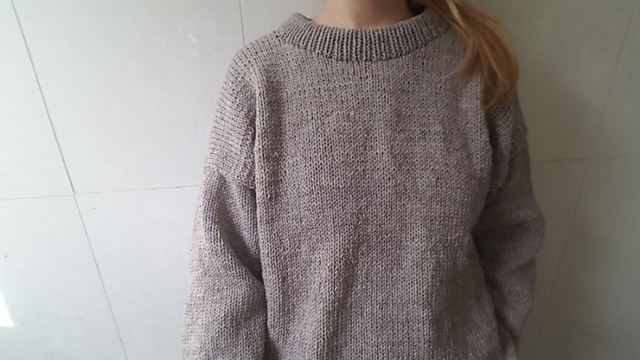
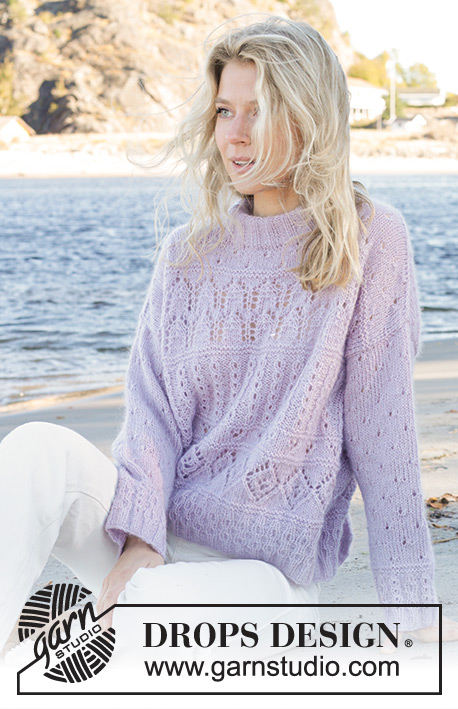
If you are ready to tackle a drop-shoulder sweater, here are a few free patterns I found for you to check out. They are not beginner-friendly.
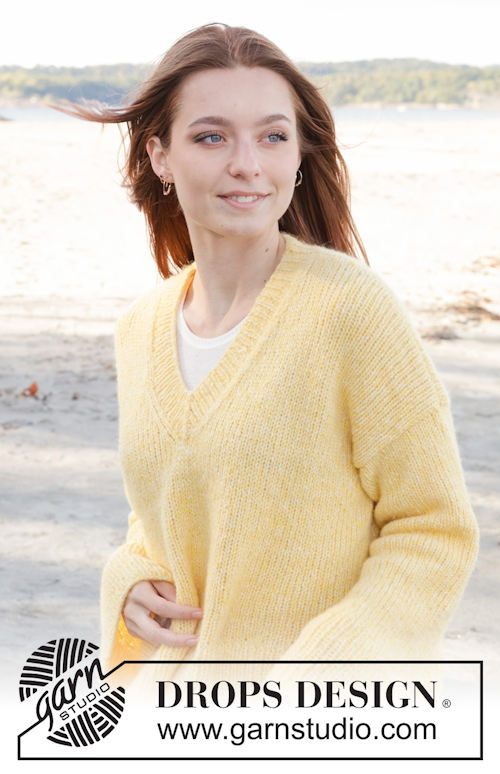
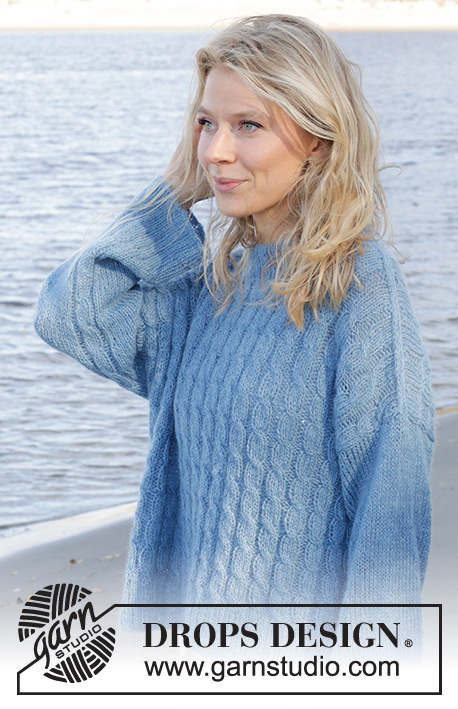

Disclosure:
This post contains affiliate links. If you buy through them, I may earn a small commission at no extra cost to you.

Janice Jones is a Certified Knitting and Crochet Instructor who creates beginner-friendly patterns and tutorials, backed by a 389-page library of practical knitting and crochet content.
Most Popular Pages
Comprehensive Guide to Yarn

All Types of Crochet Stitches
36 Reversible Knit Stitch Glossary
How to Crochet the Second Row
Dog Sweater Patterns
Working with Alpaca Yarn
Free eBooks, Just for You
Get my beginner eBook guides to Knitting and Crocheting, just for signing up for my monthly newsletter.
Choose one or both when you sign up.
About the Author: Please allow me to introduce myself
Janice Jones is a Certified Knitting Instructor and Certified Crochet Instructor through the Craft Yarn Council who focuses on beginner-friendly patterns, stitch guides, and technique tutorials. She has built a library of 389 pages on her website, sharing practical instructions and patterns, and has completed projects ranging from crochet blankets to knit sweaters. You can explore her work on her website. She makes items for Warm Up America and often knits and crochets sweaters for her small dogs.
Thank you for visiting Smart-Knit-Crocheting. I hope this and all of my tutorials will give you the inspiration to continue your knit or crochet journey. For a complete list of all the pages on my site, please visit my table of contents.
I participate in the Amazon Services LLC Associates Program, an affiliate advertising program designed to provide a means for sites to earn advertising fees by advertising and linking to Amazon.com. “As an Amazon Associate I earn from qualifying purchases.” These earnings go towards supporting my website.
Home | Contact | About | Privacy Policy | Disclaimer
I DO NOT SELL ANY PERSONAL INFORMATION FROM THIS WEBSITE. PLEASE SEE MY PRIVACY POLICY FOR MORE DETAILS.
Copyright © 2006-2026 Smart Knit Crocheting. All Rights Reserved
Please Share
Remember, Sharing is Caring