- Home
- How to Knit
- Circular Knitting
Circular Knitting - Four Ways to Knit in the Round
Circular Knitting Updated by Janice Jones |Updated February, 2026
If you’ve been knitting flat pieces for a while and feel ready to try something new, circular knitting is a lovely next step. It’s gentle, rhythmic, and surprisingly simple once you get the hang of it, even though the first look at all those needles can feel a little… porcupine-like.
The good news? You absolutely can knit in the round. And by the end of this tutorial, knitting a hat, cowl, or pair of cozy wrist warmers won’t feel intimidating at all. In fact, you may even start preferring circular knitting because it eliminates seams and helps your hands find a smooth, calming flow.
Let’s ease into it together.
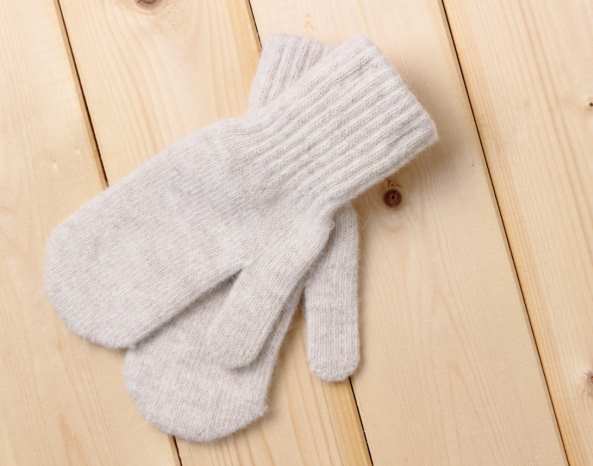
What Is Circular Knitting?
Circular knitting involves knitting in a continuous loop. Instead of working back and forth in rows, you work in rounds, which gives you a seamless tube.
You can knit in the round using:
- Circular needles
- Double-pointed needles (DPNs)
- The Magic Loop method
- Short circular needles (sometimes called “shorties”)
The technique you choose depends on the size of your project and the length of your needle cord. Don’t worry — I’ll walk you through it all.
Tools You Can Use for Knitting in the Round
1. Circular Needles
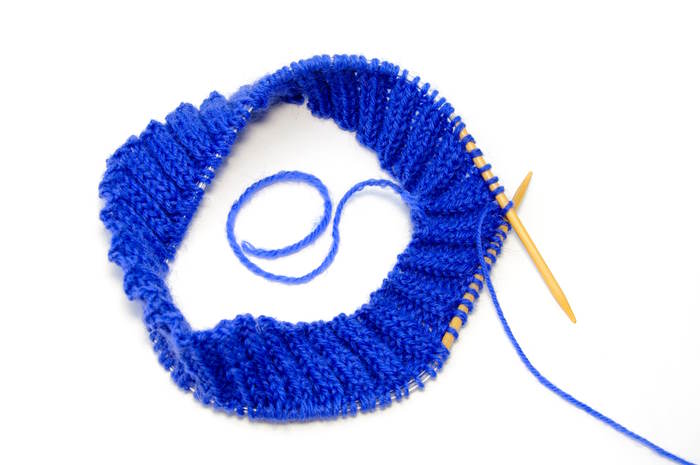 Circular Needles
These are two needle tips connected by a flexible cord. They come in different lengths (16", 24", 32", etc.). You’ll use these for:
- Cowls
- Sweaters
- Hats (the brim!)
- Most medium to large tubes
They feel comfortable in the hands and are usually the easiest option for beginners.
A circular needle has a flexible plastic link between two pointed needles (usually metal). After casting on stitches in the usual way and joining them into a circle, a seamless tube will be created as you knit in the round.

The outside of this tube always faces you. The side facing you is the "right" side of your knitting. You work in a spiral and don't turn your work at the end of each row.
To produce stockinette fabric, for example, you don't need to work one row of knit stitch and then one row of purl stitch. Knit stitches have to be worked all the way.
There are two different ways to do knitting in the round:
Double-Pointed Needles (DPNs)
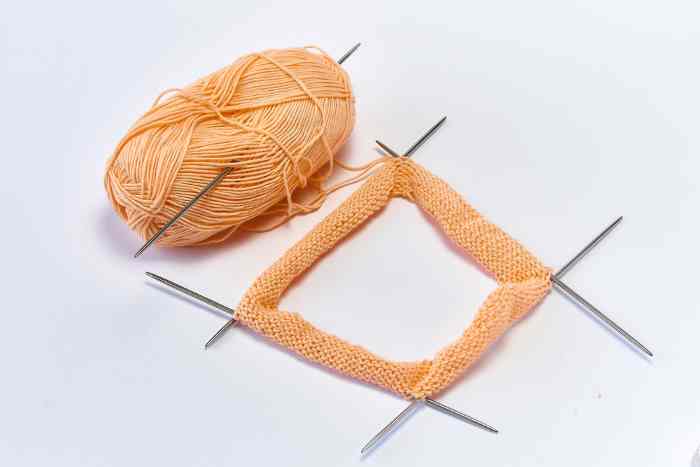 Double Pointed Needles
This is the classic method, especially for small circles like:
- Hat crowns
- Baby sleeves
- Mittens
- Socks
They may look like something out of a hedgehog convention, but after a round or two, the rhythm starts to feel natural.
If you would like to try double-pointed needles, I recommend Knit Picks as a good choice for beginners.
3. Magic Loop
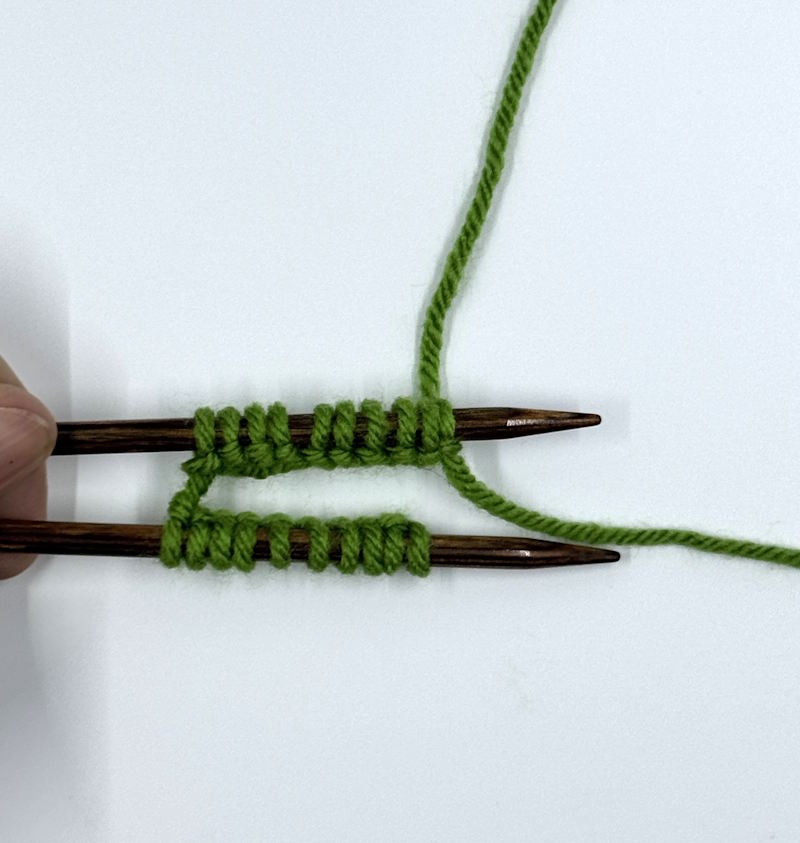
Magic Loop is a technique using a long cord (32" or longer) to knit small circles or tubes. The magic loop method replaces double-pointed needles for many projects, so it is a favorite for anyone who has difficulty maneuvering with five knitting needles at once (me included).
It is perfect if you don’t want to buy lots of cord lengths or if DPNs make you nervous. Learn more about circular knitting using the Magic Loop technique.
4. Short Circulars (Optional)
Tiny 9" circular needles let you knit small tubes like sleeves without DPNs or Magic Loop.
They take some getting used to, but many knitters adore them. I will admit that I have never been able to master these tiny needles.
If you think you'd like to try these, ChiaoGoo is a popular brand.
Circular Needles
The first type of knitting in the round, or circular knitting, that many people think of is using circular needles. But what type of circular needle do you need for your project? Luckily, many well-written patterns will tell you exactly what you need, but not all.
What lengths do circular needles come in?
What Lengths do Circular Needles Come In?
Circular needles can be as short as 22cm (8½in) or as long as 150cm (60in); however, the most commonly used lengths are 40, 60, or 80cm (16, 24, or 32in).
Which Length of Circular Needles Should I Use?
You will want a circular needle length that allows all of your stitches to fit on the needle, but not so long that they need to stretch unnecessarily. Let me explain.
The length of the circular needle includes both the needle tips and the cord that connects them. The circumference of the tube you create for your project will dictate the size to choose.
Short Circulars: (8 1/2 or 12 in) [22 or 30 cm] are best for small tubes such as socks, mittens, or cuffs. These circular needles have very short needle tips, making them uncomfortable for many knitters. If you are making small tubes such as socks, mittens, or cuffs, many knitters choose double-pointed needles, magic loop, or two circular needles instead.
Medium-sized circulars: (16 in or 40 cm) are used for sleeves, hats, and children's sweaters.
Large Circulars: 24 or 32 in (60 or 80 cm) are needed when working on sweaters.
Extra Large Circular Needles: (40, 47, 55, 60 in/100, 120, 140, 150 cm) are typically used for large flat projects, such as a blanket.
How do You Cast On Stitches on Circular Needles?
Step 1: Cast On
The easiest beginner method for learning how to knit in the round.
Cast on the number of stitches your project requires, using any cast-on method you prefer.
Spread them evenly along the cord and make sure they’re not twisted — your stitches should form a neat, straight line along the needle tips.
Quick Tip:
Lay your needle flat on a table to check for twists. If even one loop crosses, flip it back into place.
Step 2: Place Your Stitch Marker
Place a marker on your right needle to show where the round begins and ends.
Step 3: Join the Round
Bring the two needle tips together and knit the first stitch from the left needle to the right.
Congratulations — you’re officially knitting in the round!
Step 4: Keep Knitting
Knit all the way around until you reach the stitch marker again.
Move the marker from the left needle to the right, and keep going.
You’re now knitting continuous spirals, no turning your work, no purling unless your pattern calls for it.
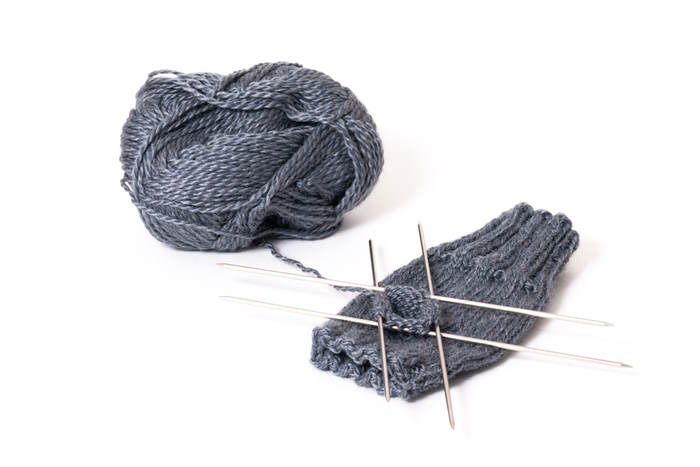
How to Knit Using Double-Pointed Needles (DPNs)
 Double pointed needles
There are usually 4 or 5 of these short, double-pointed needles in a set. After casting on, all stitches are evenly distributed among the working needles (two, three, or four needles). One needle is used to knit off.
If you’re working on a small project, like the top of a hat, a mitten, or a sock, circular needles may become too tight. DPNs save the day.
Step 1: Cast On
Cast on all stitches onto one needle.
Step 2: Divide the Stitches
Slide one-third of your stitches onto Needle 2, and another third onto Needle 3.
You’ll now have three needles holding stitches and one empty needle for knitting. Some people prefer to work on four double pointed needles and if that is the case, you will divide your stitches onto four stitches, saving the last one as your working needle.9
Step 3: Position the Needles
Arrange the needles into a triangle shape, or into a square if you are using four needles.
It feels awkward for the first minute, but trust me, your hands adjust quickly.
Step 4: Join in the Round
Using your empty needle, knit into the first stitch on Needle 1.
Then knit all the stitches on Needle 1 with that empty needle.
Now that the needle becomes the working needle, you continue to rotate.
Step 5: Keep Going
Move the needle from one to the next as you knit around, creating a continuous tube.


Tip to Prevent “Laddering”: What They Are and How to Fix Them
If you’ve ever noticed a little vertical gap running up your circular knitting, like a faint “ladder” between columns of stitches, you’ve met one of the most common issues in knitting in the round.
The good news? It’s fixable, and usually not your fault. It’s just your knitting adjusting to new tools and techniques.
What Is “Laddering”?
A ladder is a loose column of stitches that appears where:
- One double-pointed needle ends, and the next begins, or
- The stitches split in half for Magic Loop, or
- You’re using two circular needles or a very long circular needle for a small tube.
Instead of a smooth, even fabric, you see a faint line or gap that looks like the stitches are pulling apart.
Why Does Laddering Happen?
Laddering is almost always a tension issue at the needle change, that tiny moment when:
- You drop one needle and pick up the next, or
- Your stitches “jump” across the cable gap in Magic Loop.
At that transition point, the yarn isn’t being snugged up to the rest of the fabric, so those column stitches relax and become a bit looser.
Common Causes:
- Letting the first 1–2 stitches after a needle change get too loose
- Holding the work away from you instead of close to the needle tips
- Using very slick needles (like metal) while you’re still finding your tension
- A long cable that allows stitches to stretch
Easy Fixes for Ladders
You don’t need to change your whole style of knitting. A few small habits usually fix laddering completely.
1. Give the First Stitch a Gentle Tug
After you knit the first stitch on a new needle, give the working yarn a slight, firm tug to snug that stitch up against the last one on the previous needle.
2. Knit the First 2–3 Stitches a Bit Tighter
Not a yank, more like a “sit here nicely, please.”
Instead of only tightening the first stitch, try knitting the first two or three stitches on each needle a little tighter than usual. This spreads the tension over a few stitches, so one doesn’t have to work so hard.
3. Shift the Gap Occasionally
If a ladder does form, you can keep it from becoming a permanent feature by moving the gap: Every few rounds:
Knit 1–2 extra stitches from the next needle before you start the new one.
The “join” line crawls along the tube rather than sitting in one place, which makes any looseness much less noticeable.
4. Keep Your Hands Close to the Needle Tips
Try not to let your needles and stitches dangle while you’re switching needles or sliding the cable.
5. Try Different Needle Materials
- Hold the work near the tips, not halfway down the cord.
- The closer the stitches stay to the tips, the less chance they have to stretch.
If your yarn is very slippery and your needles are too (metal on silk, for example), everything wants to loosen up.
You might find:
- Wood or bamboo needles give you more control and natural friction.
- Slightly grippy needles can make a big difference in laddering.
How to Knit in the Round Using Magic Loop
Magic Loop is ideal when:
- Your project is too small for standard circulars
- You’re not quite ready for DPNs
- You love using one long needle for everything
How to Do It
- Cast on your stitches to a long circular needle (32" or longer).
- Divide your stitches in half and pull the cord through the center.
- Position one needle tip near you and the other away from you.
- Join in the round and begin knitting.
- As you finish one side, slide the needle and adjust the loop to keep knitting.
This method looks like yarn spaghetti the first time, but once your brain recognizes the pattern, it becomes a favorite. For a more in-depth article, I have written a tutorial on the Magic Loop Knitting Technique.
Benefits of Circular Knitting Needles
You do not need to knit everything in the round to benefit from circular needles. You may decide that you prefer to knit flat objects with circular needles. While I am absolutely not suggesting you get rid of all your straight needles, there is evidence that circular needles might be beneficial.
- You can use circular needles for both circular and flat knitting.
- The long cable that connects circular needles is great for knitting very large projects that may not fit on a standard 14" needle.
- Most good quality circular needles are made with sharper pointed tips that are easier to use for intricate lace stitches.
- Can be very economical to purchase even a premium brand set because they will probably the only set of needles you will ever need.

Final Thoughts
Circular knitting opens up a whole new world of projects, and once you try it, you may wonder why you didn’t start sooner. Give yourself time, breathe through the learning curve, and remember that all knitters — even the experts — once looked at a set of DPNs and thought, “What on earth is that?”
Disclosure:
This post contains affiliate links. If you buy through them, I may earn a small commission at no extra cost to you.

Janice Jones is a Certified Knitting and Crochet Instructor who creates beginner-friendly patterns and tutorials, backed by a 389-page library of practical knitting and crochet content.
Most Popular Pages
Comprehensive Guide to Yarn

All Types of Crochet Stitches
36 Reversible Knit Stitch Glossary
How to Crochet the Second Row
Dog Sweater Patterns
Working with Alpaca Yarn
Free eBooks, Just for You
Get my beginner eBook guides to Knitting and Crocheting, just for signing up for my monthly newsletter.
Choose one or both when you sign up.
About the Author: Please allow me to introduce myself
Janice Jones is a Certified Knitting Instructor and Certified Crochet Instructor through the Craft Yarn Council who focuses on beginner-friendly patterns, stitch guides, and technique tutorials. She has built a library of 389 pages on her website, sharing practical instructions and patterns, and has completed projects ranging from crochet blankets to knit sweaters. You can explore her work on her website. She makes items for Warm Up America and often knits and crochets sweaters for her small dogs.
Thank you for visiting Smart-Knit-Crocheting. I hope this and all of my tutorials will give you the inspiration to continue your knit or crochet journey. For a complete list of all the pages on my site, please visit my table of contents.
I participate in the Amazon Services LLC Associates Program, an affiliate advertising program designed to provide a means for sites to earn advertising fees by advertising and linking to Amazon.com. “As an Amazon Associate I earn from qualifying purchases.” These earnings go towards supporting my website.
Home | Contact | About | Privacy Policy | Disclaimer
I DO NOT SELL ANY PERSONAL INFORMATION FROM THIS WEBSITE. PLEASE SEE MY PRIVACY POLICY FOR MORE DETAILS.
Copyright © 2006-2026 Smart Knit Crocheting. All Rights Reserved
Please Share
Remember, Sharing is Caring