- Home
- How to Knit
- Knitting Cast On Methods
Knitting Cast-On Methods: Seven Ways to Begin
by Janice Jones, Updated October 12, 2026
Before you can knit your first row, you need stitches on your needle. That's where casting on comes in.
There are numerous ways to cast on, and an entire book has been written to describe some of them. Leslie Ann Bestor, in her book, Cast On, Bind Off, has provided tutorials on more cast-on methods than you'll likely need in a lifetime. In another of my favorite books, Cast on, Bind Off by Cap Sease, there are 211 ways to begin and end your knitting.
You don't need to learn every cast-on method at once. In fact, one or two will serve you well for many projects. In this guide, we'll compare seven methods, explain when each is useful, and help you decide which one to try next.
 This is an example of a cast-on method called the German Twisted Cast On
Which Cast-on Should I Use?
As knitters, we like to make many different things, so we need different types of cast on methods to accommodate all our creative urges. There are practical, easy, stretchy, provisional and even decorative ones.
In this article, I am going to introduce some of the most basic ones.
Where available, I've included a step-by-step tutorial or video demonstration.
How to Choose a Cast-On Method
Most beginners learn the knitted cast-on method or the long-tail cast-on because they are easy, quick, and practical for a wide range of projects. But according to Sease, function is likely the most essential consideration.
By function, we mean the reason for the edge. Does it need to be elastic and stretchy, such as in projects such as the neck edge of a pullover sweater or the cuff of a sock? Maybe it needs to be sturdy and firm so it doesn't stretch, such as the edge of a blanket or scarf. Some lace patterns would benefit from finding a cast-on method that is both sturdy and flexible.
Beyond function, the appearance can play an important role. Do you want the cast-on edge to match the bind-off edge? If the cast-on edge will be buried in a seam, it really doesn't matter.
| Cast-On Method | Stretch / Firmness | Long Tail? | Difficulty | Best Uses |
|---|---|---|---|---|
| Backward Loop | Flexible but unstable | No | Beginner | Adding a few stitches mid-project |
| Long-Tail | Moderate stretch, stable | Yes | Beginner–Intermediate | Scarves, blankets, general projects |
| Knitted | Moderate stretch, fairly firm | No | Beginner | Practice, starting projects, adding stitches |
| Cable | Firm, limited stretch | No | Beginner–Intermediate | Structured edges, buttonholes, adding stitches |
| German Twisted | Stretchy, stable | Yes | Intermediate | Sock cuffs, hats, mittens |
| Italian Tubular | Elastic, rounded edge | Depends on variation | Intermediate–Advanced | 1×1 ribbed cuffs, neckbands, hems |
| Crochet | Firm, neat edge | No | Beginner–Intermediate* | Edges resembling a standard bind-off |
Note: Stretch and firmness can vary depending on yarn, needle size, and tension. *The crochet cast-on difficulty assumes some familiarity with a crochet hook.
How to Cast-On in Knitting
- Backward Loop Cast-On
- Long-Tail Cast-On, Slingshot Method
- Knitted Cast-On
- Cable Cast-On
- German Twisted Cast-On
- Italian Tubular Cast-On
- Crochet Cast-On
1. Backward Loop Cast On
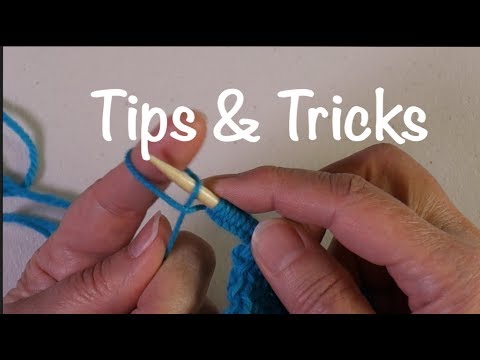
This is one of the simplest methods for placing stitches on a needle, and is often the first one taught to children. But it does have some disadvantages.
Why Use the Backward Loop Cast On Method?
Although you can use it to begin a project, the backward loop cast-on is especially helpful when you need to add stitches in the middle of a row, such as when shaping a sweater or creating an underarm. One drawback is that the loops can be loose and difficult to knit into, particularly when casting on a large number of stitches.
2. Long-Tail Cast-on or Sling Shot Method
This is an easy cast-on method for beginners. It uses one needle and a double strand of yarn. You might see this method referred to as the slingshot method because it looks like you are holding the yarn like a slingshot.
It's also called the long-tail method because you need to pull out a length of yarn before you begin.
Why Use the Long-Tail Cast On Method?
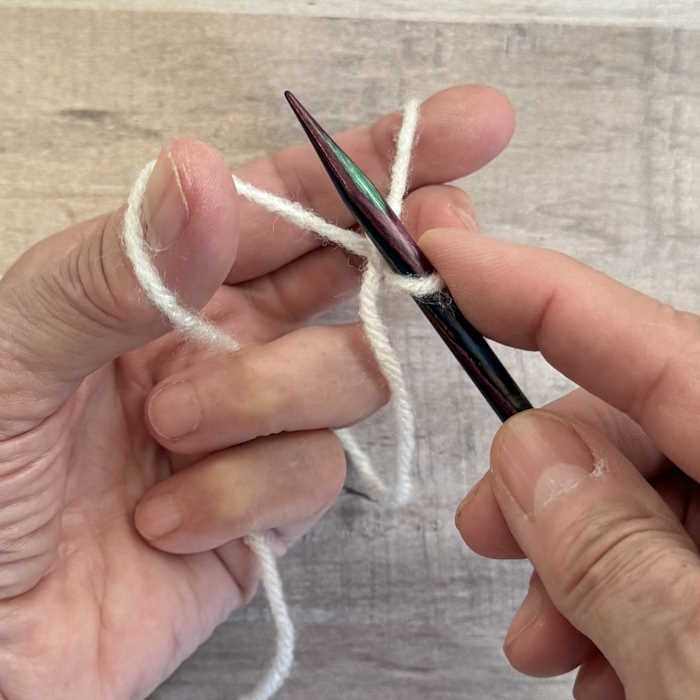
This is likely the most widely taught and versatile method in knitting. It is easy to learn and creates a firm, elastic edge, making it perfect for a wide variety of projects. The long-tail cast-on creates a stable foundation with a neat edge. Some knitting instructions treat the cast-on as the first row, while others begin counting with the row worked after casting on. Follow the row-counting convention used in your pattern. In many cases, it starts with a slip knot.
Learn how to make the Long-Tail Cast on Method.
3. Knitted Cast-On
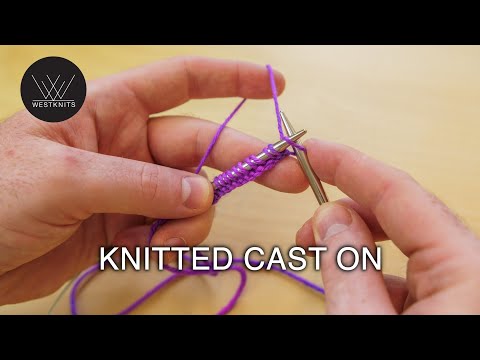
The knit-on method uses both needles and one length of yarn. There is no need to measure a long tail of yarn, but still begin with about a five to six-inch tail. This is another beginner method because it uses the basic knit stitch.
A variation of the knitted cast-on is the purl cast on. Some people find the purled cast-on to be a little easier and faster.
Why Use the Knitted or Purled Cast-On Methods?
The knitted cast-on in particular is often used to teach beginners how to start their knitting projects. By working this method, the beginner also learns a movement similar to the knit stitch. The purled variation uses a movement similar to purling. People who use the purled version like the appearance of a smooth edge without the knit bumps that appear on the edge with the knitted method. It is easy to learn, and it is also helpful if you need to add a few stitches at the end of rows while working on a project.
4. Cable Cast-On

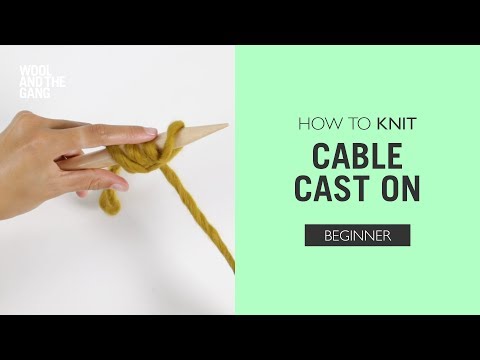
This is another beginner-friendly cast-on and is very similar to the knited cast-on. This method is also used when additional stitches are needed at the end of a row or when making buttonholes.
Notice that the first four steps are similar to the knit-on method, but once you have two stitches on your left-hand needle, the technique changes slightly.
Tutorial: How to Do the Cable Cast-On Method
Why Use the Cable Cast On Method?
This is typically the preferred method for adding stitches when creating buttonholes. It is also a good choice if you need to add stitches at the ends of a row. Finally, if you need a firm edge, the cable cast on might be a good choice.
5. German Twisted Cast-On
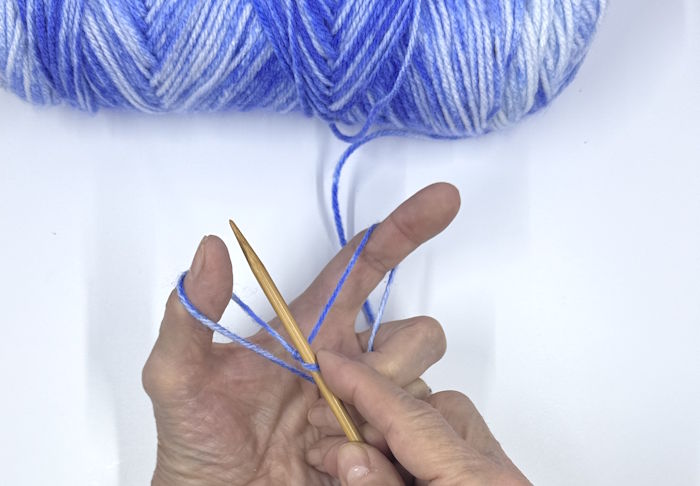
You might love this cast on method because it is stretchy, attractive, and uses a movement similar to the long-tail cast-on, with an additional twist. It is perfect for cuffs of socks and mittens, and the brim of hats. If you love the long tail cast on method, you will also be amazed by the German Twisted Cast On.
Tutorial: Learn the German Twisted Cast On. (Step-by-Step)
6. Italian Tubular Cast-On
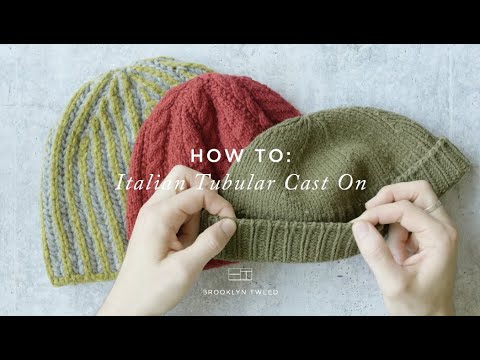
The Tubular cast-on is a beautiful, elastic edge often used for 1×1 ribbing. It creates a neat, rounded edge that looks like the stitches “flow” right from the cast-on, making it ideal for cuffs on mittens and socks. It's also a good choice for neckbands and hems. With the Italian tubular cast-on, you don't need waste yarn.
There is also an Italian bind-off that you can use with this cast-on to create a matching finishing edge, providing symmetry for cuffs and collars.
7. Crochet Cast-On Method
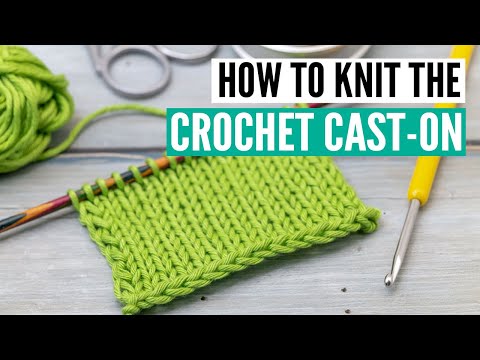
This is one of my favorite cast-on methods when I want the cast-on edge to look like the standard bind-off method. You will need a crochet hook approximately the same size as the knitting needles you are using.
Troubleshooting Cast-ons
Why is my cast-on edge too tight?
Casting on too tightly can make the first row difficult to knit and prevent an edge from stretching comfortably. Practice leaving a little space between stitches, and consider a stretchier method for ribbed edges.
Why is my cast-on edge loose or uneven?
Some methods, particularly backward loop, can produce uneven loops or excess yarn between stitches. Try a knitted or long-tail cast-on when you need a more stable beginning.
What if I run out of yarn while casting on?
Long-tail methods require estimating yarn before you begin. If you frequently run short, leave a more generous tail or try a two-strand version of the long-tail cast-on.
Frequently Asked Questions
What does “cast-on” mean in knitting?
What does “cast-on” mean in knitting?
In knitting, “cast on” refers to the method of getting stitches (loops) on your needle. It’s how you begin every knitting project. Different cast-on methods provide different edges and stretch.
Which cast-on method is best for beginners?
Which cast-on method is best for beginners?
The long-tail cast-on and knitted cast-on are often recommended for beginners. They are relatively simple to learn and work well for most projects, offering a good balance of stretch and stability.
What’s the stretchiest cast-on method?
What’s the stretchiest cast-on method?
If you need a stretchy edge—for hats, cuffs, or necklines—try the German Twisted Cast-On or the Tubular Cast-On. These techniques are ideal for projects that need elasticity without puckering.
How do I know which cast-on method to use?
How do I know which cast-on method to use?
Choose a cast-on method based on:
- The type of project (e.g., lace, ribbing, colorwork)
- The required stretch
- Whether you’re working flat or in the round
- Aesthetic preference (some cast-ons are decorative)
- When in doubt, the long-tail cast-on is a solid all-purpose choice.
Can I switch cast-on methods in the middle of a project?
Can I switch cast-on methods in the middle of a project?
Yes. Although casting on usually happens at the beginning of a project, some techniques are useful for adding stitches after knitting has begun. For example, the knitted cast-on and cable cast-on can add stitches at the end of a row, while the backward loop cast-on can add stitches at the beginning of a row or within a row. Follow your pattern's instructions, since different methods produce different edges.
How much yarn do I need for a long-tail cast-on?
How much yarn do I need for a long-tail cast-on?
A common rule is to allow about 1 inch of yarn per stitch, or use the “wrap-around-your-needle” method to estimate. It’s always a good idea to leave extra tail to avoid running out partway through your cast-on.
Once your stitches are on the needle, and you have knit your project, you’ll eventually finish with binding off.
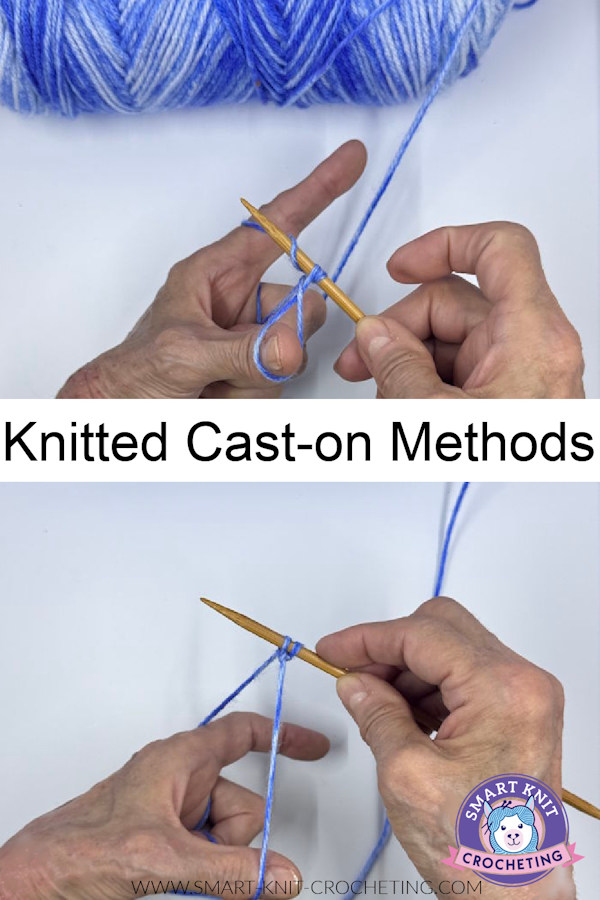
Knitting Cast-on Methods: Pin for Future Reference

Last Words
There isn't one cast-on method that's right for every knitting project. The long-tail and knitted cast-ons are useful places to begin, while methods such as the German twisted and Italian tubular cast-ons offer advantages for particular types of edges.
My suggestion is to start with one method, practice until the movements feel comfortable, and then add another when a project calls for something different.
As you gain experience, you'll discover that choosing a cast-on is just another part of planning your knitting project.
Disclosure:
This post contains affiliate links. If you buy through them, I may earn a small commission at no extra cost to you.

Janice Jones is a Certified Knitting and Crochet Instructor who creates beginner-friendly patterns and tutorials, backed by a 389-page library of practical knitting and crochet content.
Most Popular Pages
Comprehensive Guide to Yarn

All Types of Crochet Stitches
36 Reversible Knit Stitch Glossary
How to Crochet the Second Row
Dog Sweater Patterns

Working with Alpaca Yarn
Free eBooks, Just for You
Get my beginner eBook guides to Knitting and Crocheting, just for signing up for my monthly newsletter.
Choose one or both when you sign up.
About the Author: Please allow me to introduce myself

Janice Jones is a Certified Knitting Instructor and Certified Crochet Instructor through the Craft Yarn Council who focuses on beginner-friendly patterns, stitch guides, and technique tutorials. She has built a library of 389 pages on her website, sharing practical instructions and patterns, and has completed projects ranging from crochet blankets to knit sweaters. You can explore her work on her website. She makes items for Warm Up America and often knits and crochets sweaters for her small dogs.
Thank you for visiting Smart-Knit-Crocheting. I hope this and all of my tutorials will give you the inspiration to continue your knit or crochet journey. For a complete list of all the pages on my site, please visit my table of contents.
I participate in the Amazon Services LLC Associates Program, an affiliate advertising program designed to provide a means for sites to earn advertising fees by advertising and linking to Amazon.com. “As an Amazon Associate I earn from qualifying purchases.” These earnings go towards supporting my website.
Home | Contact | About | Privacy Policy | Disclaimer
I DO NOT SELL ANY PERSONAL INFORMATION FROM THIS WEBSITE. PLEASE SEE MY PRIVACY POLICY FOR MORE DETAILS.
Copyright © 2006-2026 Smart Knit Crocheting. All Rights Reserved
Please Share
Remember, Sharing is Caring