- Home
- How to Knit
- Slip Knot for Knitting
How to Make the Slip Knot for Knitting
Slip Knot for Knitting, by Janice Updated February, 2026
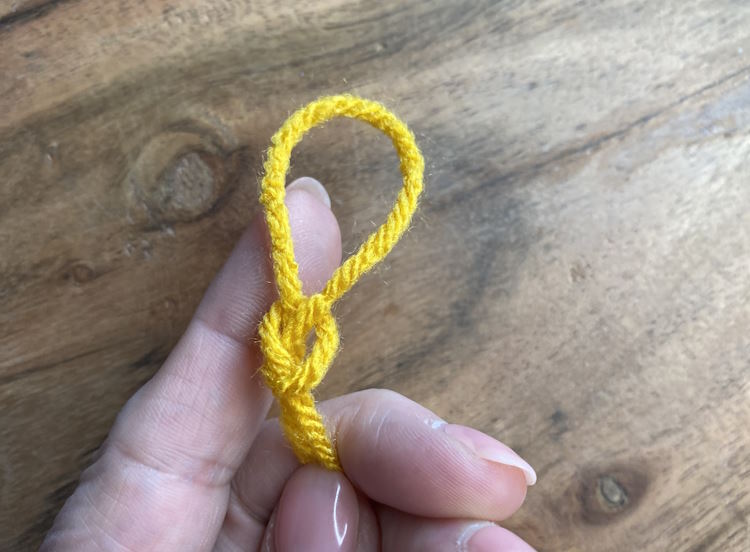 Slip Knot for Knitting
The slip knot is usually the first loop placed on your knitting needle. This is the first step in getting started with knitting. For a full walkthrough, see our complete guide to knitting.
A slip knot for knitting initiates the process of getting stitches onto the needle (casting on); it's the first loop on your adjustable needle, which can be easily tightened or loosened. Mastering this technique is vital for every knitting project, whether creating a scarf, a blanket, or an adorable pair of socks.
In this tutorial, you’ll learn:
- What a slip knot is (and when you need it)
- Two easy ways to make one
- How tight it should be on your needle
- Do you even need a slip knot?
Further, the process is simple and quick to learn, setting the foundation for countless knitting achievements.
NOTE: You don’t need a slip knot to begin knitting, but for the beginner, it’s best to learn how to make one before casting stitches onto your needles.
Methods for making the slip knot for knitting
There are more than one way to make a slip knot. I recommend if you are just getting started, to try different methods and then choose one that works best for you.
Method One: Slip Stitch Construction With the Help of your Table
This is an easy way to see exactly how the knot is tied. If you’re brand new to knitting, Method One is the easiest to see and control. Method Two is faster once you’re comfortable working in your hands.
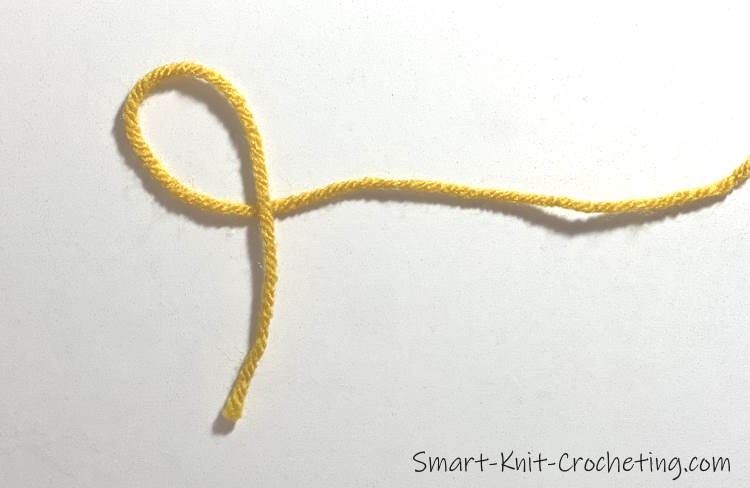 Work the slip knot on a solid surface like a desk or table.
Make a loop with the yarn's tail end on top.
Work the slip knot on a solid surface like a desk or table.
Make a loop with the yarn's tail end on top.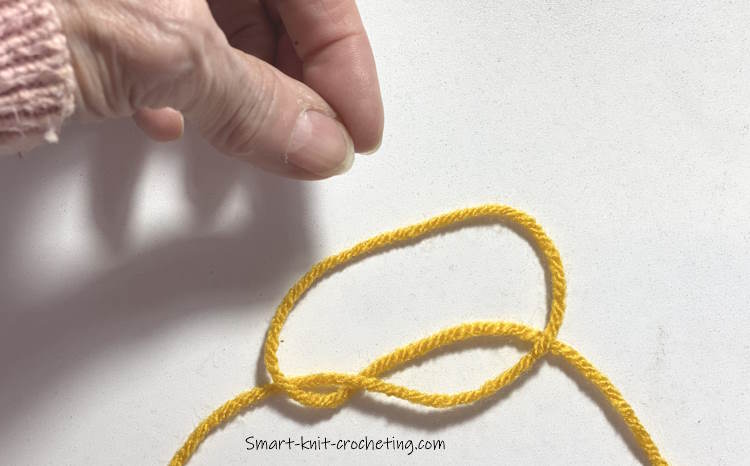 Pass your thumb and index finger through the loop.
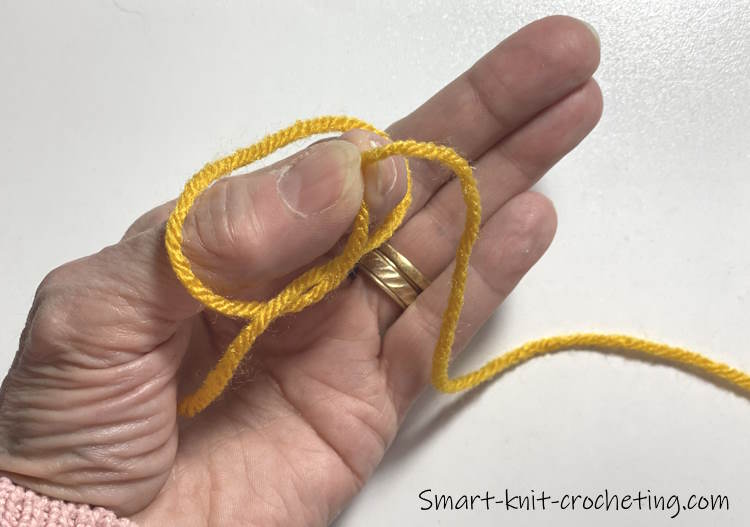 With your thumb and index finger, Pinch the yarn end that is attached to the skein.
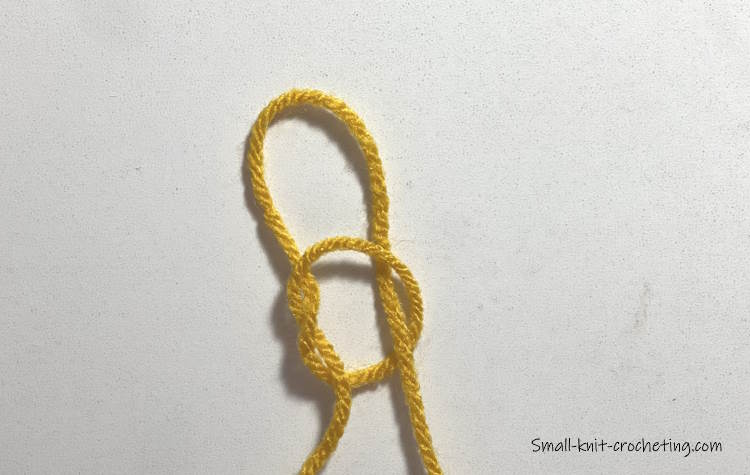 This is what the slip knot should look like before being tightened.
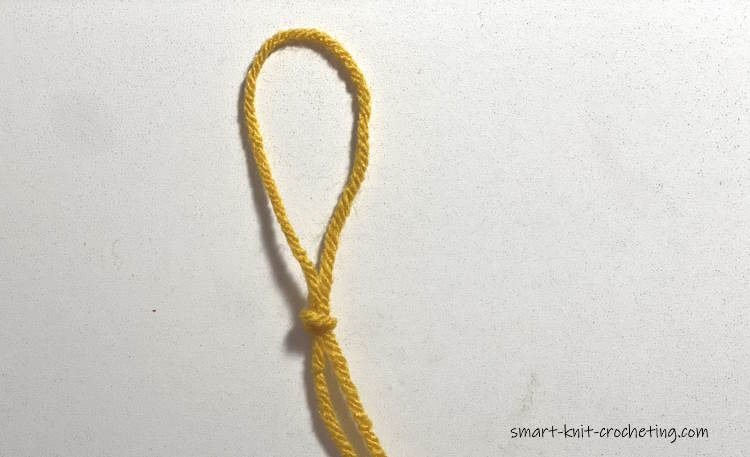 Pull through the loop and tighten the knot again.
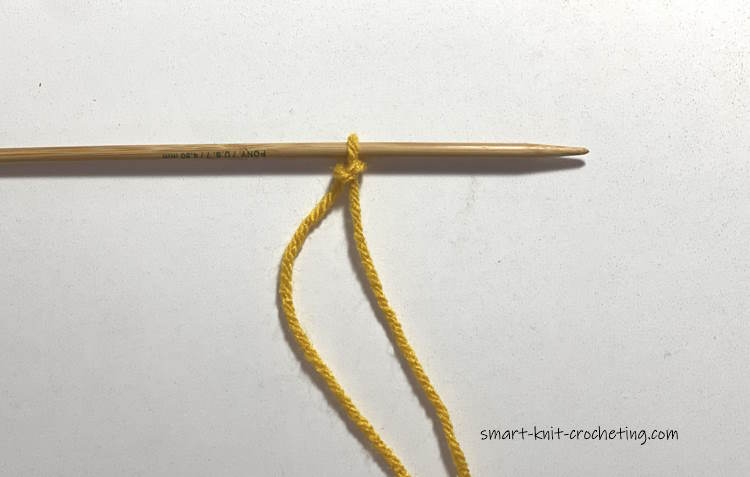 Place the knot on the knitting needle and pull slightly to tighten the needle. It should be snug but not tight.
- Work the slip knot on a solid surface like a desk or table.
- Make a loop with the yarn's tail end on top.
- Pass your thumb and index finger through the loop.
- With your thumb and index finger, Pinch the yarn end that is attached to the skein.
- Pull through the loop and tighten the knot again.
- Place the knot on the knitting needle and pull slightly to tighten the needle. It should be snug but not tight.
Method Two: Making the Knot In Your Hands and Fingers
- Hold about six inches of yarn in your hand.
- Wrap the yarn around the pointer finger.
- Pinch the loop on your pointer finger.
- Push the yarn through the loop and tighten.
- Place the knot on the knitting needle.

Do You Even Need a Slip Knot When Casting On Knitting?
Short answer: no, not always — but many beginners still use one.
A slip knot is often taught as the first step in knitting because it creates an adjustable loop that’s easy to place on the needle. However, not every cast-on method technically requires a slip knot, and some knitters choose to skip it altogether.
When a Slip Knot Is Commonly Used
A slip knot is typically used:
- When learning basic cast-on methods as a beginner
- When a pattern specifically instructs you to start with a slip knot
- When you want a clear, adjustable first loop on the needle
For new knitters, a slip knot can make the process feel more controlled and less confusing.
When a Slip Knot Is Not Necessary
Many experienced knitters avoid slip knots because:
- Some cast-ons (like the long-tail cast-on) can begin with a loop formed directly on the needle
- Certain cast-ons produce a cleaner, more consistent edge without one
In these cases, the first loop is formed during the cast-on rather than tied beforehand.
What Should Beginners Do?
If you’re just starting out, using a slip knot is perfectly fine. It helps you understand yarn tension, loop size, and needle control, all essential early skills.
As you gain experience, you may choose to skip the slip knot depending on:
- The cast-on method you’re using
- The edge finish you want
- Pattern instructions
Both approaches are correct. What matters most is that your stitches are secure, even, and easy to work with.
Slip Knot for Knitting: Frequently Asked Questions
Do you always need a slip knot to start knitting?
Do you always need a slip knot to start knitting?
No. While many beginners start with a slip knot, not all cast-on methods require one. Some cast-ons create the first loop directly on the needle instead of tying a knot first.
Should a slip knot count as a stitch?
Should a slip knot count as a stitch?
Yes, in most beginner cast-on methods, the slip knot usually counts as the first stitch. However, some knitters choose to avoid slip knots because they can accidentally add an extra stitch if counted incorrectly.
How tight should a slip knot be on the needle?
How tight should a slip knot be on the needle?
The slip knot should be snug but not tight. You should be able to slide it easily along the needle without stretching the yarn or restricting your stitches.
What’s the difference between a slip knot and a cast-on stitch?
What’s the difference between a slip knot and a cast-on stitch?
A slip knot is a starting loop placed on the needle, while cast-on stitches create the rest of the foundation row. Some cast-on methods combine these steps, making a slip knot unnecessary.
Can beginners skip the slip knot?
Can beginners skip the slip knot?
Yes, but it’s usually easier for beginners to start with one. A slip knot helps new knitters control tension and understand how loops sit on the needle before moving on to more advanced cast-on techniques.
Why do some knitters avoid using a slip knot?
Why do some knitters avoid using a slip knot?
Some knitters prefer not to use a slip knot because it can introduce a slight variation in tension at the edge or be mistaken for an extra stitch. Whether to use one often comes down to personal preference and the instructions provided.
Is a slip knot the same as a slip stitch?
Is a slip knot the same as a slip stitch?
No. A slip knot is used to begin knitting, while a slip stitch is a knitting technique worked during a row. Although the names sound similar, they serve completely different purposes.
Last Words
Mastering the slip knot is a fundamental skill that lays the groundwork for a successful knitting project. While it may seem like a minor detail, the quality of your knitting largely depends upon how well you start, and that starts with a solidly formed slip knot.
The goal is to create a loop that can adjust effortlessly without unraveling, granting both durability and flexibility to your work. Hence, it's worth your time to master this straightforward, essential technique, as it forms the very basis of your knitting journey.
Remember, every exquisite knitting piece commences with a
single, well-formed slip knot. Keep practicing, and soon it will become second
nature. Happy knitting!
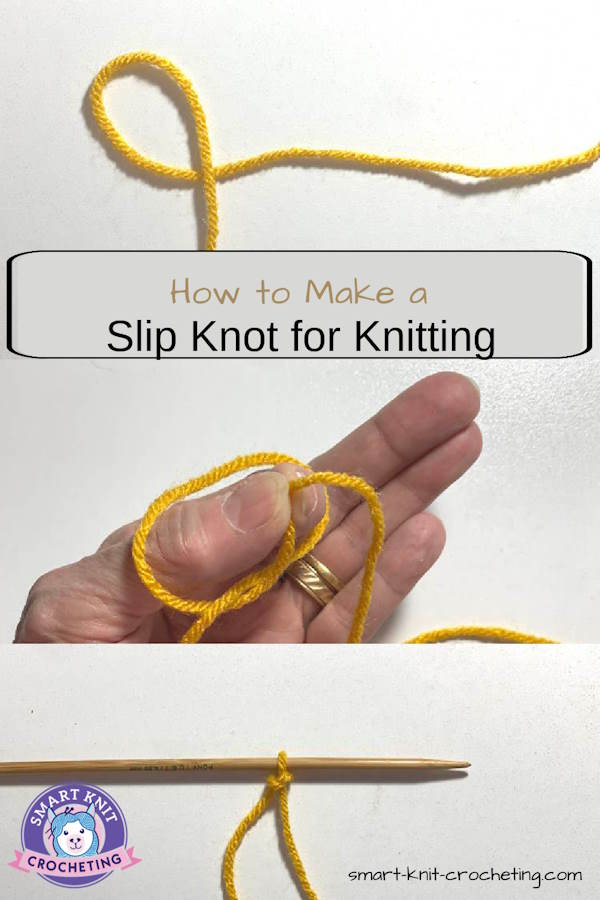
Slip Knot for Knitting: Pin for Future Reference

Disclosure:
This post contains affiliate links. If you buy through them, I may earn a small commission at no extra cost to you.

Janice Jones is a Certified Knitting and Crochet Instructor who creates beginner-friendly patterns and tutorials, backed by a 389-page library of practical knitting and crochet content.
Most Popular Pages
All Types of Crochet Stitches
36 Reversible Knit Stitch Glossary
How to Crochet the Second Row
Dog Sweater Patterns
Working with Alpaca Yarn
Free eBooks, Just for You
Get my beginner eBook guides to Knitting and Crocheting, just for signing up for my monthly newsletter.
Choose one or both when you sign up.
About the Author: Please allow me to Introduce myself
Janice Jones is a Certified Knitting Instructor and Certified Crochet Instructor through the Craft Yarn Council who focuses on beginner-friendly patterns, stitch guides, and technique tutorials. She has built a library of 389 pages on her website, sharing practical instructions and patterns, and has completed projects ranging from crochet blankets to knit sweaters. You can explore her work on her website. She makes items for Warm Up America and often knits and crochets sweaters for her small dogs.
Thank you for visiting Smart-Knit-Crocheting. I hope this and all of my tutorials will give you the inspiration to continue your knit or crochet journey. For a complete list of all the pages on my site, please visit my table of contents.
I participant in the Amazon Services LLC Associates Program, an affiliate advertising program designed to provide a means for sites to earn advertising fees by advertising and linking to Amazon.com. “As an Amazon Associate I earn from qualifying purchases.” These earnings go towards supporting my website.
Home | Contact | About | Privacy Policy | Disclaimer
I DO NOT SELL ANY PERSONAL INFORMATION FROM THIS WEBSITE. PLEASE SEE MY PRIVACY POLICY FOR MORE DETAILS.
Copyright © 2006-2026 Smart Knit Crocheting. All Rights Reserved
Please Share
Remember, Sharing is Caring