- Home
- Knit and Purl Stitches
- Swift Stitch
How to Knit the Swift Stitch (6-Row Knit and Purl Pattern)
by Janice Jones, Published October 14, 2026
The Swift Stitch is a textured knit-and-purl pattern worked over a six-row repeat and a multiple of two stitches. Its alternating knit and purl stitches create a subtle checked texture that adds interest without requiring cables, slipped stitches, or complicated techniques.
This pattern uses only knit and purl stitches, making it a good choice for knitters who are comfortable with both techniques and want to try something beyond basic ribbing or seed stitch.
The Swift Stitch is attractive on both sides and can be used for scarves, cowls, blankets, washcloths, and other projects where texture is welcome.
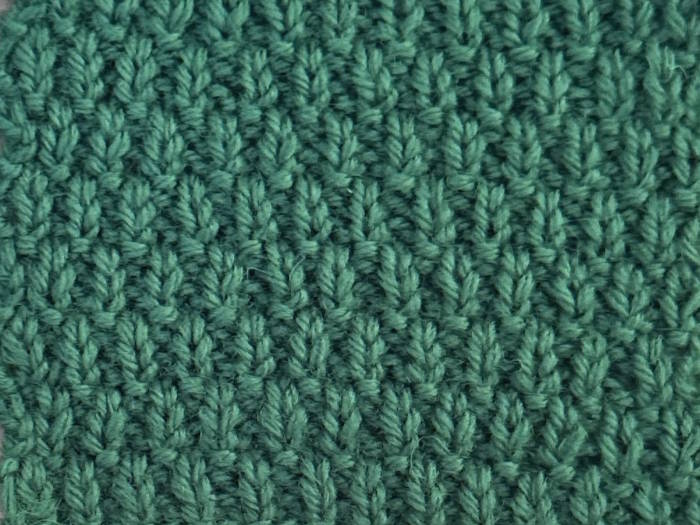 The Swift Stitch (Right side)
The Swift Stitch at a Glance
Skill level: Basic
Stitch multiple: Multiple of 2 sts
Row repeat: 6-row repeat when worked flat; 6-rnd repeat when worked in
the round
Lies flat: Yes
Reversible: Yes
Best uses: Scarves, cowls, dishcloths, washcloths, baby blankets,
borders, and simple textured panels
Related Stitches: Seed Stitch, Moss Stitch, Double Moss Stitch, 1x1 Rib,
Broken Rib.
Is the Swift Stitch Reversible?
Right Side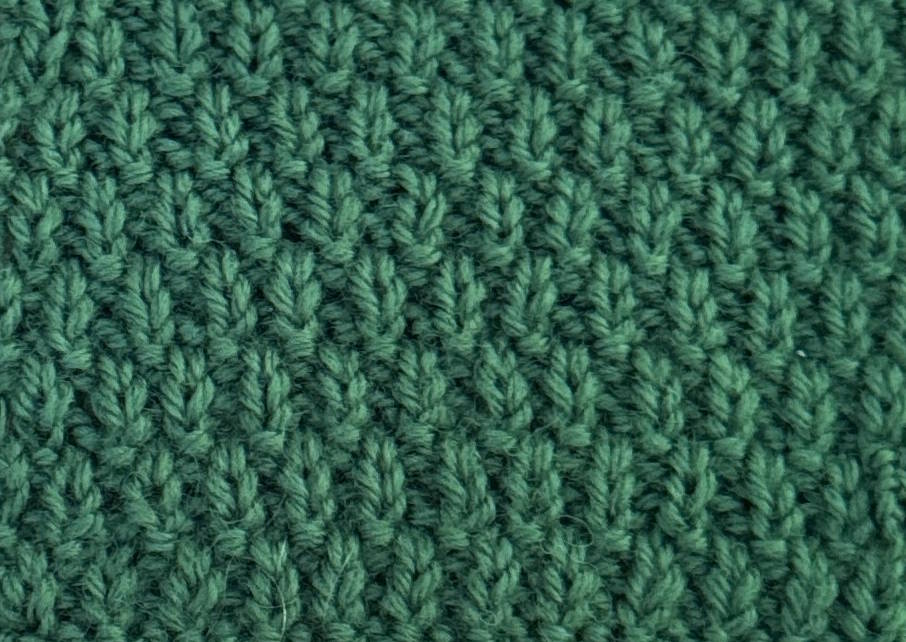 Wrong Side
As you can see in the photos above, the Swift stitch is reversible and would be a good choice for projects where both sides show such as scarves, blankets, and dish cloths.
How to Knit the Swift Stitch Flat on Straight Needles
CO a multiple of 2 sts.
Row 1 (RS): *K1, p1; rep from * to end.
Row 2 (WS): *K1, p1; rep from * to end.
Row 3: *K1, p1; rep from * to end.
Row 4: *P1, k1; rep from * to end.
Row 5: *P1, k1; rep from * to end.
Row 6: *P1, k1; rep from * to end.
Rep Rows 1–6 for the pattern
How to Knit the Swift Stitch in the Round
Cast on a multiple of two stitches, then join to work in the round, being careful not to twist stitches.
Rnd 1: *K1, p1; rep from * around.
Rnd 2: *P1, k1; rep from * around.
Rnd 3: *K1, p1; rep from * around.
Rnd 4: *K1, p1; rep from * around.
Rnd 5: *P1, k1; rep from * around.
Rnd 6: *K1, p1; rep from * around.
Repeat Rounds 1–6 for the pattern.
How to Knit the Swift Stitch Flat in Chart Form
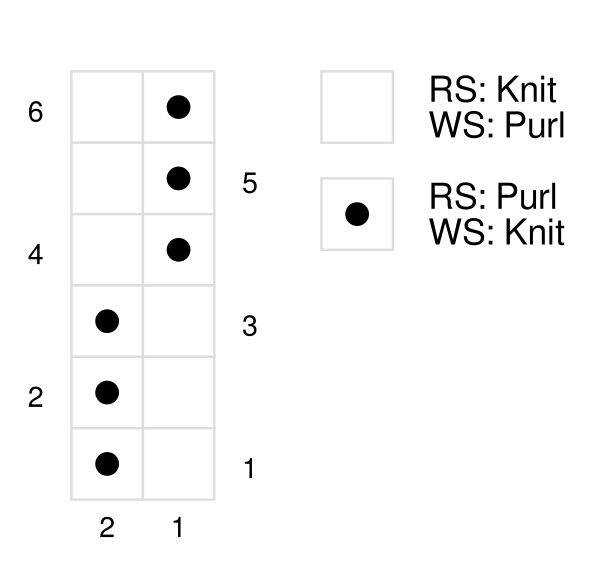
If knitting using a chart rather than written instructions, start knitting at the lower right corner on row one working from right to left, then work the second row working left to right. For more information, please see my page on understanding instructions in chart form.
Tips for Knitting the Swift Stitch
Keep track of your rows. The Swift Stitch has a six-row repeat, with the stitch sequence changing after every three rows. A row counter or a small note beside your pattern can help you remember where you are.
Pay attention to the knit and purl stitches. It's easy to continue working the same sequence out of habit. Before beginning a new row, check whether the instructions call for K1, p1 or P1, k1.
Make a small practice swatch. Cast on 20 or 24 stitches and work several pattern repeats. This gives you an opportunity to become familiar with the stitch and see how the texture develops.
Check your tension when switching between knits and purls. If your purl stitches are noticeably looser than your knit stitches, the fabric may look uneven. Try to maintain a comfortable, consistent yarn tension rather than pulling the yarn tighter to correct individual stitches. If necessary, when transitioning from a knit to a purl stitch, give a little tug on the yarn before completing the purl stitch.
Frequently Asked Questions About the Swift Stitch
Is the Swift Stitch suitable for beginners?
Is the Swift Stitch suitable for beginners?
Yes, if you already know how to knit and purl. The Swift Stitch uses basic stitches, but you will need to pay attention to the six-row repeat. It's a useful pattern for practicing changes between knit and purl stitches.
What is the best yarn for the Swift Stitch?
What is the best yarn for the Swift Stitch?
A smooth, solid-colored yarn is a good choice because it makes the texture easier to see. Wool and wool blends are suitable for scarves and cowls, while cotton is a practical option for washcloths and dishcloths. Very fuzzy or heavily textured yarns may hide some of the stitch definition.
How many stitches should I cast on for the Swift Stitch?
How many stitches should I cast on for the Swift Stitch?
The pattern uses a multiple of two stitches, so you can cast on any even number, such as 20, 24, or 30 stitches. The number you choose will depend on the width of your project, yarn weight, and needle size.
Can I use the Swift Stitch for a blanket?
Can I use the Swift Stitch for a blanket?
Yes. The Swift Stitch creates a textured fabric that can be used for blankets, including baby blankets. Make a swatch first to see whether you like the fabric's appearance, drape, and edges with your chosen yarn.
Pin This for Future Reference
Final Thoughts on the Swift Stitch
The Swift Stitch is another example of how much texture you can create with just knit and purl stitches. Its six-row repeat offers a little variety without introducing complicated techniques.
If you enjoy experimenting with knit-and-purl combinations, you might also like trying seed stitch, moss stitch, or broken rib. Each produces a different texture using the same two basic stitches.
You can find more patterns in my Knit and Purl Stitch Collection or explore my Reversible Knitting Stitch Patterns. If you feel comfortable kniting patterns with a six-row repeat, I have started a collection of 6-row repeat stitches.
Disclosure:
This post contains affiliate links. If you buy through them, I may earn a small commission at no extra cost to you.
Janice Jones is a Certified Knitting and Crochet Instructor who creates beginner-friendly patterns and tutorials, backed by a 389-page library of practical knitting and crochet content.
Most Popular Pages
Comprehensive Guide to Yarn

All Types of Crochet Stitches
36 Reversible Knit Stitch Glossary
How to Crochet the Second Row
Dog Sweater Patterns
Working with Alpaca Yarn
Free eBooks, Just for You
Get my beginner eBook guides to Knitting and Crocheting, just for signing up for my monthly newsletter.
Choose one or both when you sign up.
About the Author: Please allow me to introduce myself
Janice Jones is a Certified Knitting Instructor and Certified Crochet Instructor through the Craft Yarn Council who focuses on beginner-friendly patterns, stitch guides, and technique tutorials. She has built a library of 389 pages on her website, sharing practical instructions and patterns, and has completed projects ranging from crochet blankets to knit sweaters. You can explore her work on her website. She makes items for Warm Up America and often knits and crochets sweaters for her small dogs.
Thank you for visiting Smart-Knit-Crocheting. I hope this and all of my tutorials will give you the inspiration to continue your knit or crochet journey. For a complete list of all the pages on my site, please visit my table of contents.
I participate in the Amazon Services LLC Associates Program, an affiliate advertising program designed to provide a means for sites to earn advertising fees by advertising and linking to Amazon.com. “As an Amazon Associate I earn from qualifying purchases.” These earnings go towards supporting my website.
Home | Contact | About | Privacy Policy | Disclaimer
I DO NOT SELL ANY PERSONAL INFORMATION FROM THIS WEBSITE. PLEASE SEE MY PRIVACY POLICY FOR MORE DETAILS.
Copyright © 2006-2026 Smart Knit Crocheting. All Rights Reserved
Please Share
Remember, Sharing is Caring