- Home
- Knitting Resources
Knitting Resources for Beginners | Planners, Charts & Helpful Tools
Learning to knit involves more than just stitches and patterns. Many beginners also struggle with choosing supplies, understanding terminology, keeping track of projects, and figuring out what to do when something goes wrong. That can make knitting feel far more overwhelming than it needs to be.
This collection of beginner-friendly knitting resources is designed to make the learning process easier and more organized. Here you will find helpful guides, charts, planners, checklists, and practical tools to help you build confidence and improve your knitting skills.
New to Knitting? Start Here
If you are not sure where to begin, these beginner resources are a great starting point:
Planning and Organization Resources
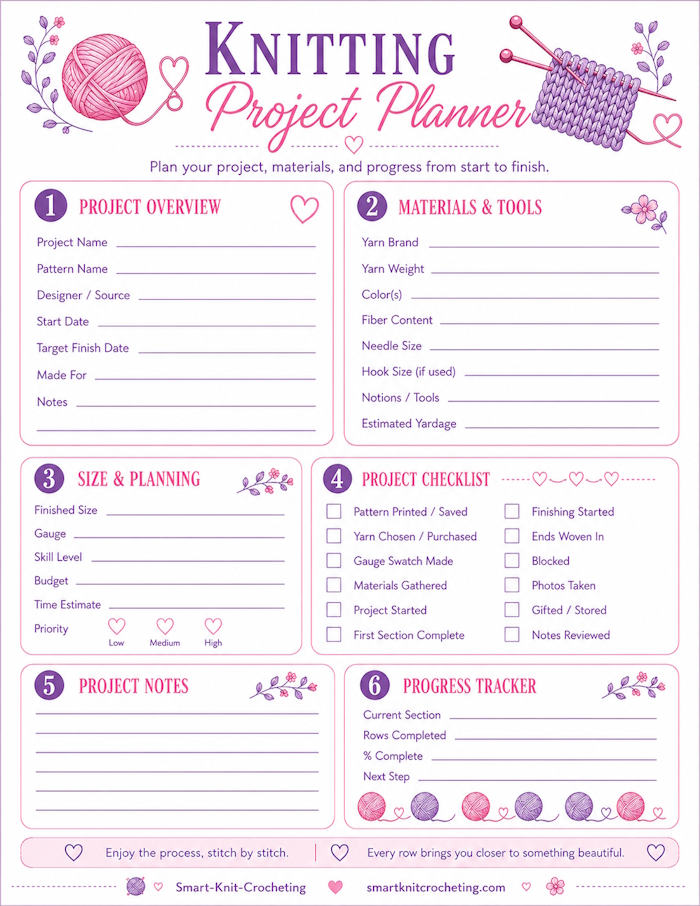
Knitting can become easier when you feel more organized. Take it from someone who knows: a knitting obsession can take on a life of its own without a little planning and organization.
If you are one of those folks who love to organize projects, either the old-fashioned paper-and-pencil way or digitally, this section is for you.
Whether it is planning gifts for the holidays or just keeping track of your yarn, a system is a good way to minimize stress so your hobby can be as calming as it is meant to be.
While you can purchase planners and knitting journals, beginners often don't need to spend money right away. I've created these free resources to help you get organized and start knitting with confidence.
- Knitting Project Planner
- Knitting Gift Tags
- Yarn Stash Organization
- Knitting Journal Ideas
- WIP Tracker
Knitting Reference Guides and Cheat Sheets
There is much to learn in knitting, but that doesn't mean that you must memorize everything. We all benefit from some small cheat sheets that fit into our knitting bags and go with us wherever we want to knit.
Here are some free printables. My gift to you is just for visiting my site. Click the pictures below to download for free.
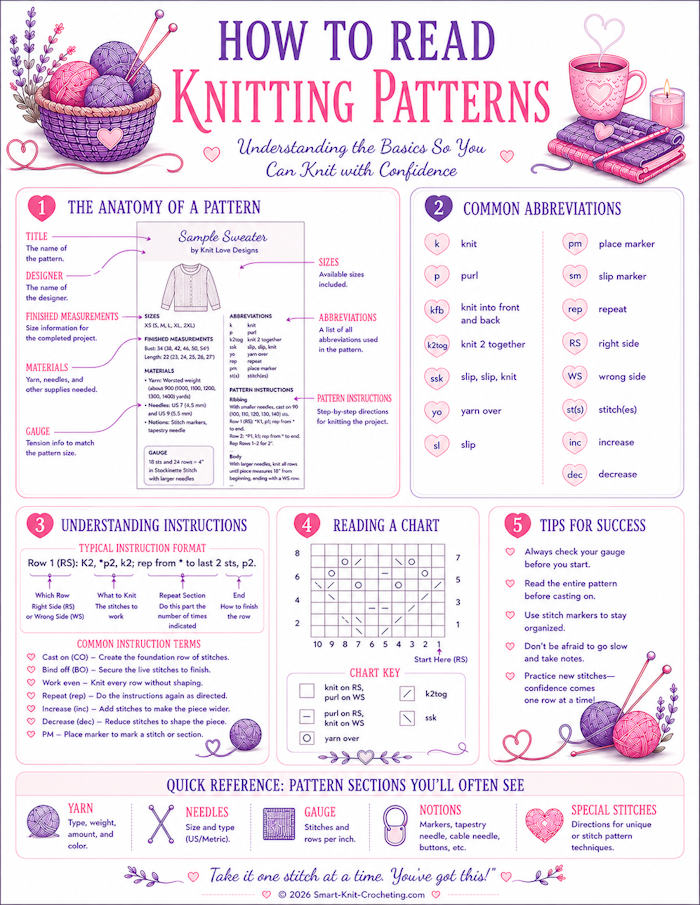
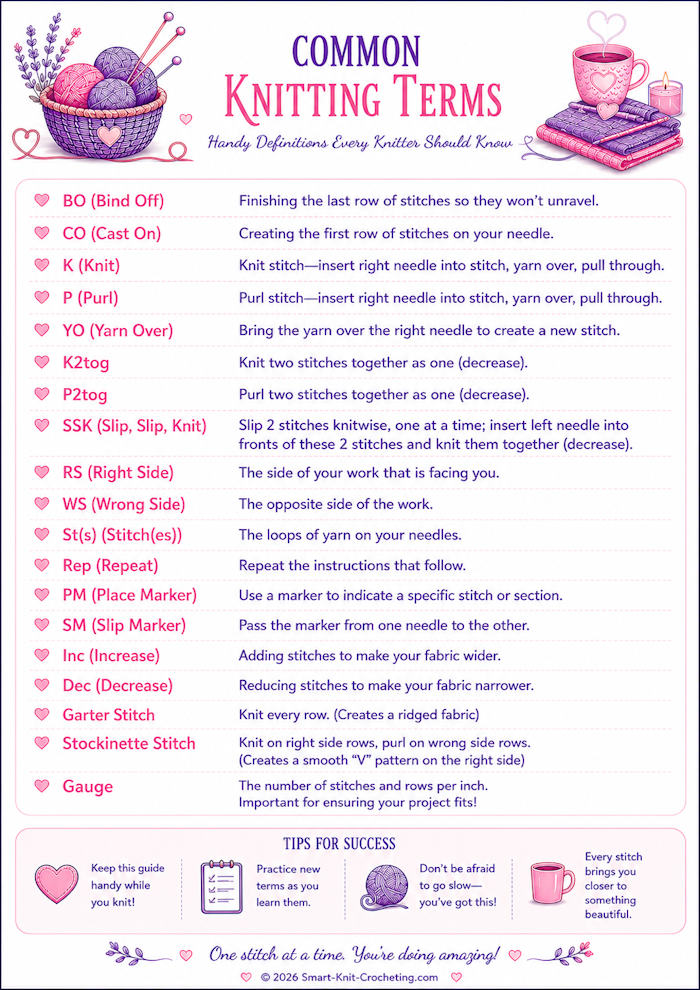
If you prefer, click the links below to go to my tutorials.
Knitting Abbreviations
Confused by pattern shorthand? This quick reference guide explains common knitting abbreviations in plain English. Download your free Abbreviations Cheatsheet.
Needle Size Conversion Chart
A helpful chart for converting US, UK, and metric knitting needle sizes. Download your free needle size conversion chart.
Yarn Weight Guide
Learn the difference between lace, fingering, worsted, bulky, and other common yarn weights. This free guide provides all the basics you need to understand yarn weights.
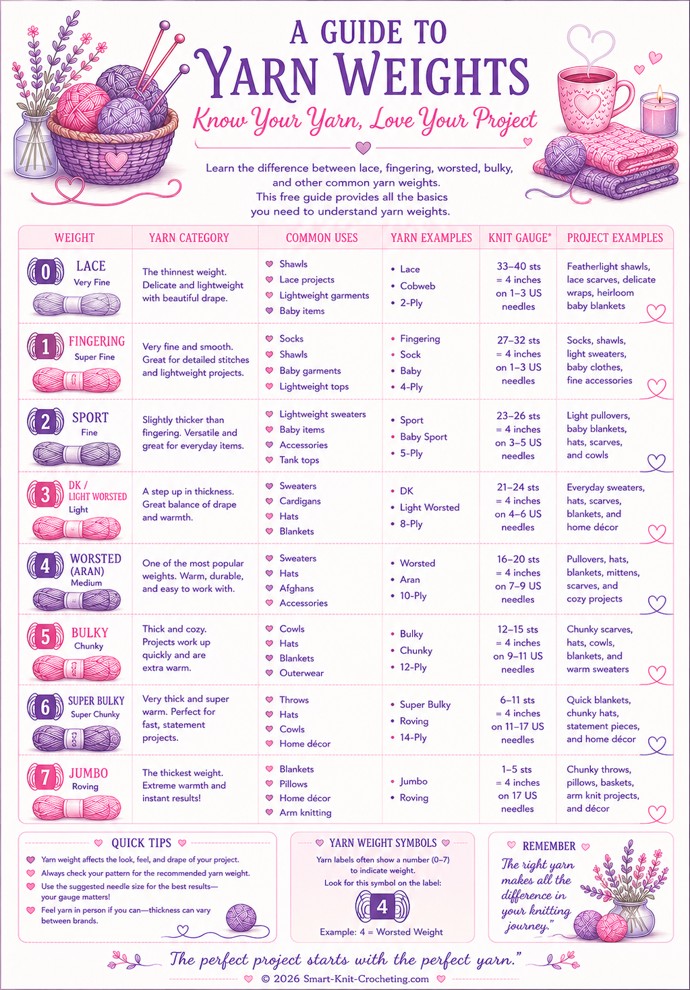


Want a free PDF download of this yarn guide? Click to get your guide to yarn weights.
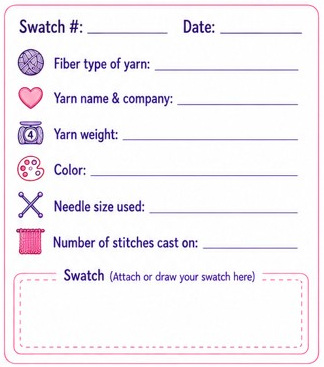
Swatching Records
Do you keep track of the swatches you knit while learning new stitch patterns or testing yarn for a project?
There is no right or wrong answer. Some knitters save every swatch, while others toss them into a basket and forget about them. However, keeping a simple record can be surprisingly helpful, especially when you want to revisit a stitch pattern, compare yarns, or remember the needle size and gauge you used.
To help you stay organized, I've created a free Swatch Record Sheet. Use it to record important details about each swatch, including the stitch pattern, yarn, needle size, gauge, and any notes you may want to remember later.
Learn more about why swatching matters and download your free Swatch Record Sheet. Print as many copies as you need, cut them apart if desired, and keep them with your swatches for easy reference.
Years from now, when you want to knit that same stitch pattern again, you'll be glad you wrote down what worked.
Decision-Making Guides for Beginners
If you are like most knitters (myself included), you'd probably appreciate recommendations that have already been researched and tested. Sure, we should always investigate things for ourselves, but a little extra help goes a long way.
If you hear yourself asking, “Which method should I use or what type of yarn is best," then these resources are worth checking out.
Where to find patterns on the web?
What knitting books are worth buying?
Troubleshooting and Finishing Resources
Many knitters discover that the hardest part of a project is not actually knitting it, but rather fixing mistakes, finishing seams neatly, weaving in ends, and blocking the final piece. These resources can help you troubleshoot common knitting problems and finish your projects with more confidence.
Interesting Reading
From Nålebinding to the 21st century, knitting has enjoyed a long and interesting history.
Rooted in the aesthetics and practices of past generations, Grandmacore invites us to reconnect with traditional crafts like knitting, crocheting, quilting, and embroidery, but with a renewed sense of purpose: slowing down, cherishing tactile experiences, and finding joy in what’s homemade.
In a world that moves too fast, slow knitting invites you to pause, breathe, and savor each stitch. Instead of racing to finish a project, you focus on the experience, the rhythm of your needles, the feel of the yarn, the meditative calm that comes from creating something with your hands.
What is Eco-friendly Knitting?
As the world embraces sustainability, knitting has found its place in the movement. More crafters are asking, "How can I knit responsibly?"
Conclusion
Knitting is good for both your physical and mental health, but sometimes it can feel a bit overwhelming. Remember, knitting takes time to learn and perfect. Many beginners worry they must memorize every knitting term, symbol, and abbreviation before they can successfully follow a pattern. Thankfully, experienced knitters use reference guides too. The more organized and supported you feel, the easier it becomes to enjoy knitting and keep improving.
Don't forget to bookmark this page, add it as a preferred source on Google, and come back to visit often. I will be adding more resources as time permits.

Disclosure:
This post contains affiliate links. If you buy through them, I may earn a small commission at no extra cost to you.
Janice Jones is a Certified Knitting and Crochet Instructor who creates beginner-friendly patterns and tutorials, backed by a 389-page library of practical knitting and crochet content.
Most Popular Pages
Comprehensive Guide to Yarn

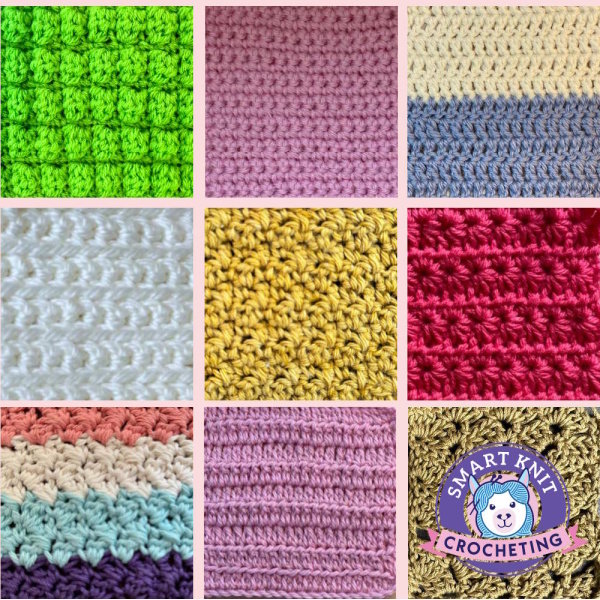
All Types of Crochet Stitches
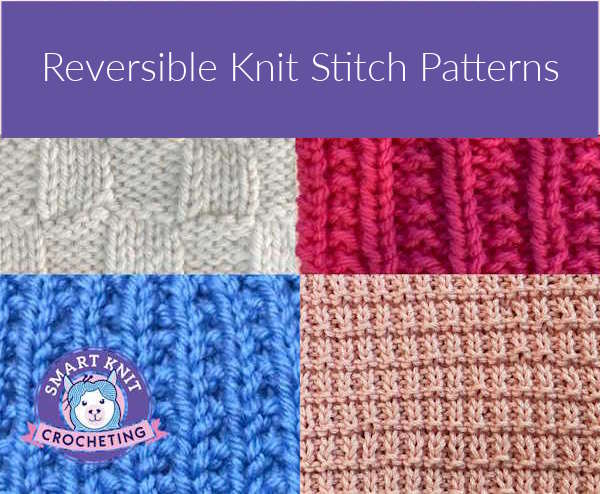
36 Reversible Knit Stitch Glossary
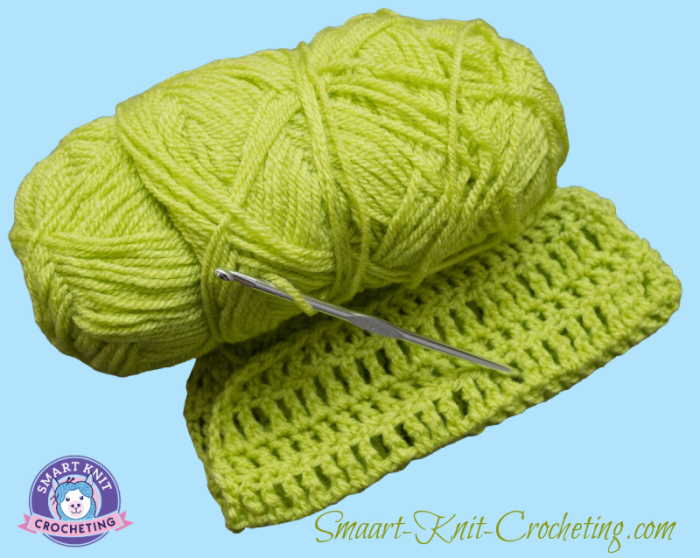
How to Crochet the Second Row
Dog Sweater Patterns
Working with Alpaca Yarn
Free eBooks, Just for You
Get my beginner eBook guides to Knitting and Crocheting, just for signing up for my monthly newsletter.
Choose one or both when you sign up.
About the Author: Please allow me to introduce myself
Janice Jones is a Certified Knitting Instructor and Certified Crochet Instructor through the Craft Yarn Council who focuses on beginner-friendly patterns, stitch guides, and technique tutorials. She has built a library of 389 pages on her website, sharing practical instructions and patterns, and has completed projects ranging from crochet blankets to knit sweaters. You can explore her work on her website. She makes items for Warm Up America and often knits and crochets sweaters for her small dogs.
Thank you for visiting Smart-Knit-Crocheting. I hope this and all of my tutorials will give you the inspiration to continue your knit or crochet journey. For a complete list of all the pages on my site, please visit my table of contents.
I participant in the Amazon Services LLC Associates Program, an affiliate advertising program designed to provide a means for sites to earn advertising fees by advertising and linking to Amazon.com. “As an Amazon Associate I earn from qualifying purchases.” These earnings go towards supporting my website.
Home | Contact | About | Privacy Policy | Disclaimer
I DO NOT SELL ANY PERSONAL INFORMATION FROM THIS WEBSITE. PLEASE SEE MY PRIVACY POLICY FOR MORE DETAILS.
Copyright © 2006-2026 Smart Knit Crocheting. All Rights Reserved
Please Share
Remember, Sharing is Caring