- Home
- How to Crochet (Start Here)
- Single Crochet Stitch Tutorial
The Single Crochet Stitch Tutorial
by Janice Jones, Last Updated February 2026.
If you’re holding a crochet hook for the first time and thinking, “Why does this feel so awkward?” — take a breath.
When you first learned to write, your hand didn’t glide smoothly across the page. It took time for the movement to feel natural. Crochet works the same way. Your hands are building a new kind of muscle memory.
The single crochet stitch is one of the very first stitches every crocheter learns. It may feel slow at first. That doesn’t mean you’re bad at it — it just means you’re at the beginning.
In this tutorial, I’ll walk you through it step by step so you can understand exactly what your hands are doing — and why.
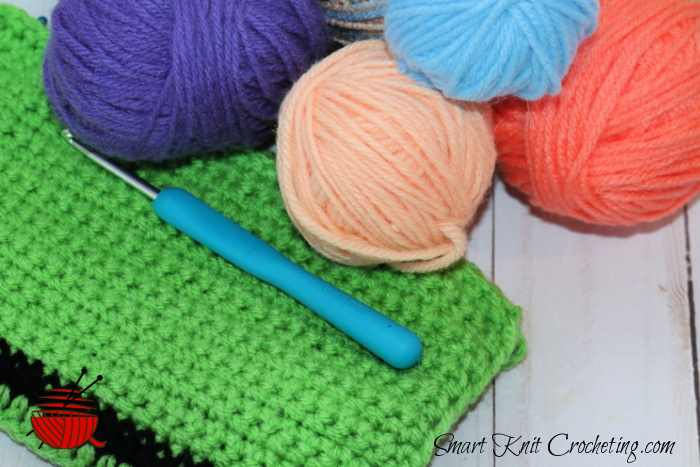
This page is all about a step by step method to making the single crochet stitch. If you are dying to use the stitch in a real project and not just practice, I’ve provided some ideas for you later on this page.
The best news about this stitch is that you can make hundreds of projects using just this stitch.
What Is a Single Crochet Stitch, Really?
The single crochet stitch creates a dense, sturdy fabric. Each stitch forms a small “V” at the top and a compact vertical post beneath.
Because it is short and tightly structured, single crochet is commonly used for:
- Dishcloths
- Amigurumi
- Edgings
- Bags and sturdy projects
Compared with taller stitches such as half double crochet or double crochet, single crochet produces less drape and more structure.
Before You Start: Tips for the Beginner
What You Need (Keep It Simple) For this tutorial, grab
- A light-colored yarn (medium weight if possible)
- A crochet hook that matches the yarn label
- A pair of scissors
If you’re not sure about yarn weights or hook sizes yet, don’t worry. I’ll explain more below, but for now, any medium yarn and matching hook will work. For more information, read the next couple of sections for more advice.
1. Use Light Colored Yarns
You'll need some yarn to practice the single crochet stitch. Light colored yarns work very well for beginners because you can see the individual stitches without needing extra lighting. You don’t need to limit yourself to white, but venture out in shades of light pink, blue, orange, green or purple. Tans and cream colors are also very easy to see.
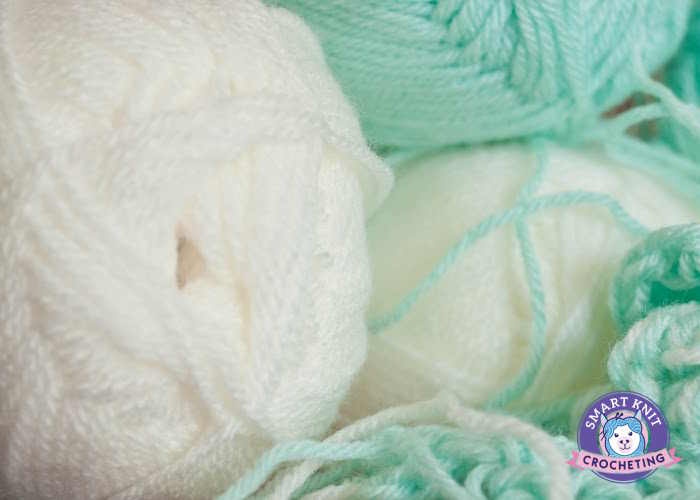
2. Easiest Yarns for Beginners
If you want to get right into learning the single crochet stitch, find some yarn that has these symbols on the yarn band. Number 4 or worsted weight yarn in a light color, but Number 5 or bulky is just as good for beginners.
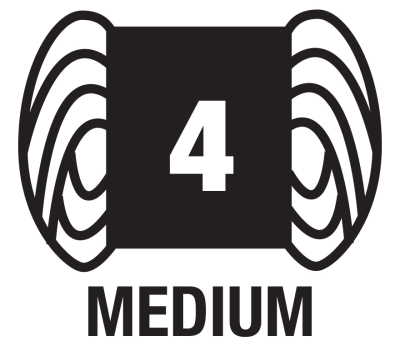
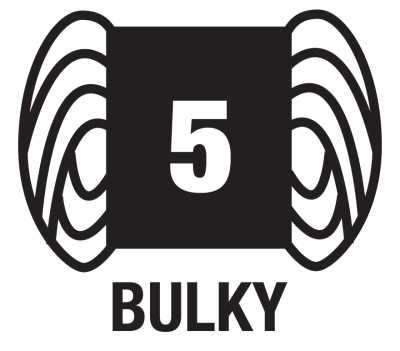
The number 4 on the yarn label is also called worsted weight yarn and is a medium weigh yarn perfect for learning to crochet. If you like something a little thicker, look for the #5 on the label.
Understanding yarn is beyond the scope of this tutorial, but if you would like more information, check out my article on the best yarn for beginners. If you are curious and want to learn even more, I have a comprehensive guide to yarn that will answer all your questions.
3. Crochet Hooks: Types and Sizes
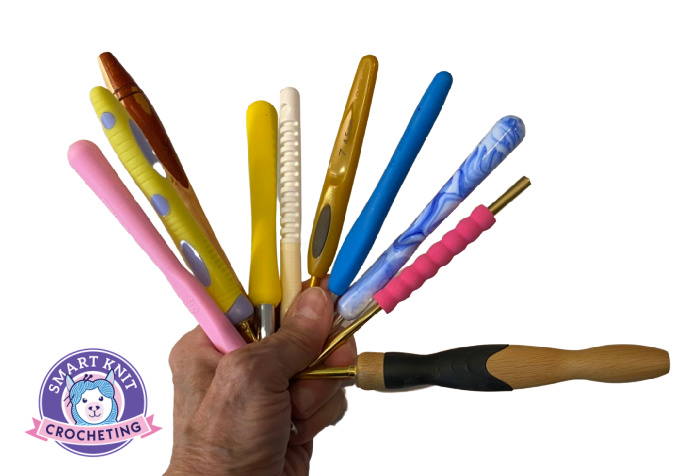
You will need a hook. It's overwhelming to choose a hook when faced with a wall of different hooks. For now, select a hook appropriate for the yarn you chose.
#4 Yarn (aka Worsted Weight Yarn): Pick a size H or I or 5.0 to 5.5 mm hook
#5 Yarn: (aka Bulky or Chunky) Pick a size J or K or 6.0 to 6.5 mm hooK
If you want to learn more about crochet hooks, check out my article about crochet hooks. If you have arthritis or are looking for a comfortable hook, read about ergonomic crochet hooks.
Prerequisites
You have your yarn and hook, so you are almost ready to learn how to make the single crochet stitch. But first, you will need to master two more skills:
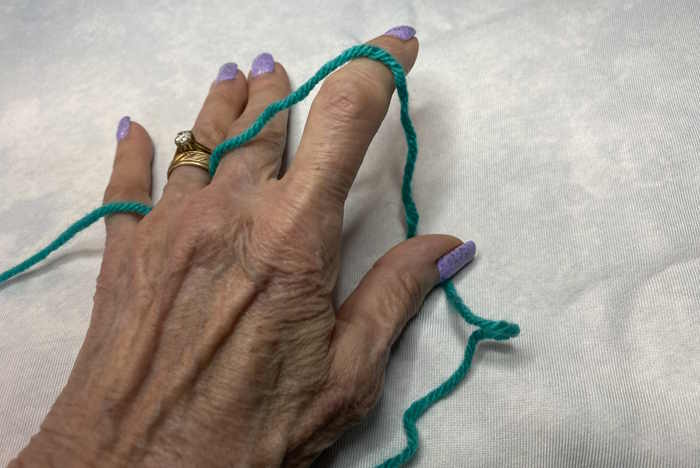
1. How to Hold the Yarn While Crocheting
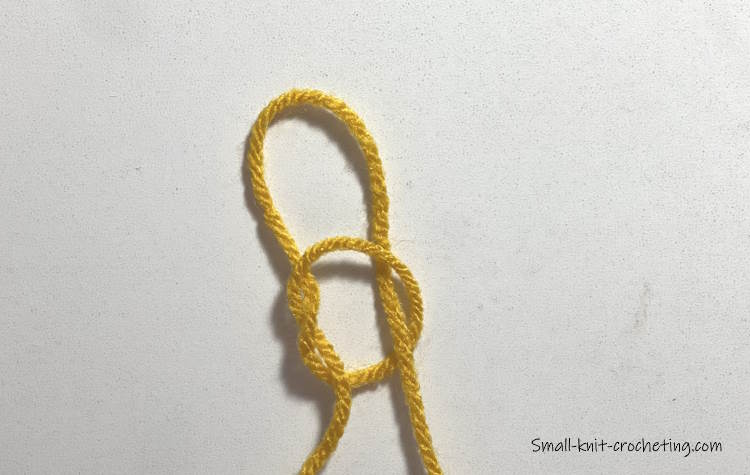
2. How to make the basic slip knot and chain stitch.
Are You Ready to Begin the Single Crochet Stitch Tutorial?
First, let's look at the abbreviation and symbol for the single crochet stitch. The abbreviation for the single crochet stitch is sc or SC. You will see that in written patterns.
In charts, you will identify the single crochet with a symbol that looks like this:
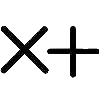 The symbol for the single crochet stitch either looks like an x or a plus sign.
The Craft Yarn Council provides a comprehensive guide for understanding stitch symbols. However, I have some chart symbol instructions as well on this site if you are interested.
Single Crochet Stitch Tutorial: Step-by-Step
The single crochet cross stitch is a fairly dense stitch. This means that the fabric you crochet may be solid and feel stiff. If you prefer that the fabric you create is softer and has a drape, you may prefer to start with a hook that is one size larger than the pattern calls for.

Single Crochet Stitch Tutorial, Step One: Make a slip knot and chain 21.
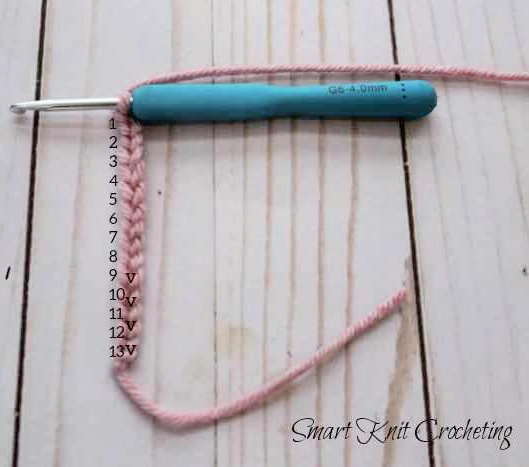
Single Crochet Stitch tutorial Step Two: Make a single crochet stitch in each chain across the row.
- Insert your hook into the second chain from your hook. Remember that the loop on your hook does not count as a stitch.
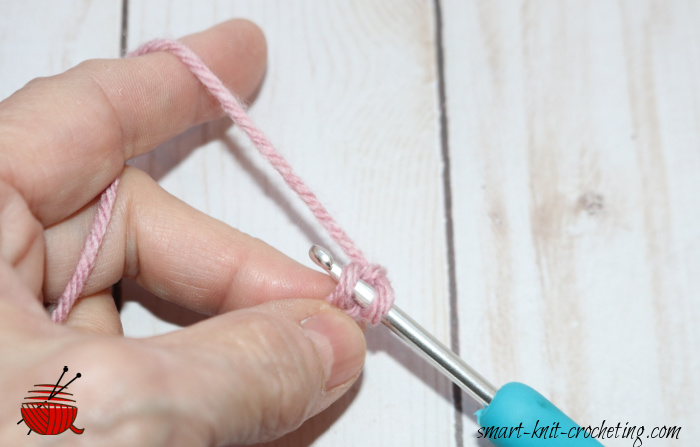 Insert your hook into the second chain from your hook
- Wrap the yarn from the back of your hook and over the front of the hook (yarn over or yo).
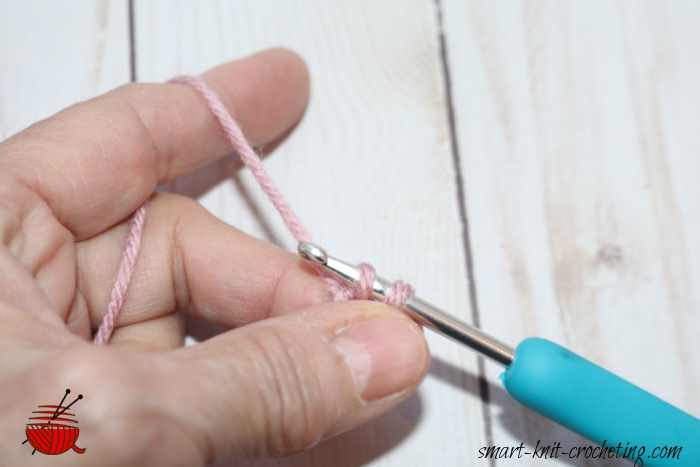 Wrap the yarn from the back of your hook and over the front of the hook
- Pull the yarn through the loop on your hook. Now you have two loops on your hook.
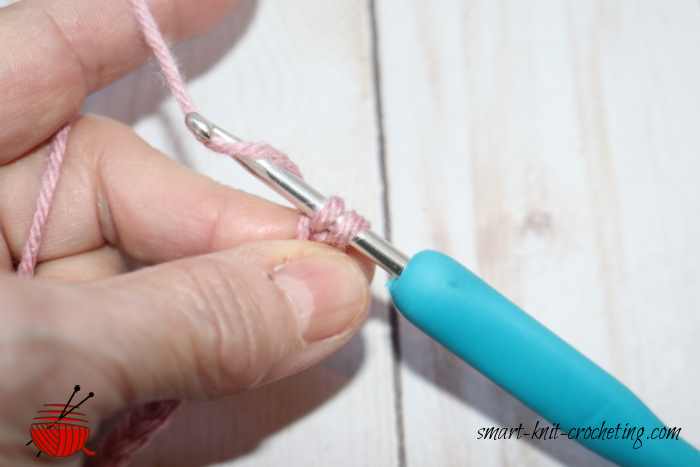 Two loops on the hook. Yarn over again
- Wrap the yarn from the back of your hook again (yo) and pull through both loops on your hook. You just made one single crochet.
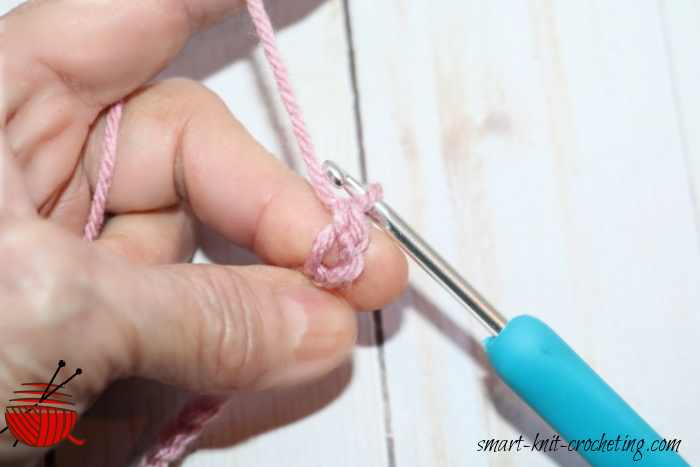 Pull through two loops to finish the first single crochet
- To make the second single crochet, insert your hook into the next chain stitch. Yarn over and pull the loop back through the chain stitch so that you have 2 looks on your hook. Yarn over again and pull through two loops. Continue in this way until you get to the end of the row.
Congratulations, you’ve worked the hardest row on your practice swatch. The next rows will be easier.
Now, let’s count the stitches you just made. After working the row, count again to make sure you still have 20 stitches. If the number changes, it usually means a stitch was added or skipped — and that’s easy to fix once you know what to look for.
Are you having problems getting your hook through the chain stitch? Often if we make our chain too tight, the first row of stitches are difficult to make.
You can either wiggle your hook a little to get into the chain stitch or consider ripping out the chain and then making it slightly looser.
Remember if you are not bringing your stitches to the full diameter of the hook, the stitches will be too tight and will be difficult to work later on.
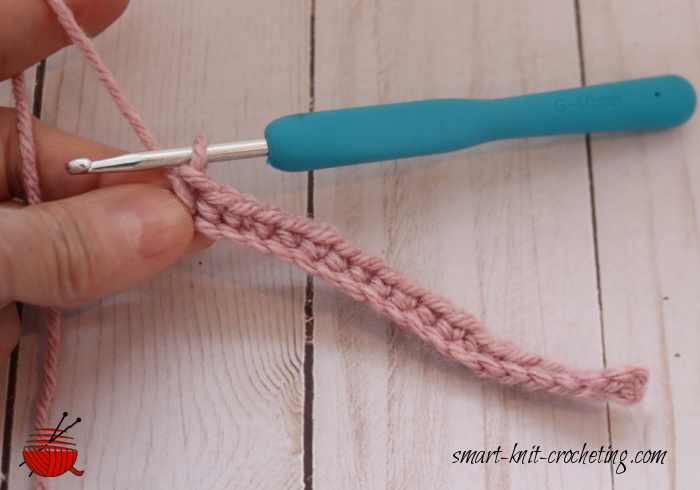 First row of single crochet completed
Single Crochet Stitch Tutorial Step 3: Work Row 2
- Make one chain stitch, and turn your work over so the reverse side is facing you. This time you will be work into the top of the single crochet stitch you just made.
- At the top of the row, you will see the v shapes that you are familiar with when learning the chain stitch. Insert your hok under the first v-shape.
- Yarn over as we did above, pull the loop back through the stitch. Yarn over again and pull through both loops on your hook. You should notice that your hook is going under the v shape. At this point, do not pick up either the front or the back loop of the v-shape. You will learn that some patterns call for picking up only one or the other loops but for now, you will be inserting your hook under both loops.
- Continue making a single crochet stitches in each stitch across the row to you reach the end. You should still have 20 stitches. Chain one and turn your work.
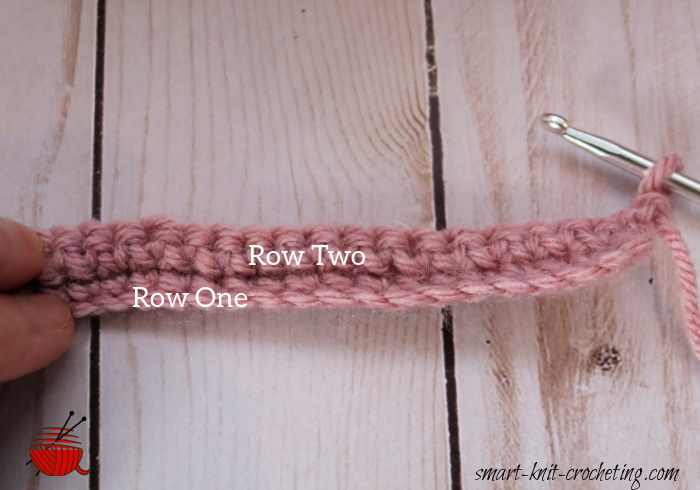 Two completed rows of single crochet. See the label
Repeat this process to create a fabric with single crochet stitches. Remember that practice makes perfect and don’t expect yourself to be an expert with your first try.
My work was awful when I first started, stitches were uneven and I had loops of yarn coming from nowhere. It’s all about getting the feel of the yarn and hook in your hand and learning how to control the tension as the yarn moves slowly across your fingers.
Counting Single Crochet Stitches
Once you've made a few stitches, it's important to recognize what you've made and how to count them:
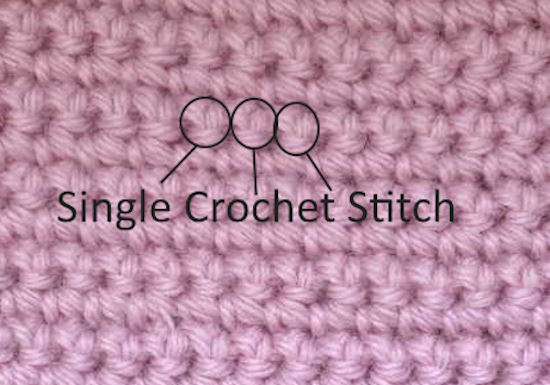 Each single crochet stitch on the right side of the fabric looks like the circled ones.
Check your own fabric and see if you can identify a single crochet stitch, then try to count them across the row.
Once you have done that see if you can identify a row of stitches and count those too.
The photo below shows 6 lines. Each line shows one row, but there is a row between each of the black lines so in this photo, you can see 12 rows of single crochet stitches.
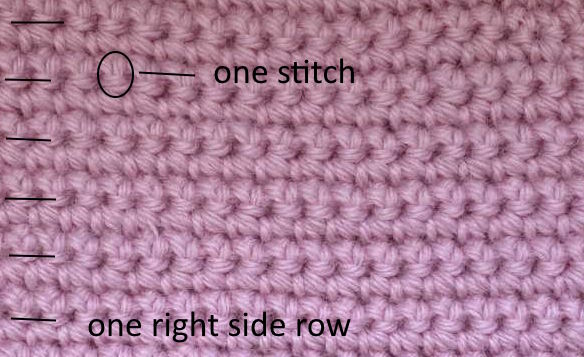 It is easier to identify and count rows on the right side of the fabric. Each line identifies one row of single crochet stitches on the right side. In between the rows of single crochet stitches identified are the rows that show what the single crochet stitch looks like on the other side of the fabric.
US vs UK Crochet Terms (Important!)
As a beginner, you may have encountered some strange terminology. I'm here to clear that up for you. I am a crocheter in the United States so what you read on this site uses U.S. Terms. However, across the "pond" in the UK, you may find the terms slightly different. If you have stumbled on a pattern or tutorial that looks different, and then wondered,
“Why does this look completely different?” — This may be why.
Crochet terminology is written in two systems:
- US Terms
- UK Terms
The stitch called single crochet (sc) in US terms is called double crochet (dc) in UK terms.
Yes — it’s confusing at first. Here’s a quick comparison of some basic crochet stitches that you will encounter:
| US Term (Abbrev.) | UK Term (Abbrev.) | What it means (plain English) |
|---|---|---|
| Chain (ch) | Chain (ch) | The foundation loops you start many projects with. |
| Slip Stitch (sl st) | Slip Stitch (sl st) | A short joining stitch (often used to join rounds or move position). |
| Single Crochet (sc) | Double Crochet (dc) | A short, dense stitch. (This is the big US/UK mismatch.) |
| Half Double Crochet (hdc) | Half Treble (htr) | A medium-height stitch (taller than sc, shorter than dc). |
| Double Crochet (dc) | Treble (tr) | A tall stitch with more drape than sc/hdc. |
| Treble Crochet (tr) | Double Treble (dtr) | A very tall stitch (often used for lacy or open fabrics). |
| Double Treble Crochet (dtr) | Triple Treble (ttr) | An extra-tall stitch (even taller than treble/tr). |
| Yarn Over (yo) | Yarn Over (yo) | Wrap yarn over the hook to create new loops. |
| Gauge | Tension | How big your stitches are (stitches/rows per inch or cm). |
| Fasten Off (FO) | Fasten Off (FO) | Finish the work by cutting yarn and securing the last loop. |
On Smart-knit-crocheting.com, we use US terminology.
If you are following a UK pattern, make sure you check which system it uses before you begin. Most patterns will state this at the top.
Practice the Single Crochet Stitch or make something instead?
You could keep practicing rows of single crochet, and that’s perfectly fine.
But if you’re like most beginners, you’d rather finish something real that is pretty and useful.
This simple dishcloth uses only the single crochet stitch. No complicated shaping. No tricky techniques. Just the stitch you’ve already learned, repeated until you have something useful in your hands.
Finishing your first project builds confidence faster than perfect practice ever will.
P.S. Since I learned to knit and crochet, I have not purchased another dishcloth or washcloth. Homemade ones last longer, make useful additions to your home, and, even better, make great hostess gifts everyone loves.
Single Crochet Dish Cloth Tutorial: FREE Pattern
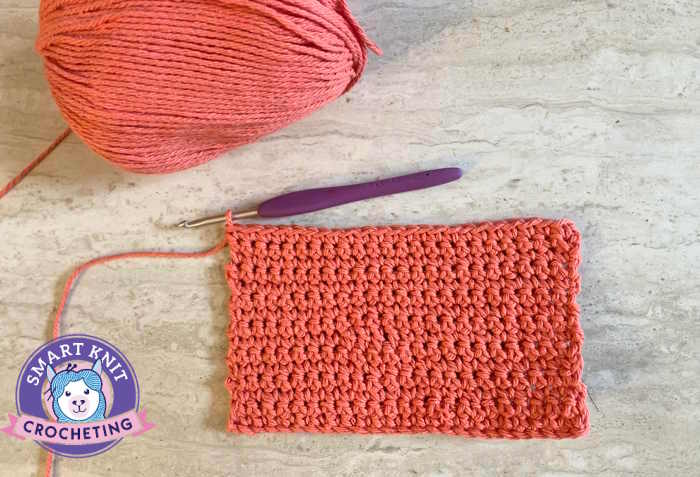
You can make a simple dishcloth that is both beautiful and functional just by practicing your single crochet stitch. Dishcloths are best made with 100% cotton yarn. It’s practical and easy to launder in your washer and dryer. If your stitches are uneven, that’s okay. Dishcloths are forgiving. Cotton softens with washing, and small inconsistencies disappear. You will never see your mistakes!
Skill Level

Gauge
The actual gauge is not important in this project.
Project Notes
All instructions are written in U.S. terms.
Skills Needed for this Plush Yarn Easy Crochet Blanket
- 100% cotton thread number 4 worsted weight
- Size H or 5.0 mm hook
- Scissors
- Tapestry Needle for Weaving in Ends
Instructions
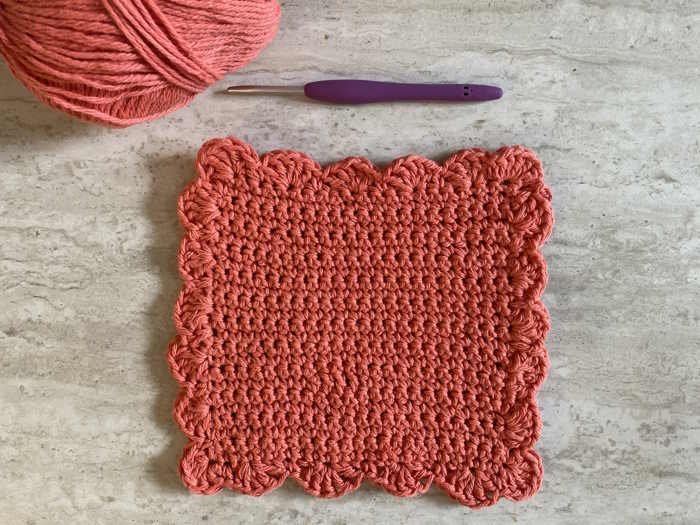
Make a slip knot, then chain 25 stitches. Insert the hook into the second chain from the hook and make a single crochet stitch in each chain across the row. Chain one and turn.
Continue to make a single crochet stitch in each sc across the row. Chain one and turn.
Continue in this pattern until you reach your desired size or 6.5 inches (17 cm).
Count your stitches at the end of each row. You’re aiming for 24.
If you have more, you may have accidentally added one at the beginning or end of the row — that happens often when we’re learning.
If you have fewer, a stitch may have been skipped. Take a look at the edges first — that’s where most beginners lose one.
If you have more than you’ve picked up a stitch somewhere, probably by trying to single crochet in the first stitch instead of the second stitch in the row, or possibly adding one at the end of the row. Less than 24 stitches means that you missed a place to add a sc.
Fasten off. Weave in ends.
Optional:
Shell Stitch Border
If you prefer, you can finish off the dishcloth with a shell stitch border.
To create the border, before fastening off, *create 5 dc in same space, skip one, create one sc in next space, skip one space, create 5 dc in same space.* Repeat * around border.
Single Crochet Stitch Tutorial: Pin for Future Reference


Disclosure:
This post contains affiliate links. If you buy through them, I may earn a small commission at no extra cost to you.
Janice Jones is a Certified Knitting and Crochet Instructor who creates beginner-friendly patterns and tutorials, backed by a 389-page library of practical knitting and crochet content.
Most Popular Pages
Comprehensive Guide to Yarn

All Types of Crochet Stitches
36 Reversible Knit Stitch Glossary
How to Crochet the Second Row
Dog Sweater Patterns
Working with Alpaca Yarn
Free eBooks, Just for You
Get my beginner eBook guides to Knitting and Crocheting, just for signing up for my monthly newsletter.
Choose one or both when you sign up.
About the Author: Please allow me to introduce myself
Janice Jones is a Certified Knitting Instructor and Certified Crochet Instructor through the Craft Yarn Council who focuses on beginner-friendly patterns, stitch guides, and technique tutorials. She has built a library of 389 pages on her website, sharing practical instructions and patterns, and has completed projects ranging from crochet blankets to knit sweaters. You can explore her work on her website. She makes items for Warm Up America and often knits and crochets sweaters for her small dogs.
Thank you for visiting Smart-Knit-Crocheting. I hope this and all of my tutorials will give you the inspiration to continue your knit or crochet journey. For a complete list of all the pages on my site, please visit my table of contents.
I participate in the Amazon Services LLC Associates Program, an affiliate advertising program designed to provide a means for sites to earn advertising fees by advertising and linking to Amazon.com. “As an Amazon Associate I earn from qualifying purchases.” These earnings go towards supporting my website.
Home | Contact | About | Privacy Policy | Disclaimer
I DO NOT SELL ANY PERSONAL INFORMATION FROM THIS WEBSITE. PLEASE SEE MY PRIVACY POLICY FOR MORE DETAILS.
Copyright © 2006-2026 Smart Knit Crocheting. All Rights Reserved
Please Share
Remember, Sharing is Caring