- Home
- How to Crochet (Start Here)
- Understanding Crochet Symbols
Understanding Crochet Symbols: Plus How to Read and Use
Understanding Crochet Symbols by Janice Jones, Last Updated May 30, 2026
Have you ever looked at a crochet chart and thought it resembled a page of ancient hieroglyphics? You're not alone. Many crocheters feel intimidated when they first encounter crochet symbols and chart diagrams. The good news is that crochet symbols are much easier to understand than they appear at first glance.
Unlike written patterns, crochet charts use symbols to show exactly where each stitch belongs. Once you learn a few basic symbols and understand how charts are organized, you'll be able to follow patterns from designers around the world—even when they use a different language.
In this guide, you'll learn:
- How to read crochet charts step by step
- Where to start and which direction to read
- The most common crochet symbols and what they mean
- How to recognize repeats, joins, increases, and decreases
- Common mistakes beginners make when reading charts
Don't worry about memorizing every crochet symbol. Most crocheters keep a chart key nearby while learning. After you've read a few charts, many of the symbols will become instantly recognizable.
If you're eager to start reading crochet charts right away, begin with the quick-start guide below. Then we'll look at the most common crochet symbols and practice reading a chart together.
 Understanding Crochet Symbols
Quick Start: How to Read a Crochet Chart: New to Crochet Charts? Start Here
How to Read A Crochet Chart Worked in Rows
You don't need to memorize dozens of symbols before you can use a crochet chart. There are three main things you should focus on first.
- Find where the chart starts.
- Learn which direction to read.
- Use the legend chart to identify stitches.
Once you understand those three basics, most crochet charts become much easier to follow.

In the photo above of a crochet chart, you will see a chart of symbols that might not make any sense until you decipher it. First, look at the legend to the right. Each stitch is represented by a symbol.
Next, the numbers surrounding the chart tell you in which direction to work. Locate the small square in the lower right hand column of the chart. That is where you begin to work. You will work from the lower right hand column of the chart towards the left until you finish the row. Next, you will move upward on the chart to the next row, which you will follow from left to right across the row. From there, you move up to row three, working from right to left. This is the chart's progression when working in rows.
This may seem odd to westerners who read from top to bottom and left to right, but crochet charts are written exactly as they are worked.
Legends
Depending on the type of software used to create the chart, the symbols can vary slightly. For the purposes of this tutorial, I am using the symbols standardized by the Craft Yarn Council, and the chart was created using a software program called Stitch Fiddle. Other types of charts may look somewhat different, but you can usually figure them out as long as they have a stitch legend.
Using Crochet Stitch Patterns When Working in the Round
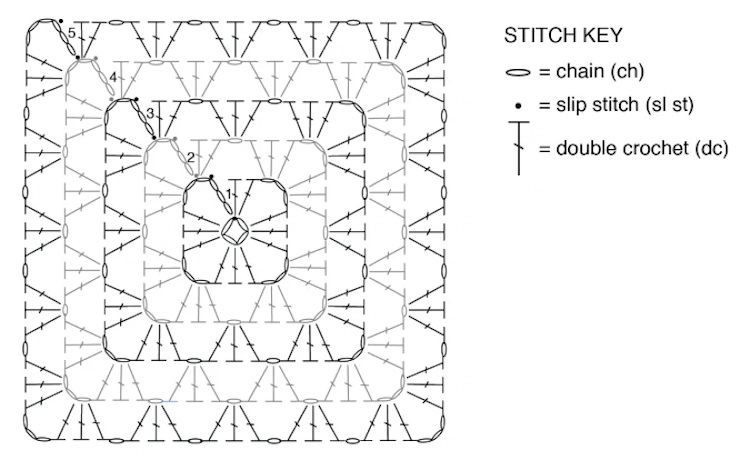 Traditional Granny Square Crochet Chart courtesy of Red Heart Yarn
If your pattern calls for working in the round, where you begin in the center and work outward, the crochet chart may appear a little differently. In this chart for making a Granny Square, the stitches start in the middle and work around counterclockwise. Rather than rows, each round is identified, often with a different color. At the end of the round, the chart will tell you how to connect to the next round.
Understanding the Difference Between US and UK Terms
This is likely one of the biggest frustrations for beginning crocheters. No matter which side of the pond you reside on, you will eventually be confronted by terms that don't match your understanding of reality.
As a beginner, I always recommend identifying the country of origin for your pattern, and most will state something to that effect: "This pattern is written in US Terms."
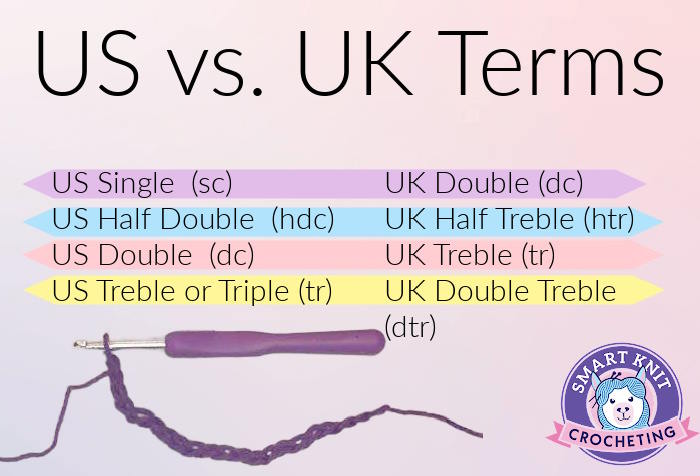
Still, the confusion exists. In the US, a single crochet stitch is called a single crochet, but the same stitch in the UK is called a double crochet. There are many terms that differ between the two countries and confuse crafters. Take a look at the chart below.
What Are Crochet Symbols?
Crochet symbols are graphic representations of stitches used in charted diagrams to illustrate how to complete a crochet project.
Each symbol corresponds to a specific crochet stitch, technique, or instruction. Charts containing these symbols are like visual maps that guide you through the pattern.
Even though they may not have any meaning to you now, you will be an expert by the time you finish reading this post.
Why Learn Crochet Symbols?
- Universal Language: Crochet symbols break language barriers, making international patterns accessible.
- Visual Aid: They represent stitches, which can be easier to follow than written instructions.
- Complex Patterns: Charts make understanding stitch placement and pattern repetition easier for intricate designs.
- Perfect for Visual Learners: If you are a visual learner, this is the way to go: Once you understand the anatomy of the crochet symbol, you will understand that each symbol looks like the stitch it stands for. Crochet diagrams are a visual representation of the finished fabric.
How Long Have Crochet Symbols Been Around
The history of crochet symbols is an interesting journey that parallels the development and globalization of crochet. Here’s an overview of how these symbols came into being and evolved.
19th Century: Illustrations
The origins of crochet symbols can be traced back to the 19th century when crochet began gaining popularity, particularly in Europe. Written instructions were the norm, and they were often lengthy and convoluted.
Patterns included detailed descriptions of each stitch and its placement, making simple designs cumbersome.
Early pattern books sometimes included illustrations to support written instructions. These illustrations were not yet standardized but helped beginners visualize the process. However, they were still relatively rudimentary and not widely adopted.
This is likely the reason why people relied on family, friends and neighbors for hands-on learning.
Mid-20th Century: International Crochet Symbols
The mid-20th century saw increased efforts to standardize crochet terminology and symbols. This period marked the beginning of a more formalized approach to crochet instructions.
Crochet became more popular globally, and the need for a universal language grew.
Organizations such as the Craft Yarn Council of America (later the Craft Yarn Council) started working on standardizing crochet terms and symbols.
European crochet patterns, particularly from countries like Japan and Russia, began incorporating symbols more extensively. These patterns reached a global audience, needing a standard notation system.
1970s and 1980s: Development of Modern Symbols
During this time, Japanese crochet books and magazines significantly developed and popularized crochet symbols. Japanese publishers were some of the first to embrace symbol-based patterns, which were clear and concise, making it easier to follow intricate designs.
Efforts to create an international standard for crochet symbols gained momentum. The International Organization for Standardization (ISO) introduced standardized symbols for crochet stitches, furthering the push for a universal system.
1990s and 2000s: Technological Influence
The Internet revolution helped spread crochet patterns and symbol charts worldwide. Countries that traditionally relied on written instructions began adopting symbol charts. Global crochet communities refined and popularized these symbols, creating a more cohesive and widely understood system.
The rise of digital patterns, online tutorials, and apps brought about greater uniformity in symbol usage. Software like Adobe Illustrator enabled designers to create clean, scalable diagrams, making it easier to produce professional-quality symbol charts.
Current State
Today, crochet symbols are an integral part of the craft and are used in patterns worldwide. The symbols have been largely standardized, though slight variations may still exist depending on regional or publisher-specific practices.
The continued efforts of organizations, designers, and crochet enthusiasts ensure that this visual language is still clear and accessible.
Understanding Crochet Symbols
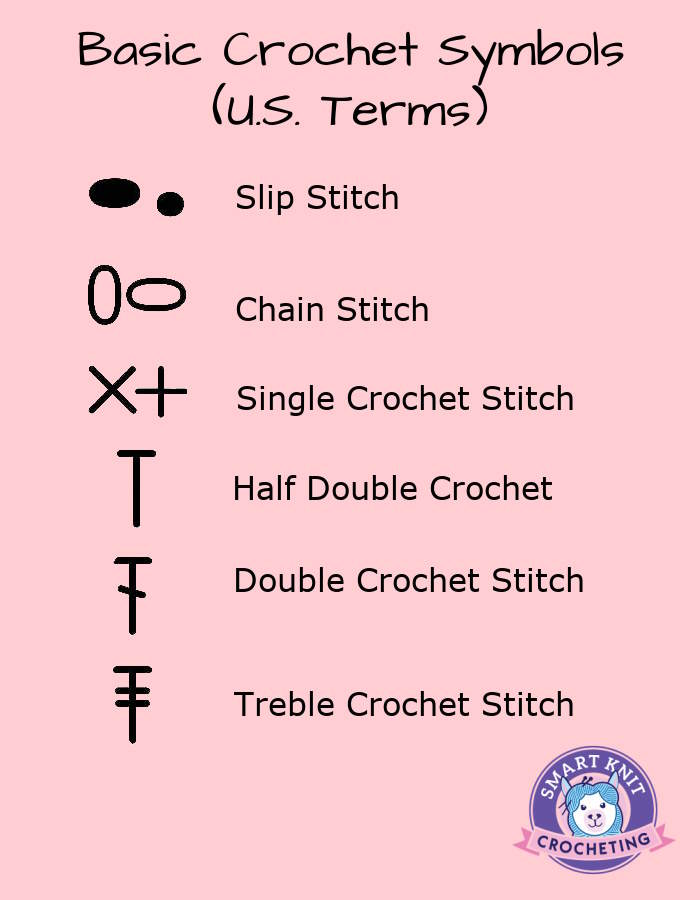
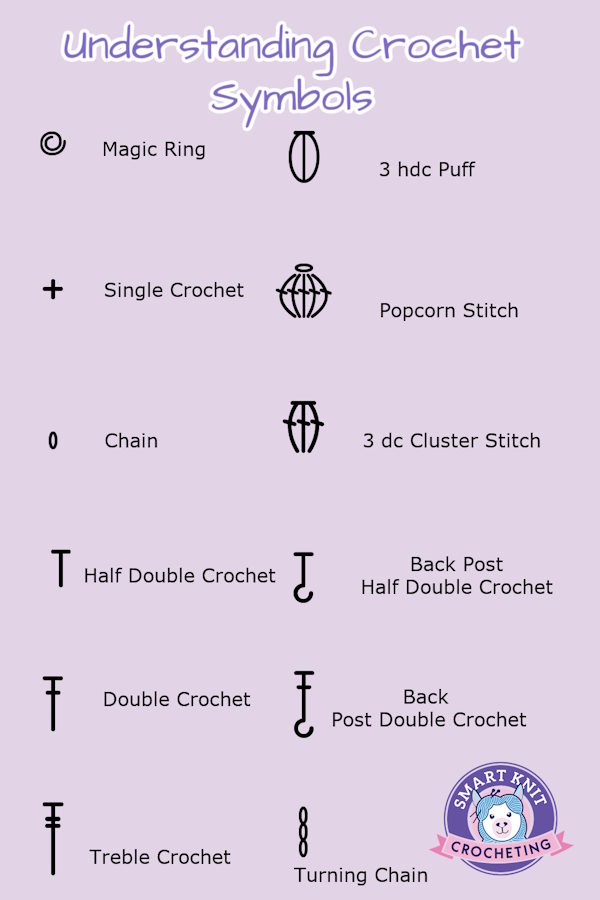
Each basic crochet stitch has a corresponding symbol. Here are a couple examples of those basic stitches.
Beyond Understanding Crochet Symbols: Examining the Anatomy
When I think about the word, anatomy, I think back to high school biology, but here we are examining the different parts of a symbol.
Each symbol can tell you many things if you know what to look for.
- The number of turning chains for each row.
- How to make the stitch (back or front post double crochet)
- Whether to increase or decrease stitches (example: dc3tog)
- Where to make the stitch (work in back or front loop only)
- How to make clusters, puffs, popcorn stitches and others
Studying the Anatomy, Step-by-Step
Let's start with the double crochet stitch. What can this symbol reveal to us? Here are two versions of the double crochet stitch symbols. Both mean the same thing. We know that it is the double crochet because we can see
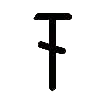 Double Crochet Symbol
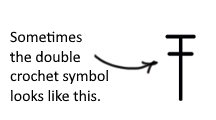 Double Crochet Stitch Symbol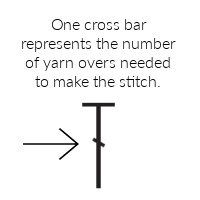
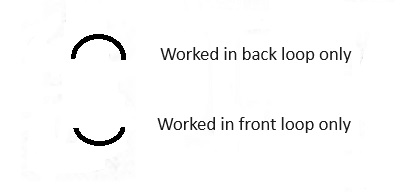
Work in Front or Back Loop Only
Next, let's look what we can do with that same double crochet stitch symbol. If the pattern wants us to work in the front or back loop only, these symbols will appear at the base of the symbol.
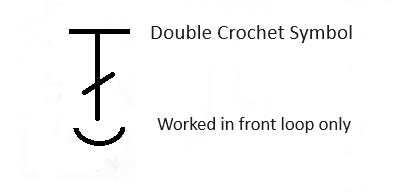
Post Stitches
We know that the double crochet stitch can be a front post only (FPdc) or back post double crochet (BPdc). This is how these stitches would appear in symbol form.
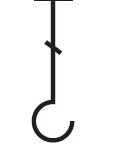 Back Post Double Crochet Symbol
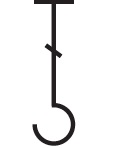 Front Post Double Crochet Symbol
Increases and Decreases (Double Crochet Stitch)
There are symbols that tell us when to increase and decrease and how many to make.
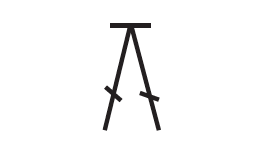 Double Crochet 2 together (DC2tog)
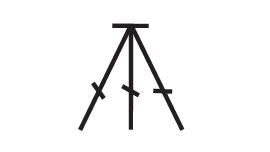 Double Crochet 3 together (dc3tog)
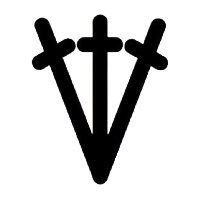 3 Double Crochet Increase
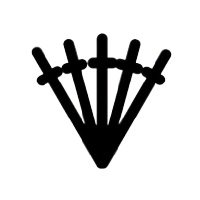 5 Double Crochet Increase
More Speciality Double Crochet Stitches
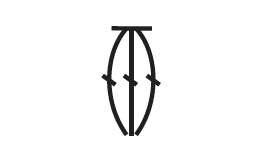 3 Double Crochet Cluster
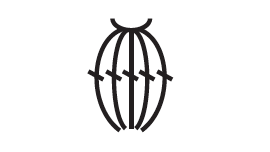 5 Double Crochet Popcorn
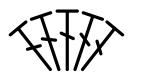 5 Double Crochet Shell Stitch
Understanding Crochet Symbols: More Stitch Pattern Symbols to Know
We've looked at how double crochet stitch symbols look, but that is only the beginning. There are many more. Other basic stitches such as single, half double, and treble stitches can be combined as you saw with the double crochet. Here are a couple more basic symbols you will encounter frequently.
Understanding Crochet Symbols in Charts
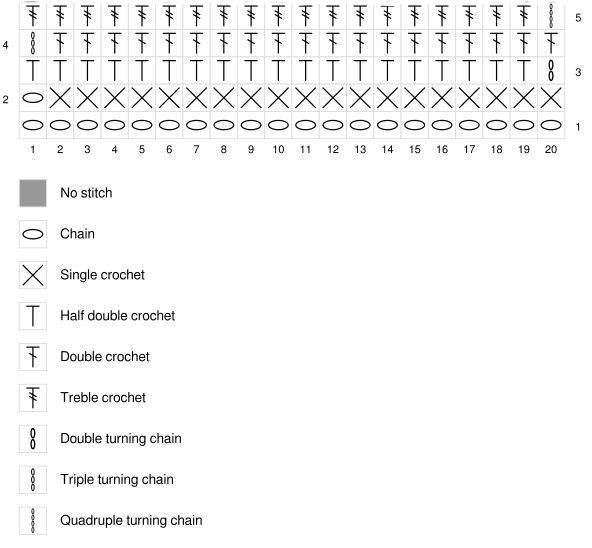
Most crochet charts show symbols worked in either rows or in the round. The first chart is fictional. I doubt that you'd find it in any pattern, but I want to make one that is easy to understand.
Crochet Chart for a Fictitious Pattern
Written Instructions
For more information on the abbreviations used in these written instructions, jump to my page on crochet abbreviations.
In written form, this would look like this:
Ch. 21.
Row 1: Sc across row. Ch. 2 and turn.
Row 2: Hdc across row. Ch 3 and turn.
Row 3: Dc across row. Ch 4 and turn.
Row 4: Tr across row.
Repeat rows 1 - 4 for pattern.
This would be an unusual pattern, but it does show what a crochet chart looks like when using crochet symbols.
Understanding crochet symbols is also very important when working in the round.
Crochet Chart for Traditional Granny Square
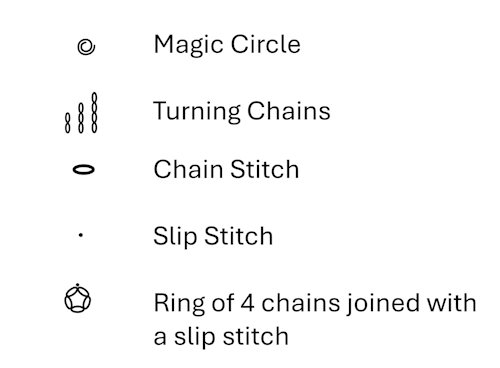
This is a traditional granny square pattern. Look at the very middle of the chart. This one starts with four chain stitches and connected with a slip stitch. The only other stitches in this chart are single and double crochet stitches and chain stitches. Take a look and see if you can identify the different parts of the chart.
Written Instructions
Ch 4, Join with a sl st to the first ch to form a ring.
1st round: Ch 6 (3 dc, 3 ch) 3 times in ring. 2 dc in ring. Join.
2nd round: Sl st in ch-3 space. Ch 6. 3 dc in same ch-3 sp. *Ch 1 (3dc, 3 ch, 3 dc) in next ch-3 space. Repeat from * twice more. Ch 1, 2 dc in first ch-3 sp. Join.
3rd round: Sl-st in Ch-3 sp. Ch 6, 3 dc in same ch-3 sp. *Ch 1, 3 dc in next Ch-3 space. Repeat from * twice more. Ch 1, 3 dc in last ch-1 sp. Ch 1. 2 dc in first Ch-3 sp. Join.
4th and 5th rounds: Sl st in ch-3 space. Ch 6, 3 dc in same Ch-3 sp. *(Ch 1, 3 dc) in each Ch-1 sp to next Ch-3 sp. Ch 1. *(3 dc, ch 3, 3 dc) in next ch 3 sp. Rep from * twice more, then from *to **once, 2 dc in first ch-3 sp. Join. Fasten off.
Conclusion
Understanding crochet symbols is a skill that most beginners need to learn at some point. As patterns get more complicated, a picture or chart makes instructions easier to understand. Charts are especially beneficial for visual learners.
Symbols are not hard to understand if you break them down into their parts. You may feel as though you need to memorize these symbols, but that is not necessary as most charts also come with a key and most stitches can be deciphered by remembering those "anatomy" lessons.
So grab some yarn and a hook and practice some stitches using crochet symbols.
Understanding Crochet Symbols: Pin for Future Reference
Disclosure:
This post contains affiliate links. If you buy through them, I may earn a small commission at no extra cost to you.
Janice Jones is a Certified Knitting and Crochet Instructor who creates beginner-friendly patterns and tutorials, backed by a 389-page library of practical knitting and crochet content.
Most Popular Pages
Comprehensive Guide to Yarn

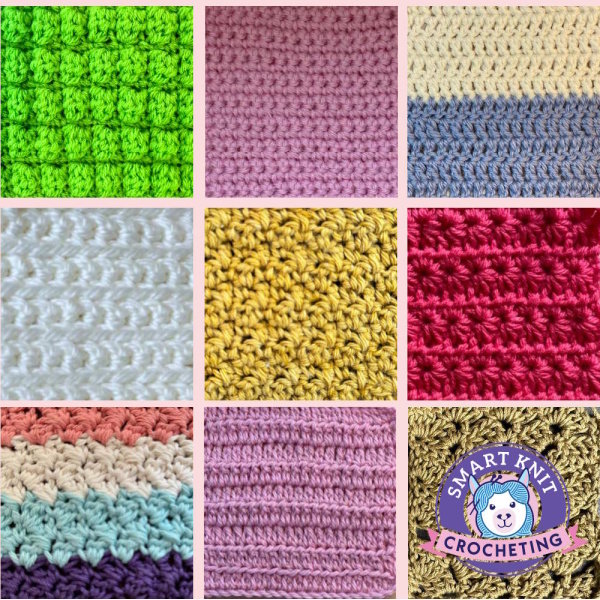
All Types of Crochet Stitches
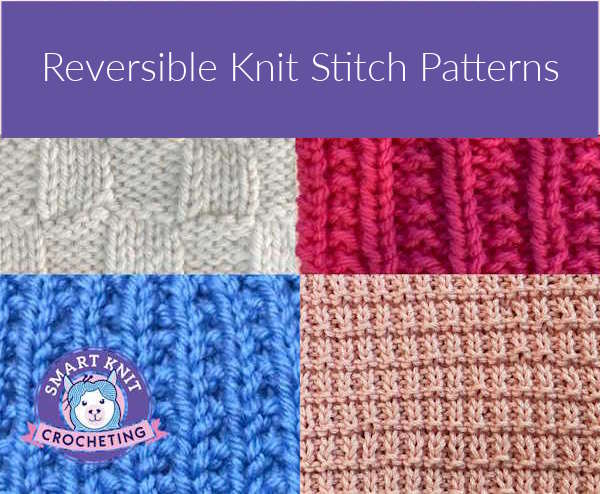
36 Reversible Knit Stitch Glossary
How to Crochet the Second Row
Dog Sweater Patterns
Working with Alpaca Yarn
Free eBooks, Just for You
Get my beginner eBook guides to Knitting and Crocheting, just for signing up for my monthly newsletter.
Choose one or both when you sign up.
About the Author: Please allow me to introduce myself
Janice Jones is a Certified Knitting Instructor and Certified Crochet Instructor through the Craft Yarn Council who focuses on beginner-friendly patterns, stitch guides, and technique tutorials. She has built a library of 389 pages on her website, sharing practical instructions and patterns, and has completed projects ranging from crochet blankets to knit sweaters. You can explore her work on her website. She makes items for Warm Up America and often knits and crochets sweaters for her small dogs.
Thank you for visiting Smart-Knit-Crocheting. I hope this and all of my tutorials will give you the inspiration to continue your knit or crochet journey. For a complete list of all the pages on my site, please visit my table of contents.
I participate in the Amazon Services LLC Associates Program, an affiliate advertising program designed to provide a means for sites to earn advertising fees by advertising and linking to Amazon.com. “As an Amazon Associate I earn from qualifying purchases.” These earnings go towards supporting my website.
Home | Contact | About | Privacy Policy | Disclaimer
I DO NOT SELL ANY PERSONAL INFORMATION FROM THIS WEBSITE. PLEASE SEE MY PRIVACY POLICY FOR MORE DETAILS.
Copyright © 2006-2026 Smart Knit Crocheting. All Rights Reserved
Please Share
Remember, Sharing is Caring