- Home
- Baby Sweater
- Baby Sweater Size Chart
Baby Sweater Size Chart: Measurements, Fit & Sizing Tips
Choosing the right size is one of the biggest challenges when knitting or crocheting a baby sweater. Babies grow quickly, sizing labels vary, and patterns often rely on age ranges that don’t reflect real measurements.
This baby sweater size chart is designed to give you a reliable starting point. More importantly, it explains how to use the chart, how much ease to allow, and how to choose the best size when knitting a baby sweater—especially if it’s a gift.
If you’re new to making baby sweaters, you may also want to start with our complete baby sweater guide, which walks through construction styles, yarn choices, and finishing techniques step by step.
| Baby Size | Approx. Age | Chest Circumference | Sweater Length | Sleeve Length |
|---|---|---|---|---|
| Preemie | 0–2 months | 12–14 in (30–36 cm) | 8–9 in (20–23 cm) | 6–7 in (15–18 cm) |
| Newborn | 0–3 months | 14–16 in (36–41 cm) | 9–10 in (23–25 cm) | 7–8 in (18–20 cm) |
| 3–6 Months | 3–6 months | 16–18 in (41–46 cm) | 10–11 in (25–28 cm) | 8–9 in (20–23 cm) |
| 6–9 Months | 6–9 months | 18–19 in (46–48 cm) | 11–12 in (28–30 cm) | 9–10 in (23–25 cm) |
| 9–12 Months | 9–12 months | 19–20 in (48–51 cm) | 12–13 in (30–33 cm) | 10–11 in (25–28 cm) |
| 12–18 Months | 12–18 months | 20–21 in (51–53 cm) | 13–14 in (33–36 cm) | 11–12 in (28–30 cm) |
| 18–24 Months | 18–24 months | 21–22 in (53–56 cm) | 14–15 in (36–38 cm) | 12–13 in (30–33 cm) |
How to Measure a Baby for a Sweater
If you have access to the baby (or one of their sweaters), measuring directly is always best.
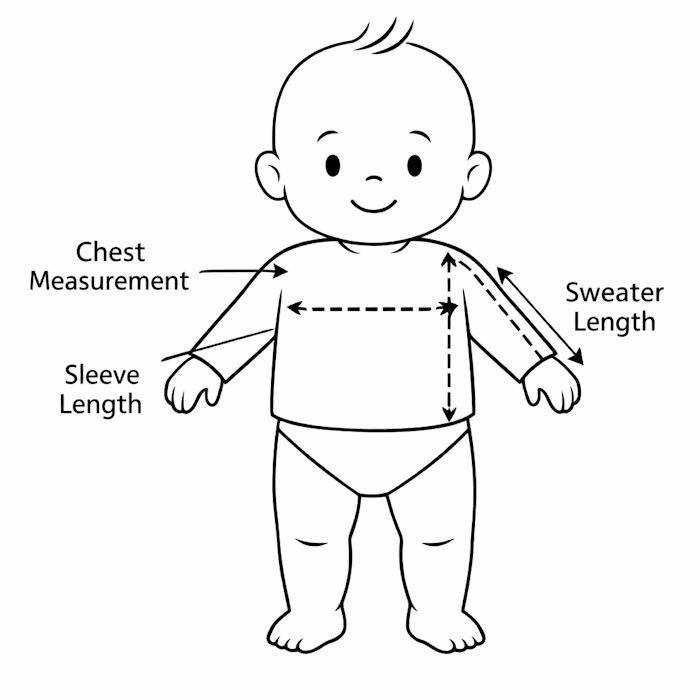
Key measurements to focus on:
- Chest circumference – the most important measurement
- Sweater length – from shoulder to hem
- Sleeve length – from underarm or shoulder, depending on construction
No baby available?
Use a well-fitting sweater that the baby already wears:
- Lay it flat without stretching
- Measure across the chest and double it
- Measure body and sleeve length
This method is often more accurate than relying on age-based sizing alone.
NOTE: This method works just as well if you are measuring for an adult sweater and you don't have access to the person, but you do have access to a well-fitting sweater. This is helpful if you want the sweater to be a surprise gift.
Baby sweater sizes are not universal
Unlike adult clothing (which at least pretends to be standardized), baby garment sizing is largely conventional rather than regulated. Most systems are based on local clothing norms rather than an international standard.
That means when you knit or crochet from an overseas pattern, you may encounter different sizing logic even if the age label looks familiar.
Common Baby Sizing Systems that Knitters/Crocheters Encounter
Age-based sizing (most common worldwide)
Used in:
- 🇺🇸 United States
- 🇨🇦 Canada
- 🇬🇧 United Kingdom
- 🇦🇺 Australia
Examples:
- Newborn
- 0–3 months
- 3–6 months
- 6–12 months
Important:
The age label may be the same, but the actual measurements may differ slightly between countries or designers.
Measurement-based sizing (more common in European patterns)
Used frequently in:
- 🇩🇪 Germany
- 🇫🇷 France
- 🇳🇱 Netherlands
- 🇸🇪 Scandinavia
Instead of age labels, patterns may list:
Chest circumference (cm)
Body length (cm)
Height of child (cm)
Example:
Size: 62 cm / 68 cm / 74 cm
This refers to the child’s height, not the sweater length.
Height-based systems (very common in European baby patterns)
Many European patterns size babies by total body height, such as:
- 56 cm
- 62 cm
- 68 cm
- 74 cm
- 80 cm
These roughly correspond to:
- 56 cm ≈ newborn
- 62 cm ≈ 0–3 months
- 68 cm ≈ 3–6 months
But again, this is approximate, not exact.
Knit vs crochet differences across regions
Regional differences matter even more in crochet patterns because:
- Crochet has less stretch
- European patterns often assume a precise gauge
- U.S. patterns may be more forgiving with ease
When crocheting from an international pattern, accurate gauge swatching becomes especially important.
Practical advice for using international baby sweater patterns
- Find the finished chest measurement
- Compare it to their baby sweater size chart
- Size up or down as needed
- Adjust needle or hook size to match gauge
If measurements aren’t listed, it’s reasonable to:
- Measure the schematic
- Email the designer
- Or choose a different size based on construction math
| US Size (Approx.) | US Age Label | European Size (Height) | Baby Height | Typical Chest Circumference |
|---|---|---|---|---|
| Preemie | Preemie | 50 | 19–20 in (48–50 cm) | 12–14 in (30–36 cm) |
| Newborn | 0–3 months | 56 | 21–22 in (53–56 cm) | 14–16 in (36–41 cm) |
| 0–3 Months | 0–3 months | 62 | 23–24 in (58–62 cm) | 15–17 in (38–43 cm) |
| 3–6 Months | 3–6 months | 68 | 25–26 in (63–68 cm) | 16–18 in (41–46 cm) |
| 6–9 Months | 6–9 months | 74 | 27–29 in (69–74 cm) | 18–19 in (46–48 cm) |
| 9–12 Months | 9–12 months | 80 | 30–31 in (75–80 cm) | 19–20 in (48–51 cm) |
| 12–18 Months | 12–18 months | 86 | 32–34 in (81–86 cm) | 20–21 in (51–53 cm) |
| 18–24 Months | 18–24 months | 92 | 35–36 in (87–92 cm) | 21–22 in (53–56 cm) |
Baby sizes are not universal — measurements are.
A baby sweater size chart works across countries only when knitters focus on chest size, length, and ease rather than age labels.
How Sweater Schematics Help With Sizing
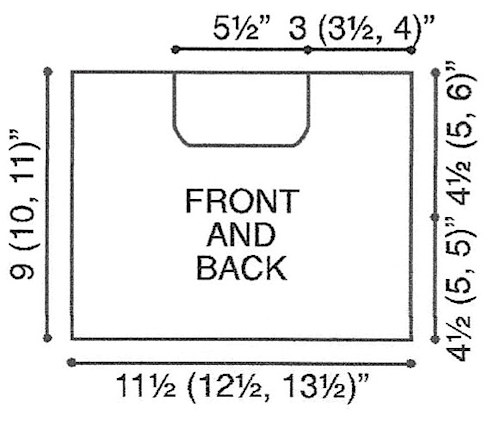
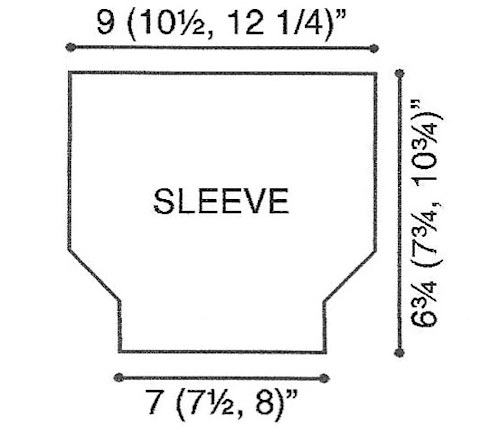
Many knitting and crochet patterns include a sweater schematic, which is a simple line drawing showing the finished garment measurements.
Schematics are especially helpful when:
- A pattern uses unfamiliar sizing (such as European height-based sizes)
- You are comparing multiple patterns
- The age label doesn’t match your size chart expectations
By comparing the schematic’s finished chest width, body length, and sleeve length to a baby sweater size chart, you can choose the best size even when sizing systems differ.
If you’re unsure how to read or use a sweater schematic, our complete baby sweater guide explains how schematics relate to construction styles and fit.
Why Baby Sweater Sizes by Age Are Unreliable
Age labels are convenient, but they’re also misleading.
Babies of the same age can vary dramatically due to:
- Growth spurts
- Birth weight and length
- Genetics
- Premature vs full-term birth
One six-month-old may comfortably wear a 12-month sweater, while another still fits into a 3-month size. This is why measurements matter more than age when choosing a baby sweater size.
How Much Ease Should a Baby Sweater Have?
Ease is the difference between body measurements and the finished sweater size.
Most baby sweaters use positive ease, meaning the sweater is slightly larger than the baby’s chest.
General ease guidelines
- Cardigans: 1–2 inches of ease
- Pullovers: 2–3 inches of ease
- Layering sweaters: slightly more ease for comfort
Babies need room to move, be dressed easily, and grow into the garment. A sweater with no ease may technically “fit,” but it won’t be comfortable or practical and will definitely make dressing the baby difficult.
Choosing a Size When Knitting a Baby Sweater as a Gift
Gift sweaters are where many knitters feel stuck. When in doubt, size up.
Helpful gift-sizing tips
- Choose the next size up if the baby is near the top of an age range
- Consider the season in which the sweater will be worn
- Favor designs with ribbing, cuffs, or adjustable closures
A slightly oversized sweater is eventually worn. A too-small sweater is rarely worn.
Knit vs Crochet Baby Sweater Sizing
Sizing behaves differently depending on whether you knit or crochet.
Knitted baby sweaters
- More natural stretch
- Slight sizing errors are more forgiving
- Easier to accommodate growth
Crocheted baby sweaters
- Less stretch
- More structure
- Gauge accuracy is critical
When crocheting, pay close attention to gauge and finished measurements. Even a small deviation can significantly affect fit.
Common Baby Sweater Sizing Mistakes
Avoid these frequent issues:
- Relying on age labels alone
- Skipping the gauge swatch
- Forgetting ease
- Using adult sizing logic for baby garments
- Assuming all yarns behave the same
Taking a few extra minutes to confirm measurements can save hours of rework later.
How to Use This Size Chart With Baby Sweater Patterns
This size chart helps you:
- Choose the correct pattern size
- Understand finished measurements
- Decide whether to size up or down
However, sizing charts do not replace pattern instructions. Always:
- Knit or crochet a gauge swatch
- Compare the pattern’s finished measurements to the chart
- Adjust needle or hook size if needed
For a complete walk-through of choosing, knitting, and finishing a baby sweater from start to finish, see our full baby sweater guide.
Frequently Asked Questions About Baby Sweater Sizing
What size baby sweater should I make if I don’t know the baby’s measurements?
What size baby sweater should I make if I don’t know the baby’s measurements?
Use the size chart, choose the next size up, and allow positive ease.
Are baby sweater sizes universal across patterns?
Are baby sweater sizes universal across patterns?
No. Always check finished measurements and gauge for each pattern.
Should I knit a baby sweater bigger so they can grow into it?
Should I knit a baby sweater bigger so they can grow into it?
Yes. A little extra room is usually a good thing, especially for gifts.
Final Note
A baby sweater size chart is a powerful tool—but your judgment as a maker matters just as much. When you understand how sizing, ease, and construction work together, you can choose sizes with confidence and create sweaters that are comfortable, wearable, and loved.
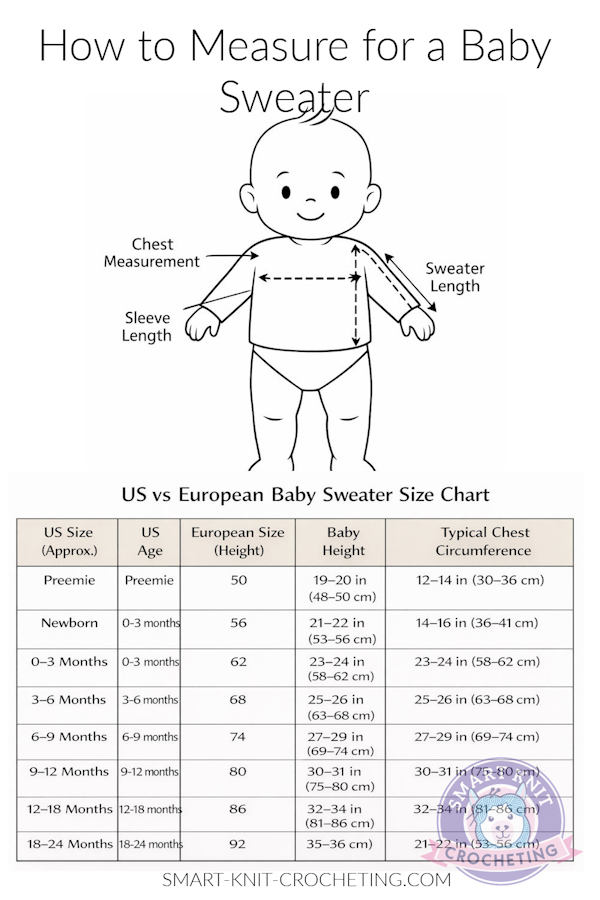
Pin for Future Reference

Disclosure:
This post contains affiliate links. If you buy through them, I may earn a small commission at no extra cost to you.

Janice Jones is a Certified Knitting and Crochet Instructor who creates beginner-friendly patterns and tutorials, backed by a 389-page library of practical knitting and crochet content.
Most Popular Pages
Comprehensive Guide to Yarn

All Types of Crochet Stitches
36 Reversible Knit Stitch Glossary
How to Crochet the Second Row
Dog Sweater Patterns
Working with Alpaca Yarn
Free eBooks, Just for You
Get my beginner eBook guides to Knitting and Crocheting, just for signing up for my monthly newsletter.
Choose one or both when you sign up.
About the Author: Please allow me to introduce myself
Janice Jones is a Certified Knitting Instructor and Certified Crochet Instructor through the Craft Yarn Council who focuses on beginner-friendly patterns, stitch guides, and technique tutorials. She has built a library of 389 pages on her website, sharing practical instructions and patterns, and has completed projects ranging from crochet blankets to knit sweaters. You can explore her work on her website. She makes items for Warm Up America and often knits and crochets sweaters for her small dogs.
Thank you for visiting Smart-Knit-Crocheting. I hope this and all of my tutorials will give you the inspiration to continue your knit or crochet journey. For a complete list of all the pages on my site, please visit my table of contents.
I participant in the Amazon Services LLC Associates Program, an affiliate advertising program designed to provide a means for sites to earn advertising fees by advertising and linking to Amazon.com. “As an Amazon Associate I earn from qualifying purchases.” These earnings go towards supporting my website.
Home | Contact | About | Privacy Policy | Disclaimer
I DO NOT SELL ANY PERSONAL INFORMATION FROM THIS WEBSITE. PLEASE SEE MY PRIVACY POLICY FOR MORE DETAILS.
Copyright © 2006-2026 Smart Knit Crocheting. All Rights Reserved
Please Share
Remember, Sharing is Caring