- Home
- How to Knit
- Knitting Cast On Methods
- German Short Rows
German Short Rows in Knitting: Step-by-Step Tutorial
What are German Short Rows in Knitting? by Janice Jones, Updated September 6, 2026
German short rows are a technique for adding shaping by partially knitting a row, turning your work, and creating a discreet "double stitch" to prevent holes. You may also see them referred to as double-stitch short rows.
This technique is not the only way to make short rows (wrap-and-turn or yarn-over), but in my opinion, it is the easiest and neatest.
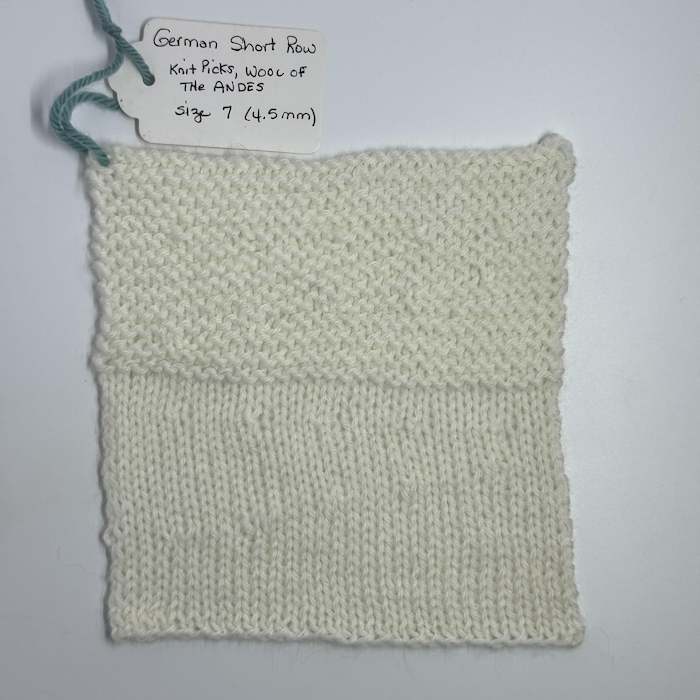
The German Short Rows Method is Known for Being:
1. Cleaner and more invisible than older methods like wrap-and-turn (W&T)
2. Simpler to execute once you understand the “double stitch” trick
3. Useful in both garter and stockinette stitch
Why Use German Short Rows?
- Less bulky than wrap-and-turn
- No need to pick up wraps on the return row
- Looks smooth in both garter and stockinette
- Excellent for garment shaping, sock heels, and curves
When to Use German Short Rows in Knitting
- Sock heels (like the Fish Lips Kiss heel)
- Shoulder shaping in sweaters
- Bust darts for a better fit
- Curved hems and shirt tails
- Shawls and crescent shapes
How to Work German Short Rows in Stockinette
(Step-by-Step on Both the Knit Side and the Purl Side
Working on the Knit Side
1. Work to the point where you want the short row to appear to start.
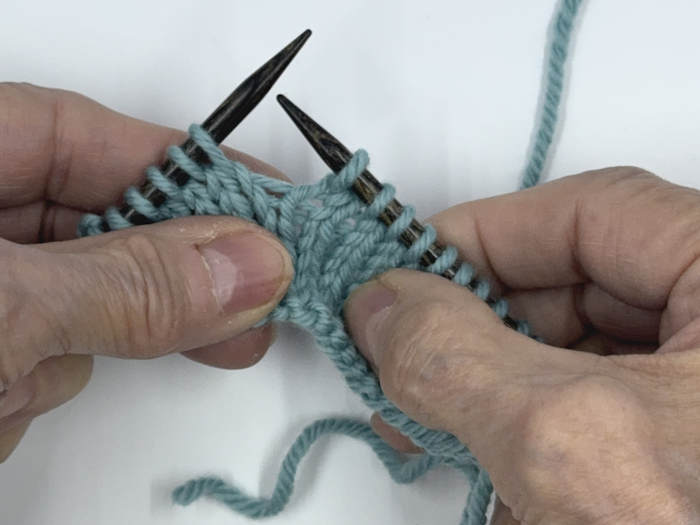
2. Turn your work over so the purl side is facing you. Using the right needle, slip the first stitch on the left needle purlwise onto the right needle.
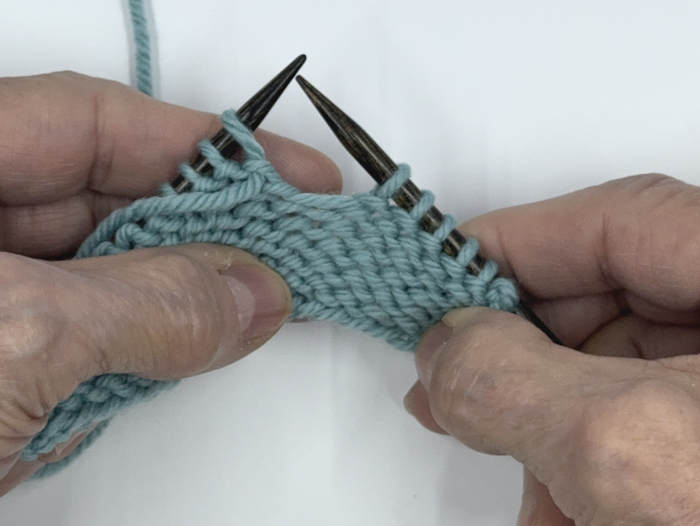
3. Pull the working yarn up and over the top of the needle so it looks like it has two legs (also called a double-stitch). If you are working from a pattern, you might see the abbreviation mds (make double stitch).
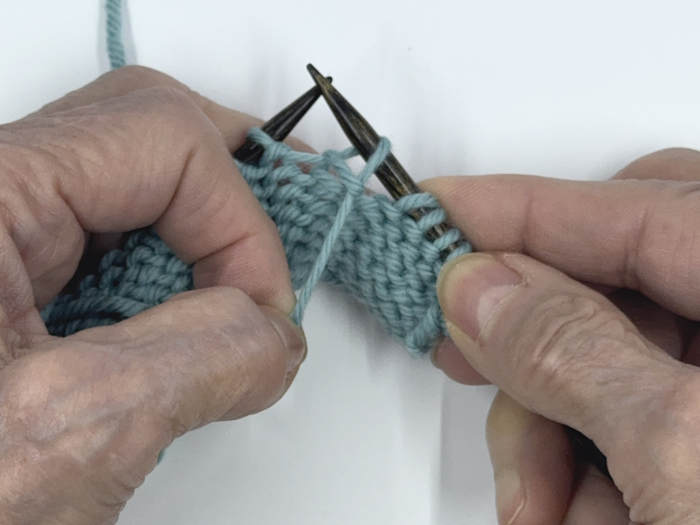
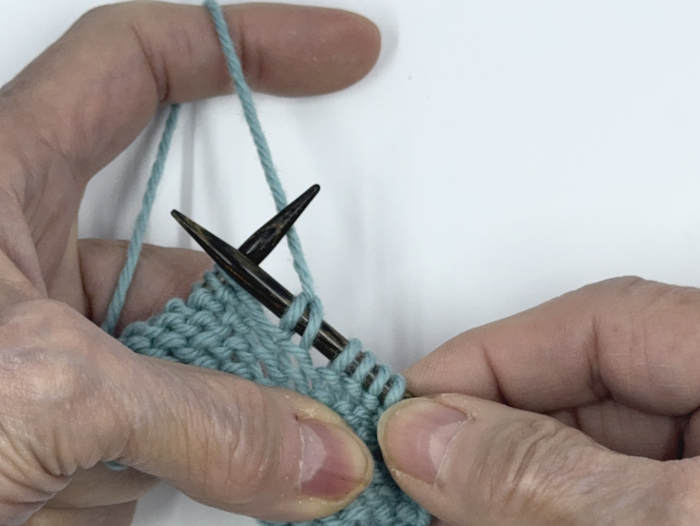
5. Bring the yarn to the front and continue purling to the end of the row or until the pattern states to make a double stitch. Turn your work.
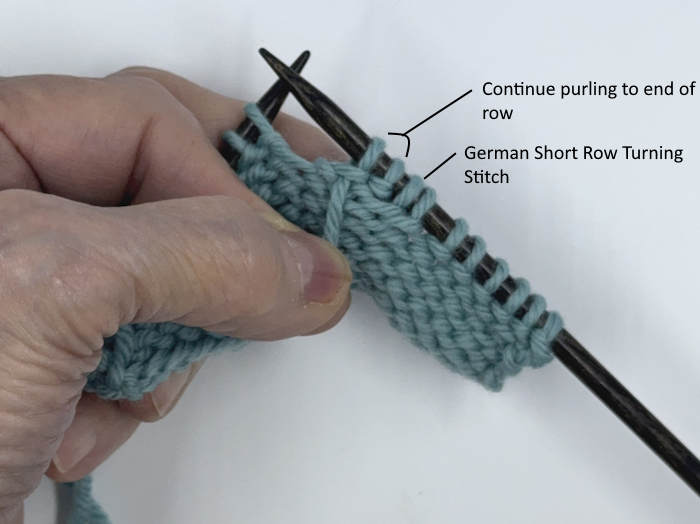
7. To finish, work the next row as you would normally, until you reach the double-stitch and work it as if it were just one stitch.
Working on the Purl Side
1. Purl to the point where you need to turn.
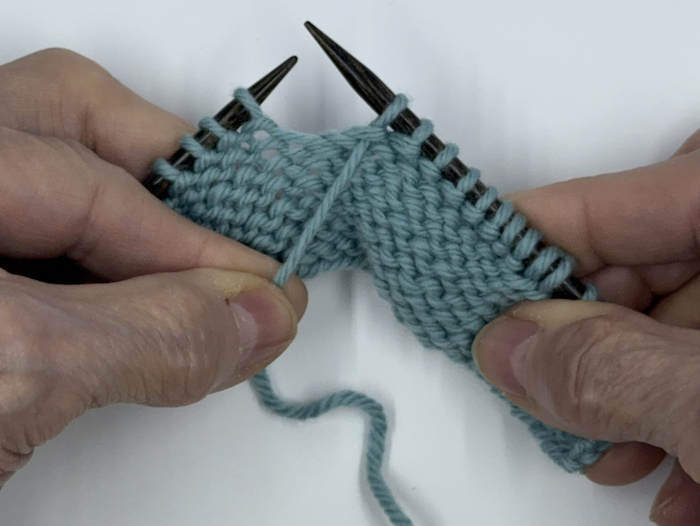
2. Turn the work so the right side is facing you.
3. Move the yarn to the front and then slip the first stitch purlwise to the right needle.
4. Pull the yarn firmly up and over the needle and towards the back. The stitch will look like it has two legs (double-stitch).
5. Bring the yarn to the back and continue to knit to the end of the row.
6. To resolve the stitch, work the next row to where the double-stitch is located. Work the double stitch as if it were one stitch, then continue to the end of the row.
How to Work German Short Rows in Garter (Step-by-Step)
Since you are knitting every row in the garter pattern, your short-row technique will be similar to working in stockinette, but you will treat each row as if you were working the right side.
1. Work to the point where you want the short row to appear.
2. Turn your work over to the reverse side.
3. With the yarn in the front, slip the first stitch purlwise.
4. Pull the working yarn up and over the top of the needle so it looks like it has two legs (double-stitch).
5. Bring the yarn to the back and continue knitting to the end of the row.
6. Repeat the same procedure on both sides of the fabric.
7. To resolve, knit across until you reach the double stitch. Insert your needle under both legs and knit it as if it were one stitch.
Tips for Success with German Short Rows
- Tension matters: Pull the yarn firmly to create a clear double stitch, but not so tight that it distorts the fabric.
- Consistency is key: Always slip stitches purlwise and maintain even tension.
- Mark your turning points: Stitch markers or row counters can help you keep track.
- Practice in swatches: Try it in both stockinette and garter stitch to see how the technique adapts.
- Blocking will smooth out the fabric.
Frequently Asked Questions About German Short Rows
What are German short rows, and why use them?
What are German short rows, and why use them?
They’re a shaping technique that turns mid-row and creates a tidy double stitch to avoid holes. They’re popular because they’re quick, easy to memorize, and look clean in both stockinette and garter—great for sock heels, shoulders, bust darts, and curved hems.
How do I make the double stitch correctly?
How do I make the double stitch correctly?
Turn your work, slip 1 purlwise, then pull the working yarn firmly over the needle so the stitch shows two legs. On the return pass, work both legs together as one stitch. Pull firmly—but not so tight that the fabric puckers.
Do I knit the double stitch as one or two stitches?
Do I knit the double stitch as one or two stitches?
Treat the double stitch as one stitch. Insert the needle through both legs and knit (or purl) them together. This closes the gap at the turning point and maintains your stitch count.
How do I do German short rows in the round?
How do I do German short rows in the round?
Work the same turns and double stitches at the indicated points. Place a marker at each turn so you don’t miss them. When you reach a double stitch, work both legs together as one. The method is identical; you continue around instead of turning at the edge.
Video About German Short Rows
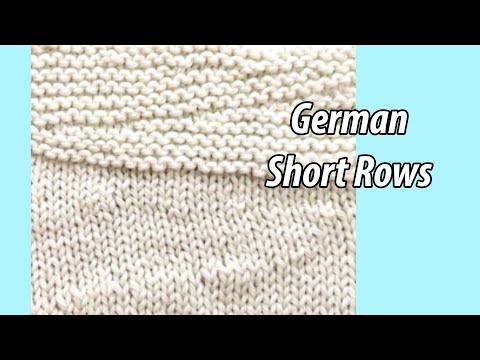
I haven't created a video on how to make a German Short Row, but there are plenty of excellent video tutorials that will help you visualize this technique. Here is a video done by master hand knitter, Heather Storta.
Other Ways to Make Short Rows
| Method | Pros | Cons | Best For |
|---|---|---|---|
| German Short Rows | Clean finish, no gaps, no wrap pick-up | Requires learning the “double stitch” technique | Garments, socks, short-row heels |
| Wrap & Turn | Widely known, works in most patterns | Can leave visible gaps if wraps aren’t hidden well | General use in sweaters and scarves |
| Yarn Over Short Rows | Simple and quick to work | YO can be visible if not disguised properly | Decorative edges, textured designs |
| Japanese Short Rows | Very neat results, minimal bulk | Requires a pin or marker, slower to execute | Lace knitting, precise shaping |
| Shadow Wrap Short Rows | Very clean, no holes, no wrap pickup | More steps, slightly more complex | Garments, invisible shaping in stockinette |
Final Thoughts
German short-row knitting provides a modern and elegant solution for shaping in hand-knit garments. With just a few practice swatches, you’ll find this method to be intuitive, flexible, and impressively seamless.
Whether you’re shaping sock heels or adding bust darts to a sweater, the German short row technique deserves a spot in your knitting toolbox.
Disclosure:
This post contains affiliate links. If you buy through them, I may earn a small commission at no extra cost to you.

Janice Jones is a Certified Knitting and Crochet Instructor who creates beginner-friendly patterns and tutorials, backed by a 389-page library of practical knitting and crochet content.
Most Popular Pages
Comprehensive Guide to Yarn

All Types of Crochet Stitches
36 Reversible Knit Stitch Glossary
How to Crochet the Second Row
Dog Sweater Patterns
Working with Alpaca Yarn
Free eBooks, Just for You
Get my beginner eBook guides to Knitting and Crocheting, just for signing up for my monthly newsletter.
Choose one or both when you sign up.
About the Author: Please allow me to introduce myself
Janice Jones is a Certified Knitting Instructor and Certified Crochet Instructor through the Craft Yarn Council who focuses on beginner-friendly patterns, stitch guides, and technique tutorials. She has built a library of 389 pages on her website, sharing practical instructions and patterns, and has completed projects ranging from crochet blankets to knit sweaters. You can explore her work on her website. She makes items for Warm Up America and often knits and crochets sweaters for her small dogs.
Thank you for visiting Smart-Knit-Crocheting. I hope this and all of my tutorials will give you the inspiration to continue your knit or crochet journey. For a complete list of all the pages on my site, please visit my table of contents.
I participate in the Amazon Services LLC Associates Program, an affiliate advertising program designed to provide a means for sites to earn advertising fees by advertising and linking to Amazon.com. “As an Amazon Associate I earn from qualifying purchases.” These earnings go towards supporting my website.
Home | Contact | About | Privacy Policy | Disclaimer
I DO NOT SELL ANY PERSONAL INFORMATION FROM THIS WEBSITE. PLEASE SEE MY PRIVACY POLICY FOR MORE DETAILS.
Copyright © 2006-2026 Smart Knit Crocheting. All Rights Reserved
Please Share
Remember, Sharing is Caring