- Home
- Comprehensive Guide to Yarn
- Baby Yarn
Baby Yarn Guide for Beginners: Fibers, Weights, Safety & Substitution
by Janice Jones Last updated January 29, 2026
Choosing yarn for a baby project can feel surprisingly confusing. Walk into any yarn store, or browse online, and you’ll see labels that say baby yarn, soft yarn, hypoallergenic, or gentle, often without a clear explanation of what those terms actually mean.
Baby yarn isn’t a single fiber or a regulated category. Instead, it’s a general label for yarns designed to feel soft against delicate skin, wash well, and stay comfortable through frequent use. Some are made from natural fibers, others from synthetics, and many are blends, each with its own strengths and limitations.
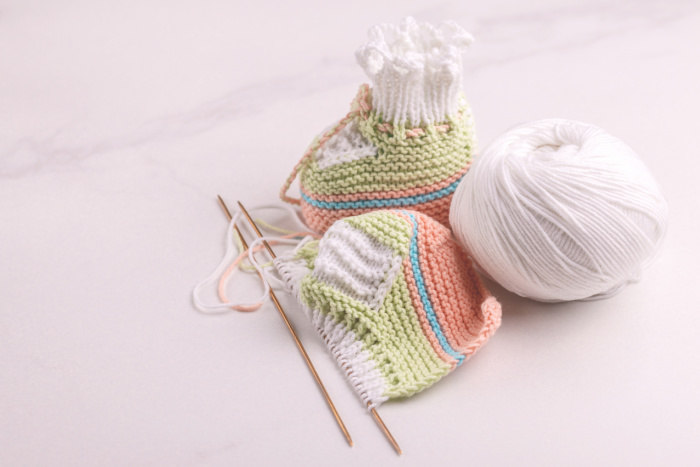
Whether you’re knitting a baby blanket, hat, sweater, or booties, the right yarn choice matters just as much as the stitch pattern. Comfort, durability, washability, and climate all play a role in how the finished piece will look, feel, and hold up over time.
In this guide, you’ll learn what baby yarn really is, how it differs from regular yarn, which fibers work best for different baby projects, and how to choose a yarn that’s practical, comfortable, and appropriate for your needs, without relying on marketing claims or brand labels alone.
This guide is written with beginners in mind, especially those using written knitting or crochet patterns and choosing yarn for baby projects for the first time.
What Is Baby Yarn? (Beginner Explanation)
Baby yarn is a general term used to describe yarns that are designed to feel soft, smooth, and comfortable against delicate skin. It is not a regulated category and does not refer to a single fiber type.
Instead, baby yarns are typically chosen for their gentle texture, low irritation, and practical care qualities, such as ease of washing and durability for frequent use. They are often spun to minimize scratchiness and excessive fuzz, and they are usually available in lighter weights that work well for blankets, garments, and small accessories.
While many yarns are explicitly marketed for babies, the label itself is less important than how the yarn feels, wears, and performs in everyday use.
If you’re new to knitting or crocheting for babies, the sections below will help you choose yarn confidently, even if you’re following a written pattern for the first time.
What Makes Yarn Safe and Comfortable for Babies?
When knitters talk about yarn being “safe” for babies, they are usually referring to comfort, practicality, and how the yarn behaves during everyday use, not to medical or clinical standards. Baby-friendly yarns are typically chosen because they feel gentle against the skin, hold up well to frequent washing, and remain comfortable over time.
Softness is one of the most critical factors. Yarns with a smooth texture and minimal fuzz are less likely to feel scratchy or irritating, especially when used for blankets or garments that come into contact with the neck and face. Tightly spun yarns often perform better than loosely spun or novelty yarns, which can feel rough or shed fibers.
Washability and durability also matter. Baby items need to be cleaned often, so yarns that can be washed easily without losing shape or softness are usually preferred. Yarns that pill excessively, stretch out, or become stiff after washing may feel less comfortable with repeated use.
Breathability and weight also play a role. Lighter-weight yarns and fibers that allow air to circulate are commonly used to help keep projects comfortable in a variety of temperatures. Heavier or very dense yarns may be better suited to cooler climates or outer layers rather than items worn close to the skin.
Finally, fiber behavior is more important than fiber type alone. Both natural and synthetic yarns can work well for baby projects when they are smooth, stable, and suited to the intended use. Choosing yarn based on how it feels, washes, and wears in real life is often more helpful than relying solely on marketing labels.
Is Acrylic Yarn a Good Choice for Baby Projects?
Acrylic yarn is commonly used for baby projects because it is soft, affordable, and easy to care for. Many acrylic baby yarns are designed to feel smooth against the skin and can be machine-washed and dried, which is especially helpful for items that need frequent cleaning.
That said, acrylic behaves differently from natural fibers. It tends to retain heat and does not breathe as well, so it may be more comfortable for blankets, toys, or outer layers than for garments worn close to the skin in warm weather. Acrylic yarns also vary widely in quality, so how the yarn feels and performs after washing matters more than the fiber name alone.
For many knitters and crocheters, acrylic baby yarn is a practical and reliable choice—especially when ease of care and durability are top priorities. Paying attention to softness, weight, and the intended use of the finished item helps ensure the best results.
Heavier Yarn Weights (#5 and #6)
Bulky (#5) and super bulky (#6) yarns are also used for some baby projects, particularly for blankets, outer layers, or quick makes. These heavier weights can produce warm, cushioned fabrics and are often chosen for cold climates or decorative items. However, they are generally less suitable for garments worn close to the skin, as the thicker fabric may feel stiff or overly warm. Simple stitches usually work best at these weights, as complex textures can become bulky or lose definition.
When Bulky Yarn Is Not Ideal
Bulky and super bulky yarns are usually not the best choice for baby clothing, fine details, or lightweight blankets. The thickness can limit drape, reduce breathability, and make seams or edges feel firm. For projects that require flexibility, softness, and everyday comfort, lighter yarn weights are often a better fit.
How Much Baby Yarn Do You Need? (Yardage Guide)
Estimating how much yarn you’ll need for a baby project doesn’t have to be exact to be helpful. Baby items are small, and most patterns fall within predictable ranges based on yarn weight and project type. The estimates below are intended as general guidance and work well for planning, shopping, or substituting yarns.
Actual yarn usage can vary depending on stitch pattern, needle or hook size, gauge, and individual tension, but these ranges will cover the most common baby projects.
The table below shows typical yarn ranges for common baby projects using the most popular yarn weights.
| Project Type | Sport / DK Weight | Worsted Weight | Notes |
|---|---|---|---|
| Baby Blanket (30" × 30") | 800–1,100 yards | 600–900 yards | Texture and stitch pattern can affect yardage |
| Baby Hat (Newborn–6 months) | 150–250 yards | 100–200 yards | Ribbing and folded brims may require more yarn |
| Baby Sweater (0–6 months) | 500–700 yards | 400–600 yards | Cardigans often use slightly more yarn |
| Baby Booties | 50–100 yards | 40–80 yards | One small skein is usually enough |
Best Fibers for Baby Yarn (Pros & Cons)
The fiber used in baby yarn affects how soft the finished project feels, how it handles washing, and how comfortable it is in different climates. No single fiber is perfect for every situation, so the best choice depends on how the item will be used, how often it will be washed, and the temperature it will be worn in.
Some fibers are naturally breathable and lightweight, making them better for warm weather, while others provide insulation and softness for cooler conditions. Blended yarns are especially common for baby projects because they combine the strengths of multiple fibers and reduce common drawbacks like stiffness, stretching, or difficult care.
Understanding how each fiber behaves makes it easier to choose yarn based on real-world use rather than label claims.
This table compares common baby yarn fibers based on comfort, care, and climate suitability.
| Fiber | Why It Can Work Well | When to Avoid | Climate Considerations |
|---|---|---|---|
| Cotton | Breathable, smooth, and easy to wash; good for babies with warm skin or summer projects | Can feel heavy or stiff; limited elasticity may affect garments | Best for warm or hot climates; may feel cool in colder weather |
| Bamboo / Viscose | Very soft with excellent drape; often blended to improve durability | Pure versions may stretch or lose shape; less resilient over time | Ideal for warm climates; stays cool against the skin |
| Superwash Merino Wool | Soft, elastic, and temperature-regulating; machine washable due to treatment | Can pill with heavy use; may be warmer than needed for summer items | Excellent for cooler or variable climates; adapts well to temperature changes |
| Acrylic | Affordable, durable, and easy-care; widely available in baby yarn lines | Less breathable; may retain heat in warm conditions | Better for cooler climates or blankets; less ideal for hot weather garments |
| Blends | Combines softness, durability, and washability; often improves comfort and performance | Quality varies by blend ratio; always check care instructions | Often suitable for a wide range of climates, depending on fiber mix |
Choosing Baby Yarn Colors
In the past, baby yarn colors were often chosen based on tradition, with pink commonly used for girls and blue for boys. While some families still use these color associations, many modern baby projects focus less on gender and more on versatility, personal preference, and practicality.
Today, neutral and flexible color choices, such as soft grays, creams, sage green, beige, yellow, and muted pastels, are especially popular. These colors work well for gifts, shared items, and projects made before a baby is born. They also tend to coordinate easily with a variety of nursery styles and clothing.
When selecting a color, it can be helpful to consider how the item will be used. Lighter colors highlight stitch patterns beautifully, while slightly deeper or mixed tones may hide wear and frequent washing more easily. Ultimately, the best color choice is one that feels thoughtful, usable, and suited to the project rather than tied to a specific expectation.
How Beginners Can Substitute Yarn in Baby Patterns
Most beginner knitters and crocheters follow written patterns, which usually recommend a specific yarn. When that exact yarn isn’t available or doesn’t fit your needs, substituting another baby yarn is both common and acceptable, as long as a few basic guidelines are followed.
The most important thing to match is yarn weight. If a pattern calls for DK-weight baby yarn, choosing another DK-weight yarn will give you the best chance of achieving a similar size and fabric. Substituting a much heavier or lighter yarn can change the finished dimensions and feel of the project.
Next, consider fiber feel and care. For baby projects, substitute yarns that have a similar softness and washability to the original. If a pattern recommends a machine-washable yarn, choosing a substitute with similar care instructions helps ensure the finished item remains practical for everyday use.
Yardage matters more than skein count. Different brands package yarn in different lengths, so always compare total yardage rather than the number of balls or skeins listed in the pattern. This helps avoid running short near the end of a project.
Before starting, it’s a good idea to make a small swatch. Even for simple baby items, a quick test can show whether the fabric feels comfortable and whether the yarn behaves well after washing. This step is especially helpful when substituting fibers or brands.
For beginners, staying close to the original yarn’s weight, texture, and care requirements keeps substitutions stress-free and straightforward. As long as the finished fabric feels soft and comfortable and suits the intended use, your substitute yarn is likely a good choice.
Quick Yarn Substitution Checklist for Baby Patterns
☐ Match the yarn weight listed
in the pattern
☐ Choose a yarn with similar softness and texture
☐ Compare total yardage, not skein count
☐ Check that care instructions are practical
☐ Make a small swatch if you are unsure
Read more about Yarn Substitutions.
Why Blends Often Work Best for Baby Projects
Blended baby yarns, such as cotton-acrylic, bamboo-cotton, or superwash wool blends, are popular because they balance comfort with practicality. Blends often improve softness, reduce stiffness, add durability, and make yarn easier to wash and maintain. For many baby projects, a well-chosen blend provides a more reliable everyday fabric than a single-fiber yarn.
Common Mistakes When Choosing Baby Yarn
Choosing yarn for baby projects is often more complicated than it looks, especially for newer knitters and crocheters. Many common mistakes stem from relying on labels or assumptions rather than on how the yarn feels and how it will look after washing and wearing.
Assuming “baby yarn” is always the best choice.
Yarn labeled as baby yarn is often soft and gentle, but the label alone does not guarantee the best result for every project. Some regular yarns can work just as well, or better, when they are smooth, comfortable, and easy to care for. Evaluating the yarn itself is more reliable than relying on the label name.
Choosing yarn that is too bulky
Heavier yarn weights may seem appealing because they work up quickly, but bulky and super bulky yarns can create stiff fabrics with limited drape. These weights are usually better suited for blankets or outer layers than for garments worn close to the skin.
Ignoring wash and care requirements
Baby items need frequent cleaning. Choosing yarn that requires special care or hand washing can quickly become impractical. Yarns that lose softness, stretch, or pill excessively after washing may not hold up well over time.
Overlooking climate and season
A yarn that feels comfortable in one climate may not work as well in another. Dense or heat-retaining fibers can feel too warm in hot weather, while very lightweight yarns may not provide enough warmth in cooler conditions. Matching the yarn to the environment is an important but often overlooked step.
Using fuzzy or novelty yarns
Yarns with heavy texture, halos, or decorative elements can feel rough, shed fibers, or obscure stitch definition. Smooth, evenly spun yarns are usually a better choice for baby projects, especially those worn close to the face.
Not testing the yarn first
Skipping a small swatch or wash test can lead to surprises later. Even a quick sample can reveal how the yarn feels against the skin, how it drapes, and how it behaves after washing—information that labels alone cannot provide.
Common Mistakes to Avoid When Choosing Baby Yarn
- Relying only on the “baby yarn” label instead of how the yarn actually feels and performs
- Choosing bulky or super bulky yarns for garments worn close to the skin
- Ignoring wash and care instructions for items that will need frequent cleaning
- Overlooking climate and season when selecting fiber and yarn weight
- Using fuzzy, novelty, or highly textured yarns that may shed or feel rough
- Skipping a small swatch or wash test before starting the project
Do Baby Yarns Need Safety Certifications?
Some yarns include safety or sustainability certifications on their labels, which can be helpful for knitters who want additional reassurance. However, certifications are not required for a yarn to be suitable for baby projects, and many commonly used baby yarns do not carry them.
Understanding what these certifications mean—and what they don’t—can help you decide whether they matter for your project.
OEKO-TEX® Standard 100
OEKO-TEX® Standard 100 is a testing and certification program that indicates the yarn has been tested for certain harmful substances and meets established safety limits for textile products. When used on baby yarn, it generally means the finished fiber has been tested and found suitable for close contact with the skin.
This certification focuses on chemical safety, not softness, yarn quality, or performance. A yarn can be OEKO-TEX® certified and still feel stiff or uncomfortable, so comfort and washability should still be evaluated separately.
GOTS (Global Organic Textile Standard)
GOTS certification applies to organic fibers, such as organic cotton or wool, and covers the entire production process, from raw materials to processing and labeling. It is primarily a sustainability and environmental standard.
While some knitters prefer GOTS-certified yarns for environmental or ethical reasons, this certification does not automatically mean the yarn will be softer, easier to wash, or better suited for every baby project.
Are Certifications Necessary for Baby Projects?
Certifications can offer peace of mind, but they are optional, not essential. Many baby blankets, garments, and accessories are made with yarns that lack formal certification but are soft, washable, and comfortable for everyday use.
For most beginners, focusing on:
- yarn weight
- fiber behavior
- washability
- overall feel
is more important than whether a yarn carries a specific certification.
How to Use Certifications as a Beginner
If you see a certification on a yarn label, think of it as additional information, not a requirement. Certifications can support your decision, but they should not replace practical considerations like softness, durability, and how the yarn performs after washing.
Choosing yarn that feels good, works for your climate, and fits your pattern will usually lead to the best results, certified or not.
For makers selling baby items, certifications can offer additional buyer reassurance, but are not required for selling handmade baby projects.
Baby Yarn FAQs
What yarn weight is easiest for beginners to make baby items?
What yarn weight is easiest for beginners to make baby items?
Worsted and DK because these two weights are the easiest to knit with for beginners. You might think that chunky or bulky yarn is easy and fast, but for beginners just trying to master knit and purl stitches, working with large needles and thick yarn is not as easy as it looks. Choose a “middle-of-the-road yarn weight for ease in knitting, even though it might take a few extra hours to complete the project.
Is baby yarn only for babies?
Is baby yarn only for babies?
No. Baby yarn can be used for projects for all ages. It is often chosen for its softness, smooth texture, and easy care, making it suitable for lightweight scarves, charity projects, and items worn close to the skin. The label describes how the yarn is intended to feel and perform, not who must use it.
Is wool safe for newborns?
Is wool safe for newborns?
Soft wools, such as superwash merino wool, are commonly used for baby projects when they are smooth, well-spun, and comfortable against the skin. Superwash merino is treated to be machine washable, making it more practical for baby items. As with any fiber, comfort and proper care matter more than the fiber name alone.
Remember that some folks are allergic to wool products, so keep that in mind when deciding which fiber to use.
Can babies be allergic to yarn?
Can babies be allergic to yarn?
True fiber allergies are uncommon, but babies can react to textures that feel rough, stiff, or irritating. Choosing smooth, soft yarns and avoiding fuzzy or scratchy fibers can help improve comfort. If you are unsure, testing a small sample for softness and washability is a practical step.
Is organic yarn necessary for baby projects?
Is organic yarn necessary for baby projects?
Organic yarn is not required for most baby projects. Many non-organic yarns are soft, comfortable, and widely used for baby items. Factors such as fiber type, washability, and overall feel are often more important than whether the yarn is labeled organic.
Baby Yarn: Pin for Future Reference

Conclusion
Baby yarn doesn’t have to be mysterious or intimidating. At its core, it’s simply yarn chosen for comfort, softness, and everyday practicality. There is no single “best” baby yarn, only the best choice for the specific project, climate, and care needs you’re working with.
By understanding fiber types, yarn weight, washability, and how different yarns behave in real use, you can confidently choose materials that feel good, wear well, and suit the purpose of your project. In many cases, a thoughtfully selected regular yarn can work just as well as one explicitly labeled for babies.
Taking the time to choose the right yarn helps ensure that your handmade baby items are not only beautiful, but also comfortable, durable, and easy to care for—qualities that matter far more than what’s printed on the label.
Once you’ve chosen your yarn, you can focus on the enjoyable part: knitting or crocheting something made with care, intention, and confidence—one stitch at a time.
Disclaimer: This information is provided for general educational purposes only and reflects common yarn-craft practices. It is not intended as medical or health advice.
Disclosure:
This post contains affiliate links. If you buy through them, I may earn a small commission at no extra cost to you.
Janice Jones is a Certified Knitting and Crochet Instructor who creates beginner-friendly patterns and tutorials, backed by a 389-page library of practical knitting and crochet content.
Most Popular Pages
Comprehensive Guide to Yarn

All Types of Crochet Stitches
36 Reversible Knit Stitch Glossary
How to Crochet the Second Row
Dog Sweater Patterns
Working with Alpaca Yarn
Free eBooks, Just for You
Get my beginner eBook guides to Knitting and Crocheting, just for signing up for my monthly newsletter.
Choose one or both when you sign up.
About the Author: Please allow me to introduce myself
Janice Jones is a Certified Knitting Instructor and Certified Crochet Instructor through the Craft Yarn Council who focuses on beginner-friendly patterns, stitch guides, and technique tutorials. She has built a library of 389 pages on her website, sharing practical instructions and patterns, and has completed projects ranging from crochet blankets to knit sweaters. You can explore her work on her website. She makes items for Warm Up America and often knits and crochets sweaters for her small dogs.
Thank you for visiting Smart-Knit-Crocheting. I hope this and all of my tutorials will give you the inspiration to continue your knit or crochet journey. For a complete list of all the pages on my site, please visit my table of contents.
I participate in the Amazon Services LLC Associates Program, an affiliate advertising program designed to provide a means for sites to earn advertising fees by advertising and linking to Amazon.com. “As an Amazon Associate I earn from qualifying purchases.” These earnings go towards supporting my website.
Home | Contact | About | Privacy Policy | Disclaimer
I DO NOT SELL ANY PERSONAL INFORMATION FROM THIS WEBSITE. PLEASE SEE MY PRIVACY POLICY FOR MORE DETAILS.
Copyright © 2006-2026 Smart Knit Crocheting. All Rights Reserved
Please Share
Remember, Sharing is Caring