- Home
- How to Knit
- Raglan Sleeves
Raglan Sleeves in Knitting: What They Are & How to Knit Them Successfully
Raglan sleeves are one of the most popular sleeve constructions in knitting, especially for seamless, top-down sweaters. They’re comfortable, easy to customize, and ideal for beginners who want to make their first garment without worrying about seaming.
But there are a few essential details that can make the difference between a sweater that fits beautifully… and one that creeps up toward your chin. Let’s walk through what a raglan is, how it works, and how to shape it properly. Getting the right fit for a sweater using raglan sleeves is likely the most challenging part of the process.
What Is a Raglan Sleeve?
A raglan sleeve is shaped using diagonal lines that extend from the neckline down to the underarm. These diagonal “raglan lines” are created by increasing stitches at four points:
- Front left
- Front right
- Back left
- Back right
The most common way to knit a raglan sleeve is to work top-down and in the round. When working top down and in the round, these increased lines open up the yoke and shape the sweater naturally. You can also work raglan sleeves bottom up, and you will also find cardigan sweater patterns with raglan sleeves.
Why Knitters Love Raglan Sleeves:
- No seaming
- Easy to try on as you go
- Works with many yarn weights
- Adjustable for bust depth, sleeve width, and neckline style
- Beginner-friendly construction
Differences Between Raglan, Drop, and Set-In Sleeves
Raglan Vs. Drop Shoulders Sweaters
| Feature | Raglan Sleeve | Drop Shoulder Sleeve |
|---|---|---|
| How It’s Constructed | Shaped with diagonal lines from neckline to underarm. Often knit top-down and seamlessly. | Body is knit as a straight rectangle; sleeves are picked up or sewn on at armhole edge. |
| Fit | More fitted and athletic; follows shoulder curve. Can be adjusted for wider/narrower shoulders. | Boxy, relaxed, and oversized. Natural drop at the shoulder creates a casual fit. |
| Best For | Lightweight sweaters, children’s knits, activewear, seamless sweaters. | Chunky sweaters, oversized silhouettes, simple beginner-friendly construction. |
| Skill Level | Beginner to intermediate (requires increases and often short rows). | Beginner (very little shaping required). |
| Advantages |
• Seamless construction • Easy to try on as you go • Customizable fit • Decorative raglan lines possible |
• Simple shaping • Excellent for oversized styles • Works well with thick yarns • Predictable sleeve/armhole fit |
| Disadvantages |
• Requires back-neck shaping for best fit • May not flatter very narrow or very rounded shoulders |
• Can look bulky at underarm • Armhole depth is fixed and may not fit all body shapes • Less tailored silhouette |
| Best Yarn Types | Wool blends, DK–worsted weights, yarns that hold structure. | Chunky yarns, cotton blends, drapey fibers for relaxed shaping. |
| Overall Style | Sporty, tailored, seamless look. | Casual, boxy, modern or retro depending on ease. |
Raglan Vs. Set-in Sleeves
| Feature | Raglan Sleeve | Set-In Sleeve |
|---|---|---|
| How It’s Constructed | Diagonal shaping from neckline to underarm. Often seamless and knit top-down. | Sleeve cap is shaped to fit into an armhole. Usually worked flat and seamed or picked up and shaped in the round. |
| Fit | Soft, athletic, and slightly rounded at the shoulders. | Most tailored and structured sleeve style; follows the natural shoulder curve. |
| Best For | Casual sweaters, seamless knits, beginner garments. | Professional-looking sweaters, fitted garments, cardigans, and classic silhouettes. |
| Skill Level | Beginner to intermediate. | Intermediate to advanced (requires shaping and precise seaming or careful top-down construction). |
| Advantages |
• Seamless construction • Easy to try on as you go • Customizable raglan lines • Comfortable shoulder fit |
• Most flattering for many body shapes • Very polished and professional appearance • Sleeves hang naturally and reduce underarm bulk • Ideal for lightweight or fitted sweaters |
| Disadvantages |
• Requires short-row shaping for best neckline fit • Not ideal for very narrow or rounded shoulders • Can look sporty rather than tailored |
• More complex shaping • Seaming may be required • Harder to adjust during knitting • Less suited to bulky yarns |
| Best Yarn Types | Wool blends, DK–worsted, yarns with elasticity. | Smooth yarns for crisp shaping (merino, cotton blends, light worsteds). |
| Overall Style | Relaxed, modern, and sporty. | Classic, structured, and elegant. |
Understanding Neckline Geometry
A well-fitting neckline:
- Sits higher at the back
- Dips lower across the front
- Has an oval shape, not round
To ensure that the sweater fits properly around the neck, many patterns will have you knit short rows in the back section so that the sweater sits higher around the neck in the back.
Popular Raglan Line Stitch Options
1. Cable Raglan Line
A small cable running down each raglan seam adds structure and visual interest.
Great for:
- Worsted or Aran yarn
- Traditional or rustic sweaters
- Minimizing “raglan stretch”
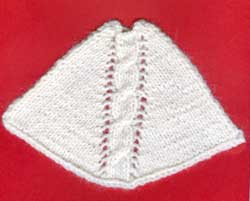
Click for chart.
Wrong Side Rows are not shown on the chart. Remember to work
them!
2. Simple Lifted-Increase Raglan Line
- Clean, understated, and almost invisible.
- Perfect for minimalist sweaters or sleek knits.
3. Decorative Raglan Line
- Slip stitches, eyelets, or textured motifs create a statement without complex knitting.
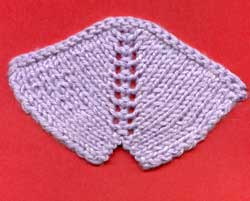
Click for the chart.
Wrong Side Rows are not shown on the chart. Remember to work
them!

Click for the chart.
Wrong Side Rows are not shown on the chart. Remember to work
them!
Tips for Knitting a Successful Raglan Sweater
- Swatch in the round: Your gauge will not match between flat and round knitting.
- Measure your upper bust: Raglans fit best when sized to the upper torso, not the full bust.
- Try on as you knit: a huge advantage of top-down construction.
- Place markers at each raglan line to keep increases consistent and prevent mistakes.
- Stop increasing at the correct depth:
Yoke depth = neckline to underarm.
Too shallow → sweater pulls upward.
Too deep → sweater droops
Common Questions Beginners Ask
Do I have to use circular needles?
For large sizes—yes. For baby sweaters, straight needles can work, but circular knitting is easier and gives better fabric.
Can I knit a raglan bottom-up?
Yes, but you lose the ability to try on as you go.
Is a raglan good for all body shapes?
Raglans flatter many, but not everyone. Broad shoulders = great match. Very narrow or very full busts may prefer set-in sleeves.
What yarn works best for raglans?
Wool or wool blends hold shape well. Cotton and alpaca may stretch without reinforcement.
Conclusion
Raglan sleeves remain one of the easiest and most satisfying ways to knit a sweater—especially if you’re beginning to explore garment construction. With a few simple techniques like short-row neck shaping and intentional raglan line design, your sweaters will fit more comfortably and look beautifully polished.
Disclosure:
This post contains affiliate links. If you buy through them, I may earn a small commission at no extra cost to you.

Janice Jones is a Certified Knitting and Crochet Instructor who creates beginner-friendly patterns and tutorials, backed by a 389-page library of practical knitting and crochet content.
Most Popular Pages
Comprehensive Guide to Yarn

All Types of Crochet Stitches
36 Reversible Knit Stitch Glossary
How to Crochet the Second Row
Dog Sweater Patterns
Working with Alpaca Yarn
Free eBooks, Just for You
Get my beginner eBook guides to Knitting and Crocheting, just for signing up for my monthly newsletter.
Choose one or both when you sign up.
About the Author: Please allow me to introduce myself
Janice Jones is a Certified Knitting Instructor and Certified Crochet Instructor through the Craft Yarn Council who focuses on beginner-friendly patterns, stitch guides, and technique tutorials. She has built a library of 389 pages on her website, sharing practical instructions and patterns, and has completed projects ranging from crochet blankets to knit sweaters. You can explore her work on her website. She makes items for Warm Up America and often knits and crochets sweaters for her small dogs.
Thank you for visiting Smart-Knit-Crocheting. I hope this and all of my tutorials will give you the inspiration to continue your knit or crochet journey. For a complete list of all the pages on my site, please visit my table of contents.
I participate in the Amazon Services LLC Associates Program, an affiliate advertising program designed to provide a means for sites to earn advertising fees by advertising and linking to Amazon.com. “As an Amazon Associate I earn from qualifying purchases.” These earnings go towards supporting my website.
Home | Contact | About | Privacy Policy | Disclaimer
I DO NOT SELL ANY PERSONAL INFORMATION FROM THIS WEBSITE. PLEASE SEE MY PRIVACY POLICY FOR MORE DETAILS.
Copyright © 2006-2026 Smart Knit Crocheting. All Rights Reserved
Please Share
Remember, Sharing is Caring