- Home
- Types of Knit Stitches
- Reversible Knit Stitch Patterns
- Waved Welt Knit Stitches
Waved Welt Knit Stitch Pattern: Beginner-Friendly Tutorial
Waved Welt Knit Stitch Pattern by Janice Jones, Last Updated May 16, 2026
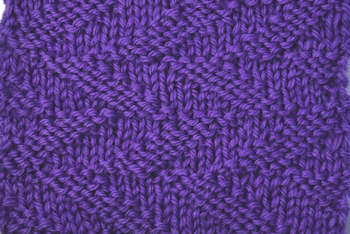
When creating unique, visually striking knitted pieces, the waved welt knit stitch adds beautiful texture, creating a soft wave/ripple effect.
The Waved Welt Knit Stitch belongs to the knit-and-purl stitch family because it uses only basic knit and purl stitches to create texture. It is also a reversible knit stitch and an 8-row repeat.
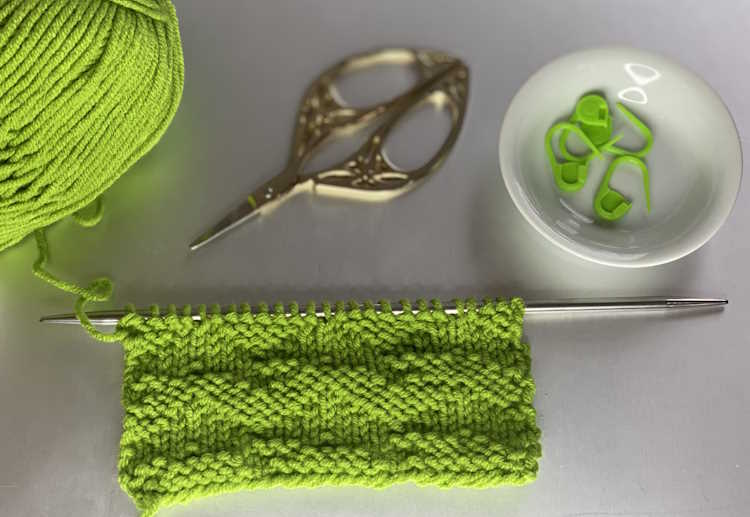 Waved Welt Knit Stitch Pattern
The Waved Welt Knit Stitch: At a Glance
- Skill Level: Advanced beginner
- This is an 8-row repeat
- Worked on Multiples of 8 plus 1
- Made with just Knit and Purl Stitches
- Reversible
- Slightly stretchy
- Lies Flat: Yes
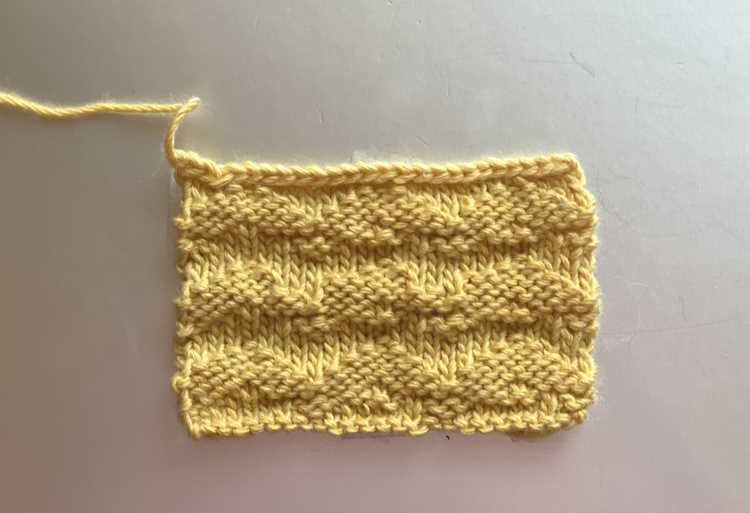 Waved Welt Knit Stitch Pattern, Right Side
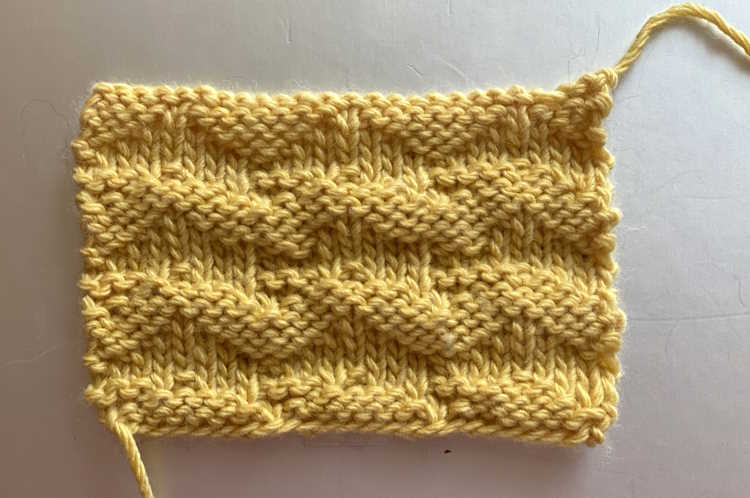 Waved Welt Knit Stitch Pattern, Wrong Side
Waved Welt Knit Stitch Directions
Abbreviations
K - Knit
P - Purl
CO - Cast On
BO - Bind Off
Rep - Repeat
st / sts - stitch/stitches
* * Repeat the instruction between the two asterisks
Skills Needed
Written Directions for Working Flat on Straight Needles
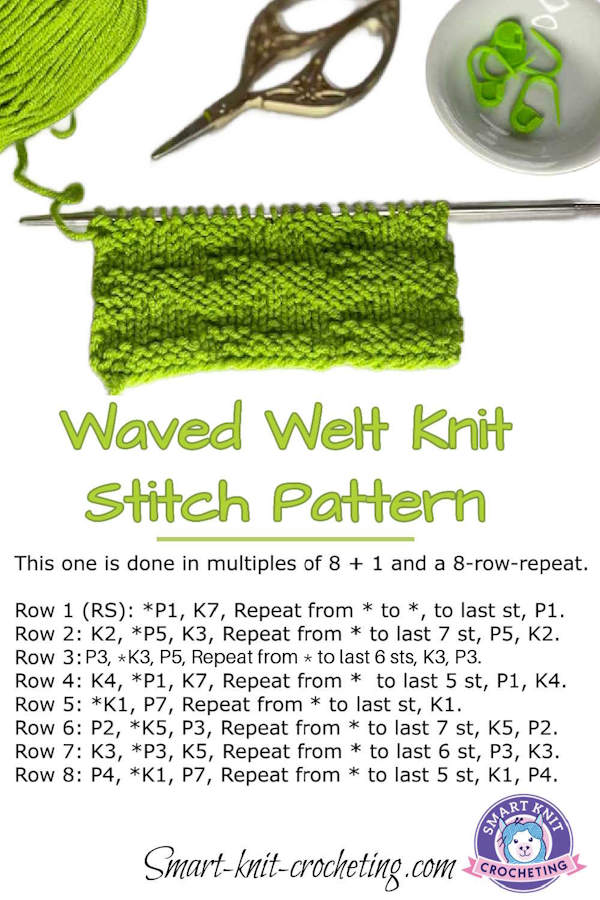
This one is done in multiples of 8 + 1 and an 8-row repeat.
Row 1 (RS): *P1, k7; rep from * to last st, p1.
Row 2 (WS): K2, *p5, k3; rep from * to last 7 sts, p5, k2.
Row 3: P3, *k3, p5; rep from * to last 6 sts, k3, p3.
Row 4: K4, *p1, k7; rep from * to last 5 sts, p1, k4.
Row 5: *K1, P7; rep from * to last st, k1.
Row 6: P2, *k5, p3; rep from * to last 7 sts, k5, p2.
Row 7: K3, *P3, k5; rep from * to last 6 sts, p3, k3.
Row 8: P4, *k1, p7; rep from * to last 5 sts, k1, p4.
Repeat these 8 rows until you reach your desired length. Bind off and weave in ends.
Waved Welt Knit Stitch Instructions Working Flat in Chart Form
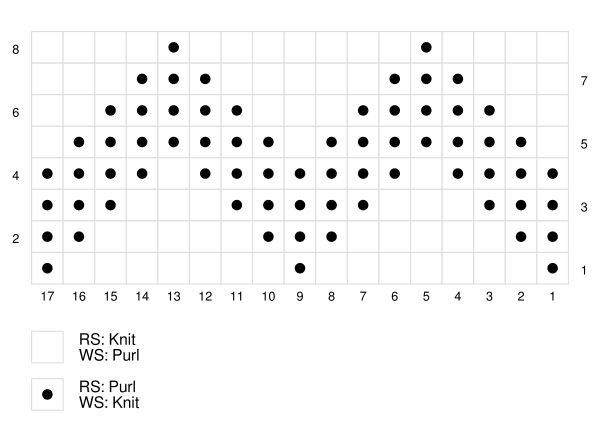 Waved Welt Knit Stitch Instructions in Chart Form
Written Directions for Working in the Round
Cast On: A multiple of 8 stitches. Join to work in the round without twisting your stitches. Place a stitch marker to indicate the beginning of the round.
Round 1: *P1, k7; rep from * to end of round.
Round 2: *K2, p5, k3; rep from * to end of round.
Round 3: *P3, k3, p5; rep from * to end of round.
Round 4: *K4, p1, k7; rep from * to end of round.
Round 5: *K1, p7; rep from * to end of round.
Round 6: *P2, k5, p3; rep from * to end of round.
Round 7: *K3, p3, k5; rep from * to the end of the round.
Round 8: *P4, k1, p7; rep from * to end of round.
Repeat Rounds 1–8 until your piece measures the desired length.
Why is the Pattern Different When Working in the Round?
When working in the round, whether on circular needles or double-pointed needles, every round is worked from the right side of the fabric. This means that the right side is always facing you. Because of this, the wrong-side rows from the flat version need to be converted so the wave texture appears correctly on the public side of the fabric.
Problem Solving / Troubleshooting
Beginners often panic when they see a pattern that specifies 8 or more rows, even if it is just knit and purl stitches. If this resonates with you, you are not alone. Keeping track of 8 rows is not as easy as it looks, especially if you have been accustomed to memorizing stitch patterns. I know in my youth, I might have memorized the pattern, but definitely not anymore. What do you do?
How to Knit an 8-row repeat without memorization?
No one expects you to memorize a stitch pattern, though if you can, I applaud you!! I have found that an old-school method works well, but I will also suggest other methods because I know not everyone is as old as me. Write or print the pattern and then use a ruler or a magnetic pattern holder to keep track of your work.
After completing each row, check it off before moving on to the next row. I also count my stitches so that I know I am creating the pattern the way it is supposed to be.
Modern Ways to Keep Track of Your Knitting
Modern knitters track their projects using versatile knitting apps, digital tablets, and visual mapping. These tools help manage row counts, complex charts, and yarn stashes, ensuring you never lose your place.
Top Knitting Apps
- KnitCompanion: A favorite among knitters for complex patterns. It allows you to import PDFs, track your row progress on charts, and highlight your exact position.
- MyRowCounter: Excellent for managing multiple projects or taking part in test knits.
Digital Pattern Tracking
- Smartphones & Tablets: Many knitters use a tablet with a note-taking app like GoodNotes, Notability, or Xodo to import and mark up PDFs.
- Digital Knitting Journals: You can download or print comprehensive hyperlinked project trackers to easily inventory your stash and WIPs (Works In Progress).
Uneven Stitches
Once beginners have moved beyond learning how to make knit and purl stitches, they may wonder why their knitted fabric doesn't look exactly like the photo in the online tutorial or on the YouTube channel. If you are at that stage, give yourself a pat on the back. You are beginning to pay more attention to the way your knitting looks. Many knitters totally skip this stage.
One thing beginners often notice about the Waved Welt Knit Stitch Pattern is that each row involves both knit and purl stitches. As in knitting rib stitches, such as the 2 x 2 or double rib, some stitches appear larger than others. If this bothers you, there are solutions. Learn more about how to manage tension between knit and purl stitches.
What Can We Use the Waved Welt Knit Stitch For?
Because the fabric has a little stretch without curling, it works especially well for scarves, cowls, and comfortable accessories. This pattern works great with a smooth yarn and good stitch definition. Choose this knit pattern for scarves, cowls, hats, and headbands, or even a sweater. I think this stitch would be great for a pillow or cushion cover.
Pin for Future Reference
I hope you have enjoyed this knit stitch pattern tutorial. Please check back frequently, as I am adding new tutorials at the rate of about 2 or 3 per week.
Happy Knitting,
Janice
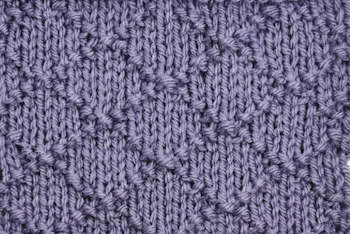
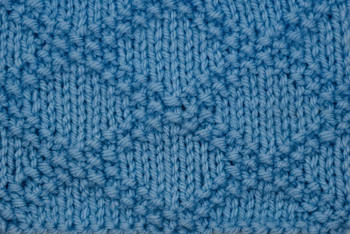
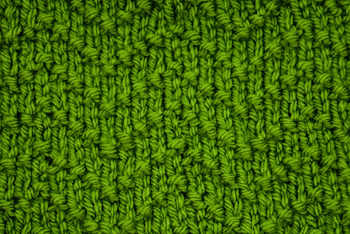
Similar Knit Stitch Patterns You Might Like to Try

Disclosure:
This post contains affiliate links. If you buy through them, I may earn a small commission at no extra cost to you.

Janice Jones is a Certified Knitting and Crochet Instructor who creates beginner-friendly patterns and tutorials, backed by a 389-page library of practical knitting and crochet content.
Most Popular Pages
Comprehensive Guide to Yarn

All Types of Crochet Stitches
36 Reversible Knit Stitch Glossary
How to Crochet the Second Row
Dog Sweater Patterns
Working with Alpaca Yarn
Free eBooks, Just for You
Get my beginner eBook guides to Knitting and Crocheting, just for signing up for my monthly newsletter.
Choose one or both when you sign up.
About the Author: Please allow me to introduce myself

Janice Jones is a Certified Knitting Instructor and Certified Crochet Instructor through the Craft Yarn Council who focuses on beginner-friendly patterns, stitch guides, and technique tutorials. She has built a library of 389 pages on her website, sharing practical instructions and patterns, and has completed projects ranging from crochet blankets to knit sweaters. You can explore her work on her website. She makes items for Warm Up America and often knits and crochets sweaters for her small dogs.
Thank you for visiting Smart-Knit-Crocheting. I hope this and all of my tutorials will give you the inspiration to continue your knit or crochet journey. For a complete list of all the pages on my site, please visit my table of contents.
I participant in the Amazon Services LLC Associates Program, an affiliate advertising program designed to provide a means for sites to earn advertising fees by advertising and linking to Amazon.com. “As an Amazon Associate I earn from qualifying purchases.” These earnings go towards supporting my website.
Home | Contact | About | Privacy Policy | Disclaimer
I DO NOT SELL ANY PERSONAL INFORMATION FROM THIS WEBSITE. PLEASE SEE MY PRIVACY POLICY FOR MORE DETAILS.
Copyright © 2006-2026 Smart Knit Crocheting. All Rights Reserved
Please Share
Remember, Sharing is Caring