- Home
- Types of Knit Stitches
- Textured Knitting Stitches
- Knit Hurdle Stitch
How to Make the Knit Hurdle Stitch
by Janice Jones Last Updated May 16, 2026
Reading Time: 4 minutes
The knit hurdle stitch is a simple, beginner-friendly stitch pattern. The hurdle stitch combines garter stitch with ribbing. The garter stitch rows create the raised horizontal ridges, while the rib rows add stretch and texture between them.
Download your free PDF tutorial or keep reading.
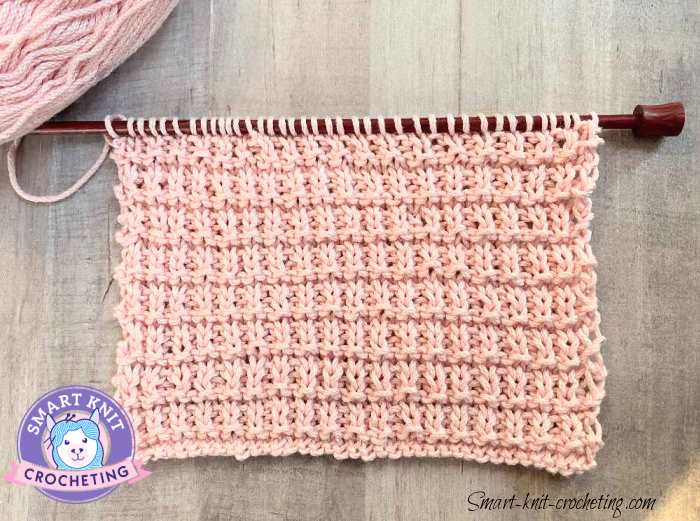 I used a 100% cotton yarn to create this swatch.
Many knit stitches are named based on their appearance. In this case, the two rows of knit stitches form the "hurdles," which resemble the obstacles or barriers that horses jump over or dogs jump in an agility course.
Knit Hurdle Stitch
At a Glance
- Skill Level: Beginner
- Multiple: Even number of stitches
- Row Repeat: 4 rows
- Techniques Used: Knit stitch and purl stitches
- Characteristics: Reversible, textured, flat-laying fabric
- Best For: Dishcloths, scarves, blankets, placemats, and beginner practice projects
How to Knit the Hurdle Stitch
Skills Needed
Abbreviations
Here are the abbreviations that I used.
CO = Cast On
K = knit
P = purl
sts = stitches
BO = Bind Off
RS = Right Side
WS = Wrong Side
* * Repeat the instructions between the two asterisks for the number of times indicated.
Written Instructions for Working Flat on Straight Needles
- Cast on an even number of stitches.
- Row 1 and 2: Knit all sts.
- Row 3: *K 1, p1; rep from* across the row.
- Row 4: *K 1, p1; rep from* across the row.
Repeat rows 1 through 4 until you reach your desired length. Bind off and weave in ends.
Instructions for Working Flat in Chart Form
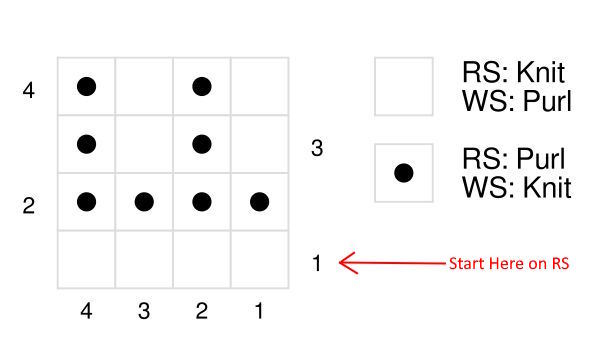 The Knit Hurdle Stitch Instructions in Chart form.
Written Instructions for Working in the Round
Cast on an even number of stitches. Join to work in the round, being careful not to twist stitches. Place a stitch marker to indicate where the round begins.
Round 1: Knit around.
Round 2: Purl around.
Round 3: *K1, p1; rep from * around.
Round 4: *K1, p1; rep from * around.
Ever Wonder Why the Pattern is Different for "In the Round" Knitting?
When working in the round, whether on circular needles or double-pointed needles, every round is worked from the right side of the fabric. This means that the right side is always facing you. Because of this, Round 2 must be purled to create the garter stitch ridges that appear automatically when working flat.
Uses for the Hurdle Stitch
Since this pattern is reversible, this stitch is useful for many projects:
- Knit dishcloths or face cloths (See the free pattern below)
- Blankets
- Rugs
- Placemats
- Pillows
- Scarves and Cowls
Troubleshooting and Mistakes to Avoid
I try to add this section to all of my stitch pattern pages because I know how easy it is to get off-track. Don't worry, though, everyone makes mistakes, even professional knitters, and the only way we get better at our hobby is to practice and learn from our mistakes.
Accidentally creating the seed stitch
This is easier to do than you might think because two of the rows in this stitch pattern are the 1 x 1 rib pattern, and two rows are the garter stitch. Keep track of your rows by using a scrap piece of paper and a pencil to jot down tally marks until you feel confident to continue.
Forgetting the second garter row
If you remember from learning how to make the garter stitch pattern, two rows are needed to create one garter ridge. These two rows create this ridge that gives the Hurdle stitch its unique texture. Again, the best way to keep track of your rows, especially in the beginning, is to use scrap paper and a pencil. (I always keep a post-it note pad in my knitting bag for this exact reason.)
Losing the 1x1 rib sequence
One little trick that will help you memorize this stitch pattern is: 2 rows of garter stitch 2 rows of 1 x 1 ribbing Look at the photo below. As you can see, each knit stitch is followed by a purl stitch. We can still use this photo to identify stitches for your 1x1 rib. If you see that the next stitch on the needle is a purl stitch, then you will use it to make a purl stitch. If the next stitch is a knit stitch, make a knit stitch.
 This is a photo of the seed stitch, but it is useful because you can begin to identify the way purl stitches look different from knit stitches. When making the Hurdle stitch (or 1x1 rib), always knit the knits and purl the purls.
Casting on an odd number of Stitches
This can happen very easily if you forget to count your stitches carefully. If this does happen and you don't want to rip it out and start again, just be sure that you always knit the knit stitches and purl the purl stitches.
Directions for Making a 7" Facecloth
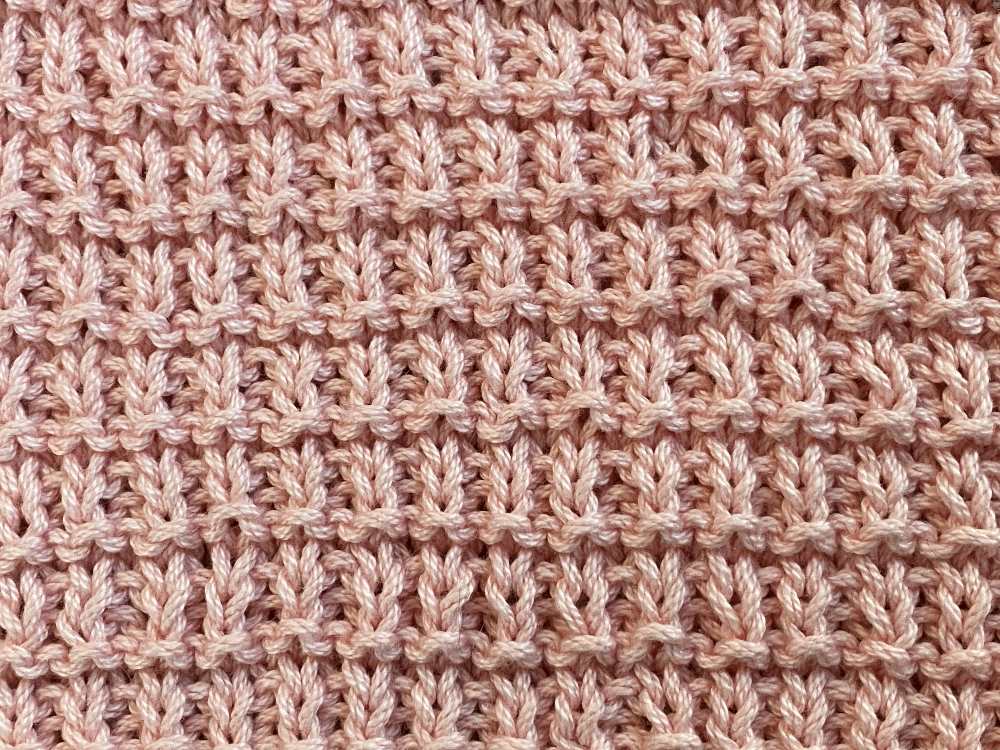
Supplies Needed for Making a Dishcloth
I may receive a small commission for items purchased from this site with no additional cost to you.
For the purposes of this tutorial, I used the following supplies:
- 100% Lily Sugar 'n Cream 100% Cotton, worsted weight yarn
- US size 8 (5.0 mm) straight knitting needles
- Scissors
- Tapestry Needle to weave in ends.
Finished Measurements
The finished dishcloth/facecloth measures 7 inches by 7 inches (17.8 by 17.8 cm).
To make this project larger, add 6 stitches for every inch you want to add. So, for example, if you want an 8-inch cloth, CO 44 sts. instead of the 38 inches suggested below.
Skill Level

Instructions
CO 38 stitches
Row 1 and 2: K all sts.
Row 3: *K 1, P1* across the row
Row 4: *K 1, P1* across the row
Repeat rows 1 through 4 until you reach your desired length. To create a dishcloth/facecloth, the finished project size is 7 inches square. BO after row 1 knit all stitches.
Weave in ends.
Frequently Asked Questions
What projects are best suited for the knit hurdle stitch?
What projects are best suited for the knit hurdle stitch?
The knit hurdle stitch is versatile and can be used for various projects, such as dishcloths, face cloths, blankets, rugs, placemats, pillows, scarves, and cowls.
What skills do I need to know before attempting the knit hurdle stitch?
What skills do I need to know before attempting the knit hurdle stitch?
To work the knit hurdle stitch, you should be familiar with casting on, knit stitch, purl stitch, binding off, and weaving in ends.
What is the difference between a hurdle stitch and a rib stitch?
What is the difference between a hurdle stitch and a rib stitch?
The hurdle stitch requires a four-row repeat, with two rows of garter stitch separating the rib stitch pattern. Those two rows of garter pattern create the "hurdle" that separates the rib and gives it the classic name, Hurdle.
Is the hurdle stitch good for beginners?
Is the hurdle stitch good for beginners?
Yes, this is a great stitch pattern for beginners who have learned the knit and the purl stitch. Two rows are entirely in the garter stitch pattern, and the other two are in a similar 1 x 1 rib stitch pattern. Since it is only a 4-row repeat, it is easy to memorize, so beginners can concentrate on their knitting without having to check the pattern frequently.
Is the hurdle stitch reversible?
Is the hurdle stitch reversible?
Yes, the hurdle stitch is reversible, making it an ideal choice for projects where both sides show. (scarves, cowls, dishcloths, and towels)
Does hurdle stitch curl?
Does hurdle stitch curl?
The hurdle stitch generally lies flat, unlike the stockinette stitch. However, it is always a good idea to block the final project lightly to give it the most professional-looking appearance.
More Stitch Tutorials For You
Last Words
If you are ready to move beyond basic garter stitch but still want something relaxing and beginner-friendly, the knit hurdle stitch is an excellent next step. It creates beautiful texture without complicated techniques and works well for practical projects like dishcloths, scarves, and blankets.
Once you memorize the simple 4-row repeat, this becomes one of those comforting stitch patterns you can knit almost without thinking.
Free Downloadable PDF
Would you like a free pdf of this knit hurdle stitch tutorial? Click to get your free copy.
Knit Hurdle Stitch Tutorial: Pin for Future Reference

Disclosure:
This post contains affiliate links. If you buy through them, I may earn a small commission at no extra cost to you.
Janice Jones is a Certified Knitting and Crochet Instructor who creates beginner-friendly patterns and tutorials, backed by a 389-page library of practical knitting and crochet content.
Most Popular Pages
Comprehensive Guide to Yarn

All Types of Crochet Stitches
36 Reversible Knit Stitch Glossary
How to Crochet the Second Row
Dog Sweater Patterns
Working with Alpaca Yarn
Free eBooks, Just for You
Get my beginner eBook guides to Knitting and Crocheting, just for signing up for my monthly newsletter.
Choose one or both when you sign up.
About the Author: Please allow me to introduce myself
Janice Jones is a Certified Knitting Instructor and Certified Crochet Instructor through the Craft Yarn Council who focuses on beginner-friendly patterns, stitch guides, and technique tutorials. She has built a library of 389 pages on her website, sharing practical instructions and patterns, and has completed projects ranging from crochet blankets to knit sweaters. You can explore her work on her website. She makes items for Warm Up America and often knits and crochets sweaters for her small dogs.
Thank you for visiting Smart-Knit-Crocheting. I hope this and all of my tutorials will give you the inspiration to continue your knit or crochet journey. For a complete list of all the pages on my site, please visit my table of contents.
I participate in the Amazon Services LLC Associates Program, an affiliate advertising program designed to provide a means for sites to earn advertising fees by advertising and linking to Amazon.com. “As an Amazon Associate I earn from qualifying purchases.” These earnings go towards supporting my website.
Home | Contact | About | Privacy Policy | Disclaimer
I DO NOT SELL ANY PERSONAL INFORMATION FROM THIS WEBSITE. PLEASE SEE MY PRIVACY POLICY FOR MORE DETAILS.
Copyright © 2006-2026 Smart Knit Crocheting. All Rights Reserved
Please Share
Remember, Sharing is Caring