- Home
- Reversible Knit Stitch Patterns
- Diagonal Zig Zag Stitch
Diagonal Zig Zag Stitch: Beginner-friendly Tutorial
by Janice Jones, Certified Knitting Instructor (CKC) Published March 12, 2026
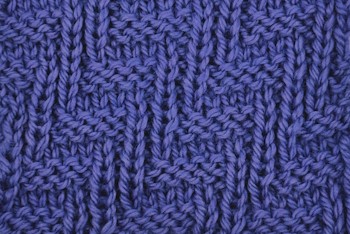
The diagonal zig-zag stitch is a highly textured stitch pattern made entirely from knit and purl stitches. It is also reversible, making it an ideal stitch pattern when you want both sides of the fabric to show, such as with blankets and scarves.
The pattern can be completed by working a stitch pattern of 8 stitches and a row repeat of 16 rows. It works just as well when knit flat or in the round. I will walk you through how to make this interesting stitch pattern.
Pattern Notes
- Skill level: Easy
- Stitch multiple: 8
- Row repeat: 16
- Reversible: Yes
- Worked flat: Yes
- Worked in the round: Yes
- Fabric behavior: Lies flat
- Techniques used: Knit and purl only
Why You’ll Love This Stitch section
This stitch is a great choice if you want a pattern with plenty of texture but no complicated techniques. The diagonal lines add movement and interest, while the reversible fabric makes it especially useful for scarves, blankets, and cowls. It is also a nice way for beginners to practice following a longer repeat using only knit and purl stitches.
Skills Needed
How to cast on using the long-tail cast-on method
How to read a written knitting pattern
How to work from a knitting chart
All Abbreviations Used
k - knit
p - purl
RS - right side
WS - wrong side
rep - repeat
* * - work the instructions contained in the two asterisks the total of times indicated.
Supplies Required for Making a Practice Swatch
- Yarn: I recommend a worsted-weight, #4 yarn in a light color.
- Needles: Flat or circular in size US 7 (4.5 mm) or US 8 (5.0 mm)
- Scissors
- Tapestry needle for weaving in ends
- Stitch marker (optional)
Instructions for Working Flat on Straight Needles
Cast on Multiples of 8.
For a Practice Swatch, cast on 24 stitches.
Row 1 (RS): * K1, P1, K1, P5; rep from * to end of row.
Row 2: (WS): * K5, P1, K1, P1; rep from * to end of row.
Row 3: * K1, P1, K5, P1; rep from * to end of row.
Row 4: * K1, P5, K1, P1; rep from * to end of row.
Row 5: * K1, P5, K1, P1; rep from * to end of row.
Row 6: * K1, P1, K5, P1; rep from * to end of row.
Row 7: * K5, P1, K1, P1; rep from * to end of row.
Row 8: * K1, P1, K1, P5; rep from * to end of row.
Row 9: * P4, K1, P1, K1, P1; rep from * to end of row.
Row 10: * K1, P1, K1, P1, K4; rep from * to end of row.
Row 11: * K3, P1, K1, P1, K2; rep from * to end of row.
Row 12: * P2, K1, P1, K1, P3; rep from * to end of row.
Row 13: * P2, K1, P1, K1, P3; rep from * to end of row.
Row 14: * K3, P1, K1, P1, K2; rep from * to end of row.
Row 15: * K1, P1, K1, P1, K4; rep from * to end of row.
Row 16: * P4, K1, P1, K1, P1; rep from * to end of row.
Repeat rows 1 – 16 for the pattern.
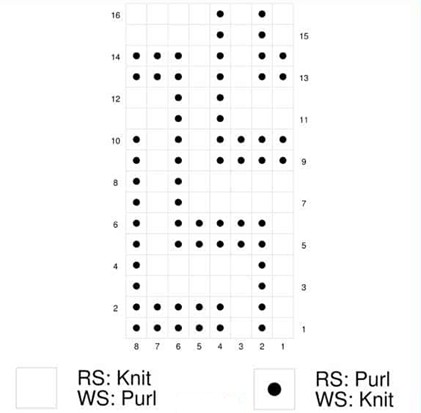
Instructions for Working Flat in Chart Form
Written Instructions for Working in the Round on Circular Needles
Cast on multiples of 8.
Round 1: * K1, P1, K1, P5; rep from *
around.
Round 2: * K1, P1, K1, P5; rep from * around.
Round 3: * K1, P1, K5, P1; rep from * around.
Round 4: * K1, P1, K5, P1; rep from * around.
Round 5: * K1, P5, K1, P1; rep from * around.
Round 6: * K1, P5, K1, P1; rep from * around.
Round 7: * K5, P1, K1, P1; rep from * around.
Round 8: * K5, P1, K1, P1; rep from * around.
Round 9: * P4, K1, P1, K1, P1; rep from * around.
Round 10: * P4, K1, P1, K1, P1; rep from * around.
Round 11: * K3, P1, K1, P1, K2; rep from * around.
Round 12: * K3, P1, K1, P1, K2; rep from * around.
Round 13: * P2, K1, P1, K1, P3; rep from * around.
Round 14: * P2, K1, P1, K1, P; rep from * around.
Round 15: * K1, P1, K1, P1, K4; rep from * around.
Round 16: * K1, P1, K1, P1, K4; rep from * around.
Repeat rounds 1 – 16 for the pattern.
Troubleshooting and Beginner Tips
Losing Track of Your Progress
Sometimes, beginners get intimidated by the row count in beginner patterns. This stitch pattern requires a row repeat of 16, which can seem like a lot to beginners. To make it easier, print out the pattern and use a ruler or sticky note to keep track of where you are. You can also use tally marks on a slip of paper to mark the row complete. Other methods include:
Tension Problems
Sometimes problems between knit and purl stitches can cause the fabric to look less than stellar. The knit stitches sometimes look larger than they should. If you find that your knits and purls are not the same size, you are not alone. Check out my tension article to get some tips on how to improve this problem
Project Ideas
This stitch pattern is ideal for any project where you need both sides to look the same, such as:
- Washcloths
- Blankets of all sizes
- Scarves
- Cowls
It can also work well in larger projects, such as sweaters or vests, where you want to add an additional interesting panel.
Frequently Asked Questions about the Diagonal Zig Zag Knit Stitch
What is the diagonal zig-zag knit stitch?
What is the diagonal zig-zag knit stitch?
The diagonal zig-zag knit stitch is a textured stitch pattern that creates slanted lines forming a repeating zig-zag design across the fabric. It is typically created using combinations of knits and purls, which shift the stitches slightly to the left or right in each row.
Does the diagonal zig-zag stitch curl?
Does the diagonal zig-zag stitch curl?
Because many versions include both knit and purl stitches, the diagonal zig-zag pattern generally lies fairly flat. However, like most knitted fabrics, it may still benefit from a border such as garter stitch or ribbing to prevent edge curling.
Is the diagonal zig-zag stitch suitable for beginners?
Is the diagonal zig-zag stitch suitable for beginners?
Yes, confident beginners can learn the diagonal zig-zag stitch. While it may look complex, the pattern usually relies on simple knitting techniques, such as knit and purl stitches and basic decreases, repeated over several rows.
What types of yarn work best for this stitch pattern?
What types of yarn work best for this stitch pattern?
Smooth, light-colored yarns show the diagonal zig-zag texture best. Highly textured yarns, such as boucle or fuzzy yarns, can hide the stitch pattern and make the zig-zag effect harder to see.
How can I keep track of the stitch and row repeat?
How can I keep track of the stitch and row repeat?
A few helpful strategies include:
- Placing stitch markers between pattern repeats
- Printing the pattern and checking off rows
- Using a row counter
- Using a ruler on top of a paper pattern
These small tools can make learning textured stitch patterns much easier.
Last Words About the Diagonal Zig-Zag Stitch Pattern
The diagonal zig-zag knit stitch is a wonderful pattern to add to your knitting toolbox. Its flowing lines and textured fabric create visual interest without requiring complicated techniques, making it a satisfying stitch for both adventurous beginners and more experienced knitters.
Once you become familiar with the stitch repeat, the rhythm of the pattern is easy to remember, and the fabric grows quickly. The diagonal movement also gives finished projects a lively, modern look that stands out from more traditional stitch patterns.
Try using the diagonal zig-zag stitch for scarves, blankets, dishcloths, or textured sweater panels. With the right yarn and a little practice, this simple stitch pattern can turn an ordinary project into something truly special.
Most importantly, take your time and enjoy the process. Like many textured stitches, the pattern becomes easier with each repeat—and before long, those beautiful zig zag lines will start to appear almost effortlessly on your needles.
Disclosure:
This post contains affiliate links. If you buy through them, I may earn a small commission at no extra cost to you.

Janice Jones is a Certified Knitting and Crochet Instructor who creates beginner-friendly patterns and tutorials, backed by a 389-page library of practical knitting and crochet content.
Most Popular Pages
Comprehensive Guide to Yarn

All Types of Crochet Stitches
36 Reversible Knit Stitch Glossary
How to Crochet the Second Row
Dog Sweater Patterns
Working with Alpaca Yarn
Free eBooks, Just for You
Get my beginner eBook guides to Knitting and Crocheting, just for signing up for my monthly newsletter.
Choose one or both when you sign up.
About the Author: Please allow me to introduce myself

Janice Jones is a Certified Knitting Instructor and Certified Crochet Instructor through the Craft Yarn Council who focuses on beginner-friendly patterns, stitch guides, and technique tutorials. She has built a library of 389 pages on her website, sharing practical instructions and patterns, and has completed projects ranging from crochet blankets to knit sweaters. You can explore her work on her website. She makes items for Warm Up America and often knits and crochets sweaters for her small dogs.
Thank you for visiting Smart-Knit-Crocheting. I hope this and all of my tutorials will give you the inspiration to continue your knit or crochet journey. For a complete list of all the pages on my site, please visit my table of contents.
I participate in the Amazon Services LLC Associates Program, an affiliate advertising program designed to provide a means for sites to earn advertising fees by advertising and linking to Amazon.com. “As an Amazon Associate I earn from qualifying purchases.” These earnings go towards supporting my website.
Home | Contact | About | Privacy Policy | Disclaimer
I DO NOT SELL ANY PERSONAL INFORMATION FROM THIS WEBSITE. PLEASE SEE MY PRIVACY POLICY FOR MORE DETAILS.
Copyright © 2006-2026 Smart Knit Crocheting. All Rights Reserved
Please Share
Remember, Sharing is Caring