- Home
- Types of Knit Stitches
- Textured Knitting Stitches
- Knit Tile Stitch Pattern
How to Knit the Tile Stitch Pattern
by Janice Jones, Last Updated May 15, 2026
The Tile Stitch is a simple, textured knit-and-purl pattern that creates subtle blocks of raised knit stitches against a smooth reverse stockinette background. These “tiles” repeat horizontally and vertically, creating a structured geometric texture without being overly bulky. The Tile Stitch belongs to the Knit and Purl Stitches family because it creates texture using only basic knit and purl stitches.
The clean, geometric look makes it ideal for scarves, dishcloths, or even larger projects like baby blankets and cushion covers. It is also a good choice for a men’s beanie.
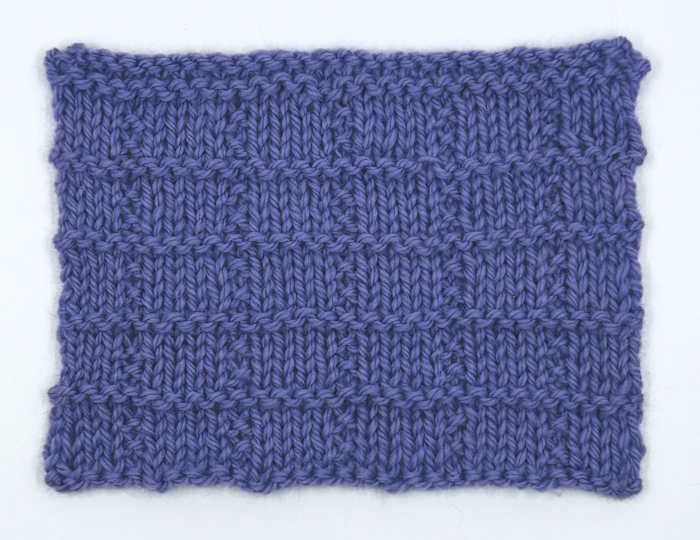 Tile Stitch, Right Side
The Knit Tile Stitch At a Glance
- This pattern is worked over a multiple of 5 + 4 stitches, so for example, 24, 29, 34, and so forth.
- This is a 6-row repeat.
- This knit pattern is not reversible.
- The tile stitch consists solely of knit and purl stitches.
- It lies flat with no curl, but it looks better with a bit of blocking.
- This pattern can be created with variegated yarn or solid colors. If knit with a solid color yarn, the pattern is more visible. If you want to add a little color, you may choose to knit rows 5 and 6 in a different color.
Skills Level

Skills Needed to Make the Tile Stitch
- How to make the knit stitch
- How to make the purl stitch
- How to cast on
- How to bind off
- How to weave in ends
- How to block
Abbreviations Used in this Knit Pattern
K = knit
P = purl
RS = right side
WS = wrong side
** Work the stitches between the two asterisks for the number of times indicated in the pattern.
What do You Need to Work a Tile Stitch Swatch?
What You’ll Need:
- Yarn of your choice (smooth, light-colored yarn shows texture best). I used Yarnspirations Patons Classic Wool, 100% Wool
- Knitting needles to match your yarn. I used a size #8 (5.0 mm)
- Tapestry needle (for weaving in ends)
- Scissors
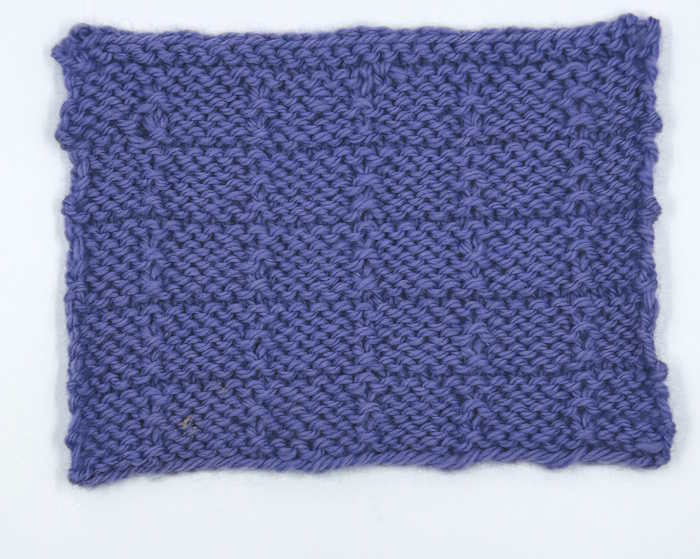 This is the wrong side of the Knit Tile Stitch Pattern
Tile Stitch Written Instructions Worked Flat
To work the Tile Stitch, cast on a multiple of 5 + 4 stitches (e.g., 24, 29, 34, etc.). For this practice swatch, I cast 29 stitches.
Row 1 (RS): Knit all stitches.
Row 2 (WS): *P4, k1; repeat from * until 4 stitches remain, p4.
Row 3: Knit all stitches.
Row 4: *P4, k1; repeat from * until 4 stitches remain, p4.
Row 5: Knit all stitches.
Row 6: Knit all stitches.
Repeat Rows 1–6 for the pattern.
Note: Rows 5 and 6 create the horizontal separation between the “tiles,” giving the stitch its geometric appearance.
Instructions for Working Flat in Chart Form
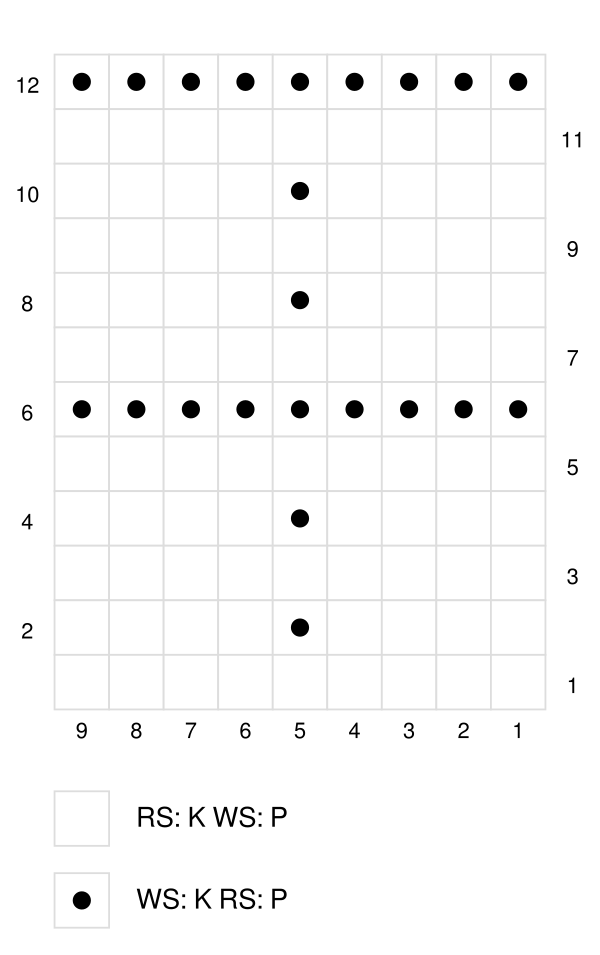
The written instructions are straightforward; however, some people prefer the added visual appeal of charts. Here is a chart for working the Tile Pattern flat. Remember to start at the lower right-hand corner, work to the left, and then up.
Written Instructions for Working in the Round
If you would like to make a hat working on circular needles, here is the pattern for working in the round:
Cast On: Multiple of 5
Round 1: Knit all stitches.
Round 2: *K4, P1; rep from * to end of round.
Round 3: Knit all stitches.
Round 4: *K4, P1; rep from * to end of round.
Round 5: Knit all stitches.
Round 6: Purl all stitches.
Problem Solving / Troubleshooting
My Tile Pattern Does Not Line Up
- If your swatch does not look like little tiles or boxes, carefully check whether you shifted your knit and purl sections accidentally.
- The Tile Stitch depends on the placement of knit and purl stitches lining up correctly from row to row. Even one extra knit or purl stitch can throw off the geometric appearance.
- Using stitch markers between repeats can help you keep track of the pattern.
I Lost Track of the 6-Row Repeat
- This is a very common beginner problem, especially if you stop knitting in the middle of a repeat.
- Try using a row counter, a pencil and paper, or a knitting app to track your rows.
- You can also learn to “read” your knitting by looking for the horizontal separator rows that create the tile effect.
My Texture Is Hard to See
- Highly textured, fuzzy, or dark yarns can make the Tile Stitch pattern difficult to see clearly.
- Smooth, light-colored yarns with good stitch definition usually show the geometric texture best.
My Edges Look Uneven
- Uneven edges are common when learning new knit and purl stitch combinations.
- Try slipping the first stitch of every row or paying closer attention to your tension at the beginning and end of rows.
- Blocking your finished project may also help smooth the edges.
What can you make with the Knit Tile Stitch Pattern?
- Dishcloths and washcloths
- Scarves and cowls
- Blankets and throws
- Textured panels in sweaters or bags
- Hats
Frequently Asked Questions
Is the Tile Stitch reversible?
Is the Tile Stitch reversible?
No, not exactly. The right side shows a geometric tile texture, while the wrong side features rows of reverse stockinette and some purl ridges. However, it still looks neat on the back.
Can I knit the Tile Stitch in the round?
Can I knit the Tile Stitch in the round?
Yes, but you’ll need to adjust the purl/knit rows to accommodate knitting in the round (i.e., read the WS rows as RS knits and vice versa). The stitch multiple is 5.
What type of projects suit this stitch best?
What type of projects suit this stitch best?
It’s ideal for flat-knit projects like blankets, scarves, dishcloths, and even bags. It adds texture without bulk.
Will this stitch curl at the edges?
Will this stitch curl at the edges?
No, the Tile Stitch lies flat due to the mix of knit and purl stitches.
How easy is the Tile Stitch for beginners?
How easy is the Tile Stitch for beginners?
Very beginner-friendly! If you’re comfortable with knit and purl stitches, you can proceed with this pattern.
Last Words about the Tile Stitch
With the knowledge of knit and purl stitches, any beginner can tackle this pattern. Though not reversible, meaning the two sides look different, the reverse is neat, making this stitch pattern a good choice where both sides will show, such as washcloths and scarves.
Knit Tile Stitch Pattern: Pin for Future Reference

Disclosure:
This post contains affiliate links. If you buy through them, I may earn a small commission at no extra cost to you.

Janice Jones is a Certified Knitting and Crochet Instructor who creates beginner-friendly patterns and tutorials, backed by a 389-page library of practical knitting and crochet content.
Most Popular Pages
Comprehensive Guide to Yarn

All Types of Crochet Stitches
36 Reversible Knit Stitch Glossary
How to Crochet the Second Row
Dog Sweater Patterns

Working with Alpaca Yarn
Free eBooks, Just for You
Get my beginner eBook guides to Knitting and Crocheting, just for signing up for my monthly newsletter.
Choose one or both when you sign up.

About the Author: Please allow me to introduce myself

Janice Jones is a Certified Knitting Instructor and Certified Crochet Instructor through the Craft Yarn Council who focuses on beginner-friendly patterns, stitch guides, and technique tutorials. She has built a library of 389 pages on her website, sharing practical instructions and patterns, and has completed projects ranging from crochet blankets to knit sweaters. You can explore her work on her website. She makes items for Warm Up America and often knits and crochets sweaters for her small dogs.
Thank you for visiting Smart-Knit-Crocheting. I hope this and all of my tutorials will give you the inspiration to continue your knit or crochet journey. For a complete list of all the pages on my site, please visit my table of contents.
I participate in the Amazon Services LLC Associates Program, an affiliate advertising program designed to provide a means for sites to earn advertising fees by advertising and linking to Amazon.com. “As an Amazon Associate I earn from qualifying purchases.” These earnings go towards supporting my website.

Home | Contact | About | Privacy Policy | Disclaimer
I DO NOT SELL ANY PERSONAL INFORMATION FROM THIS WEBSITE. PLEASE SEE MY PRIVACY POLICY FOR MORE DETAILS.
Copyright © 2006-2026 Smart Knit Crocheting. All Rights Reserved
Please Share
Remember, Sharing is Caring