- Home
- Knit and Purl Stitches
- Close Check Knitting Stitch Pattern
Close Check Knitting Stitch Pattern: Tips and Tutorial
Close Check Knitting Stitch Pattern by Janice Jones Updated March 18, 2026
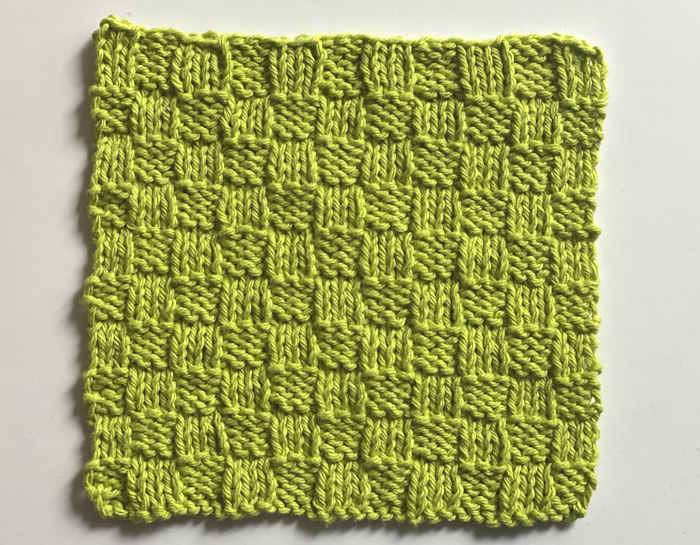
The close-check knitting stitch pattern is a beginner-friendly knit-and-purl design that creates a tidy, geometric texture. It looks a little like a small-scale checkerboard, with blocks of stockinette and reverse stockinette alternating to form a reversible fabric. Because it lies flat and uses only basic stitches, it is a great choice for scarves, washcloths, blankets, pillow covers, and other easy knitting projects.
In this tutorial, you’ll learn how to knit the close check stitch flat and in the round, read the chart, and use the pattern in a simple practice project. If you already know how to knit and purl, you can make this stitch.
Close Check Stitch At a Glance
Skill Level: Basic
Stitch Multiples: 6 + 3
Row Repeats: 8
Reversible: Yes
Techniques Used: Knit and Purl Stitches Only
Lies Flat
Worked in the Round: Yes
What You'll Love About This Stitch
This pattern reminds me a little of the basketweave stitch because it consists of little boxes of stitches. Stockinette stitches alternate with reverse stockinette stitches to create a geometric pattern.
The thing I love about this stitch is that it creates a fabric that would be good for making a cowl, scarf, pillow cover, or even a blanket.
It is accomplished by working on a multiple of 6 plus 3 and is an 8-row repeat. But, it's still beginner-friendly because all you need to know is knit and purl stitches.
When Stitch Patterns All Begin to Look Alike
At first, I thought I had made a mistake by creating 3 pages on this website about the same stitch, but as I looked more closely, I saw three separate knit patterns that looked similar but were actually different stitches.
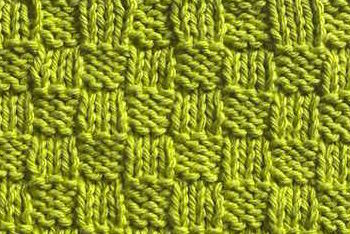 Close Check
Stitch Multiples: 6 + 3
Row Repeat: 8
Each little square = 3 sts
Reversible
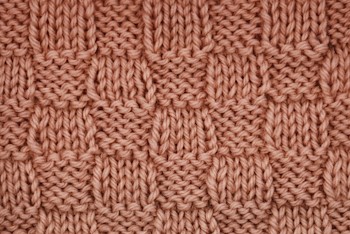 Simple Checker
Stitch Multiple: 8 + 4
Row Repeat: 10
Each little square = 4 sts
Reversible
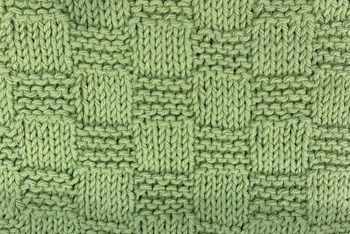 Garter Checkerboard
Stitch Multiple: 10 + 5
Row Repeat: 14
Each little square: 5 sts.
Not Reversible
Skills Needed
- How to cast on using the long-tail cast-on method.
- How to make the knit stitch.
- How to make the purl stitch.
- How to bind off in pattern (knit the knit stitches before binding them off, and purl the purl stitches before binding them off.
- How to read written instructions or knitted chart instructions.
- How to weave in ends.
Supplies to Create a Practice Swatch
- Yarn of your choice. I am using Lily Sugar'n Cream 100% Cotton Yarn
- Needles to match your favorite yarn. I am using a size US 8 (5.0 mm) needle
- Scissors
- Tapestry needle
Abbreviations
k = knit
p = purl
CO = Cast on
BO = Bind off
Rnd = Round
st/sts. = stitch/stitches
* * Repeat the instructions contained between the two asterisks for the number of times indicated
Written Instructions for Working Flat
Cast On: Multiples of 6 + 3
Row 1: (RS): P3, *k3, p3; rep from * to end of
row.
Row 2: K3, *p3, k3; rep from * to end of row.
Row 3: P3, *k3, p3; rep from * to end of row.
Row 4: K3, *p3, k3; rep from * to end of row.
Row 5: K3, *p3, k3; rep from * to end of row.
Row 6: P3, *k3, p3; rep from * to end of row.
Row 7: K3, *p3, k3; rep from * to end of row.
Row 8: P3, *k3, p3; rep from * to end of row.
Repeat Rows 1 to 8 for the pattern.
Instructions for Knitting the Close Check Knitting Stitch Pattern in Chart Form
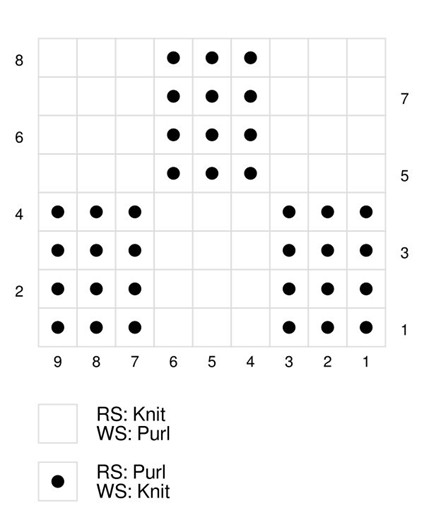
Written Instructions for Working in the Round
Cast on a multiple of 3
Round 1: *K3, P3;
repeat from * to end.
Round 2: K3, P3; repeat from * to end.
Round 3: K3, P3; repeat from * to end.
Round 4: P3, K3; repeat from * to end.
Round 5: P3, K3; repeat from * to end.
Round 6: P3, K3; repeat from * to end.
Round 7: K3, P3; repeat from * to end.
Round 8: K3, P3; repeat from * to end.
Repeat Rounds 1 to 8 for the pattern
Troubleshooting and Beginner Tips
Best Yarns for This
Stitch
If your close check pattern does not look very clear at first, do not worry. This stitch becomes easier to see after several rows, once the little blocks begin to form.
My fabric does not look like little checks yet. Keep going for at least one full repeat. The texture becomes much more obvious after rows 4 to 8.
I keep losing my place in the pattern. Try counting in groups of 3 stitches, since each block is built around groups of 3 knits and 3 purls.
My tension looks uneven. Knit and purl patterns often look a little uneven before blocking. A light block can help smooth the fabric and make the checks look more defined.
The edges look messy. Pay close attention to the first and last 3 stitches of each row. Beginners often rush the edges, which can make the swatch look less tidy.
I mixed up rows 1 through 4 and rows 5 through 8. A row counter can help, since the stitch shifts halfway through the repeat.
Tip: If you are learning this stitch for the first time, use a light-colored yarn with good stitch definition. It will make the pattern much easier to see.
Best Yarns for This Stitch
The best yarns for the close check knitting stitch are smooth yarns with good stitch definition. Because this pattern relies on the contrast between knit and purl sections, you will usually see it best in yarns that are not too fuzzy or heavily textured.
Cotton yarn is a lovely choice for washcloths and dishcloths, which is why it worked well for my sample. Wool, wool blends, and smooth acrylic yarns also work nicely for scarves, blankets, and home decor projects.
If you want the checker texture to stand out clearly, choose a solid or lightly tonal yarn. Very busy variegated yarns can distract from the pattern and make the little checks harder to see.
For beginners, a worsted-weight yarn in a lighter color is usually the easiest option. It helps the stitch pattern show up well while you are learning the repeat.
Frequently Asked Questions
Is the close check knitting stitch good for beginners?
Is the close check knitting stitch good for beginners?
Yes. This stitch is beginner-friendly because it uses only knit and purl stitches. If you already know those two basic stitches, you can learn this pattern.
Is the close check stitch reversible?
Is the close check stitch reversible?
Yes. Both sides are attractive, which makes this stitch a nice choice for scarves, blankets, and washcloths.
Does the close check stitch curl?
Does the close check stitch curl?
No. This stitch generally lies flat, which is one reason it works well for practical projects.
What can I make with the close check stitch?
What can I make with the close check stitch?
This stitch works well for washcloths, dishcloths, scarves, cowls, blankets, pillow covers, and stitch sampler projects.
Project Ideas: Washcloth
I decided to create a bright green washcloth while practicing this pattern. It's your choice, you can make a small swatch or use the directions below to make a dishcloth/washcloth.
Cast On: Multiples of 6 + 3
Skill Level
Beginner/Easy
Finished Size
7 inches by 7 inches
Directions
For this tutorial, I cast on 33 stitches using the long-tail cast-on method (6 x 5) + 3 = 33. This is large enough to create a washcloth, if you want a project to complete while learning this stitch.
Row 1: P3, *k3, p3; rep from * to end of row.
Row 2: K3, *p3, k3; rep from * to end of row.
Row 3: P3, *k3, p3; rep from * to end of row.
Row 4: K3, *p3, k3; rep from * to end of row.
Row 5: K3, *p3, k3; rep from * to end of row.
Row 6: P3, *k3, p3; rep from * to end of row.
Row 7: K3, *p3, k3; rep from * to end of row.
Row 8: P3, *k3, p3; rep from * to end of row.
Continue this pattern until you reach your desired length. Bind off in pattern and weave in ends.
Crochet Border (Optional)
If you would like to add a little border, a simple crochet border using single crochet and half double crochet stitches adds about another inch to the washcloth.
Directions for Crochet Border
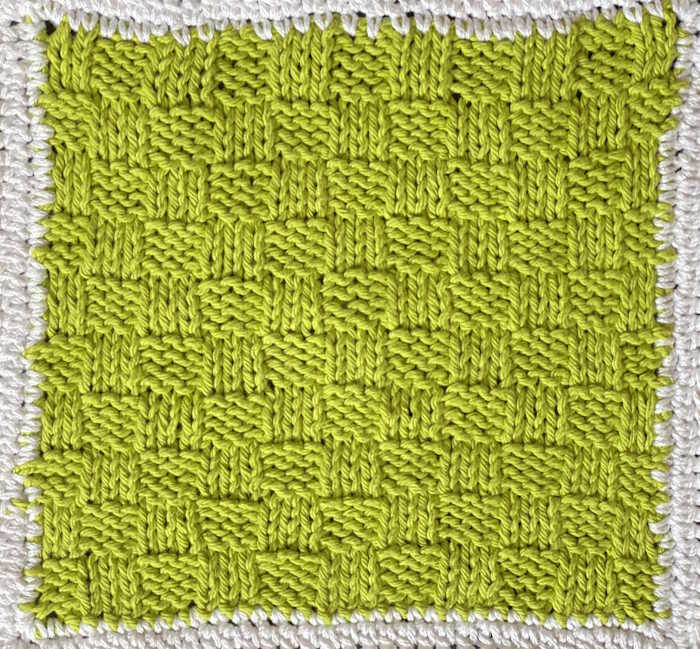
To make this border, you will need to know a little about crochet.
How to make the single crochet stitch
How to make the half double crochet stitch
Make a slip stitch using a contrasting cotton yarn. Attach with a 4.5 mm (7) crochet hook in any corner of the washcloth.
Work one single crochet stitch in each knit stitch around the perimeter. When you reach a corner, work two single crochet stitches, one chain and then two more single crochet in the same corner space. Slip stitch to connect last stitch to the first one you made.
You can end there, or add an additional round of half double crochet. To add this round, chain 3. Work one half double crochet stitch, one chain and two more half double crochet stitches into the same corner space. Work one half double crochet in each stitch around working two half double crochet, one chain, two more half double crochet in each corner. Fasten off and work in ends.
Conclusion
The close-check knitting stitch pattern is a simple yet attractive design that turns basic knit and purl stitches into a neat geometric texture. It is easy to learn, reversible, and practical for many different kinds of projects.
If you are looking for a stitch that feels a little more interesting than plain ribbing or stockinette but is still beginner-friendly, this is a wonderful pattern to try. Once you have worked a few repeats, the rhythm becomes very easy to remember.
Whether you use it for a small practice swatch, a washcloth, or a larger project, the close check stitch is a classic pattern worth adding to your stitch library.
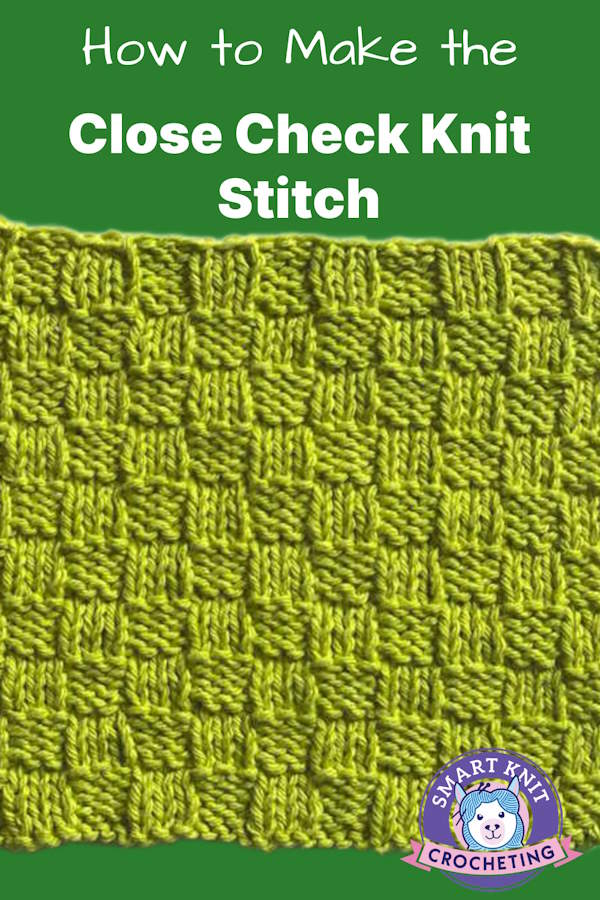
Pin for Future Reference
Disclosure:
This post contains affiliate links. If you buy through them, I may earn a small commission at no extra cost to you.
Janice Jones is a Certified Knitting and Crochet Instructor who creates beginner-friendly patterns and tutorials, backed by a 389-page library of practical knitting and crochet content.
Most Popular Pages
Comprehensive Guide to Yarn

All Types of Crochet Stitches
36 Reversible Knit Stitch Glossary
How to Crochet the Second Row
Dog Sweater Patterns
Working with Alpaca Yarn
Free eBooks, Just for You
Get my beginner eBook guides to Knitting and Crocheting, just for signing up for my monthly newsletter.
Choose one or both when you sign up.
About the Author: Please allow me to introduce myself
Janice Jones is a Certified Knitting Instructor and Certified Crochet Instructor through the Craft Yarn Council who focuses on beginner-friendly patterns, stitch guides, and technique tutorials. She has built a library of 389 pages on her website, sharing practical instructions and patterns, and has completed projects ranging from crochet blankets to knit sweaters. You can explore her work on her website. She makes items for Warm Up America and often knits and crochets sweaters for her small dogs.
Thank you for visiting Smart-Knit-Crocheting. I hope this and all of my tutorials will give you the inspiration to continue your knit or crochet journey. For a complete list of all the pages on my site, please visit my table of contents.
I participant in the Amazon Services LLC Associates Program, an affiliate advertising program designed to provide a means for sites to earn advertising fees by advertising and linking to Amazon.com. “As an Amazon Associate I earn from qualifying purchases.” These earnings go towards supporting my website.
Home | Contact | About | Privacy Policy | Disclaimer
I DO NOT SELL ANY PERSONAL INFORMATION FROM THIS WEBSITE. PLEASE SEE MY PRIVACY POLICY FOR MORE DETAILS.
Copyright © 2006-2026 Smart Knit Crocheting. All Rights Reserved
Please Share
Remember, Sharing is Caring