- Home
- Types of Knit Stitches
- Knitting Rib Stitches
- Ridged Rib Stitch Pattern
Ridged Rib Stitch Pattern: How To Tutorial for Beginners
Ridged Rib Stitch Pattern by Janice |Last updated 01-04-2026
The ridged rib stitch pattern is a beginner-friendly ribbing stitch that creates a stretchy, textured fabric with excellent stitch definition. Because both sides look the same, it’s a great choice for projects where the fabric will be seen from all angles.
This stitch is worked over a simple 4-row repeat using only knit and purl stitches, making it easy to memorize once you get started. It works well on both straight and circular needles and is especially useful for cuffs, brims, and cozy accessories that need stretch without curling.
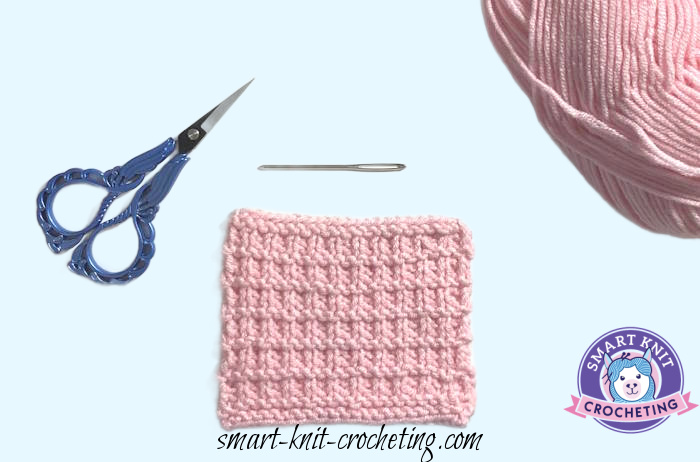 Ridged Rib Stitch Pattern
Skill Level
This is a basic, beginner-level stitch pattern
Abbreviations Used
k - knit stitch
p - purl stitch
CO - cast on
BO - bind off
* * - repeat the instructions between the asterisks
Skills Needed
Fabric Characteristics & Behavior
The ridged rib stitch creates a firm yet flexible fabric with visible horizontal ridges formed by garter stitch rows. It has good elasticity, though slightly less stretch than traditional 1×1 ribbing, which helps it hold its shape over time.
Because of its balanced structure, the fabric lies flat and does not curl at the edges. Stitch definition is clear, making it an excellent choice for smooth or lightly textured yarns. Heavily fuzzy yarns may soften the ridges and reduce visual texture.
Notes About the Ridged Rib Stitch Pattern
- Made entirely of knit and purl stitches
- Reversible (Both sides look identical)
- Stitch Multiples of 2 + 1
- 4-row repeat stitch pattern
- Stretchy
- Beginner-friendly
Is This Pattern Reversible?
Yes, this knit ribbing is reversible. Look at the photos below to see how it looks on both sides.
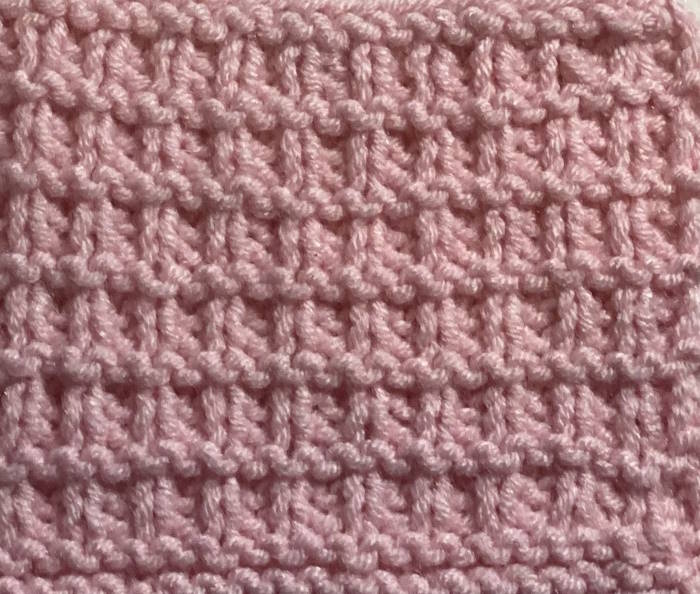 Ridged Rib Knit Stitch Pattern, Right Side
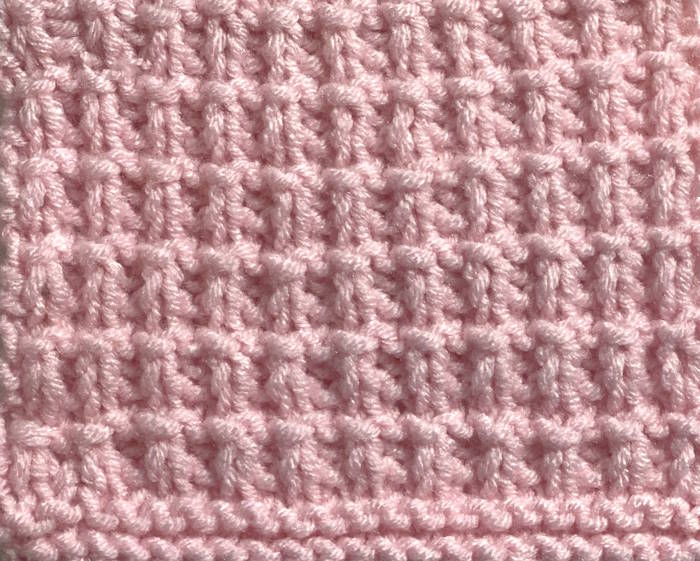 Ridged Rib Knit Stitch Pattern, Wrong Side
Supplies Needed For This Tutorial
- Yarn of your choice
- Knitting Needles: Choose a size appropriate for the type of yarn you are using.
- Scissors
- Tapestry needle for weaving in ends
- Stitch Markers, optional
For this tutorial, I used 100% acrylic yarn and a number 4.5 mm (US 7 needles)
Written Directions
Cast on a multiple of 2 + 1. You can also look at this as working on an odd number of stitches (For this tutorial, I cast on 23 stitches)
Row One: K across to the end of the row.
Row Two: K across to the end of the row.
Row Three: P1, *K1, P1*
Row Four: K1, *P1, K1*
Repeat these four rows until you reach your desired length. The alternating knit and purl rows create the raised ridges that give this stitch its texture. Bind off and Weave in Ends.
Learn How to Read Knitting Stitch Charts
This is an easy, beginner-friendly stitch, so reading the written pattern instructions makes sense. Still, it is always good to learn how to follow knitting charts.
Can the Ridged Rib Stitch Be Worked in the Round?
Yes. The ridged rib stitch works well in the round and produces the same reversible texture as when worked flat. When knitting in the round, all rounds are worked from the right side, so pay close attention to the written instructions and stitch count.
This stitch is commonly used for hat brims, cowls, and cuffs, where stretch and durability are essential.
What Can You Make With This Stitch
The Ridged Rib Stitch Pattern is a great choice when making hat brims, cowls, ear warmers, or mittens.
There are many different ribbing stitches, including mock cable ribbings, single rib stitch, broken rib stitch knitting pattern, slip stitch ribbing, double rib stitch, twisted rib stitch, and fisherman's rib.
With so many ribbing stitch patterns available, how do you choose the best for your next project? There are a couple of things to keep in mind.
- What is your knitting ability? This pattern is very easy and does not require any new techniques, such as making slip stitches or managing a cable needle.
- Do you need a rib pattern that allows you to see your stitches? (also known as stitch definition?) This one fills this bill.
- How stretchy does your rib need to be? Some rib patterns provide less elasticity than others. This one is very stretchy.
Ridged Rib Stitch Pattern: FAQ
Is the ridged rib stitch stretchy?
Is the ridged rib stitch stretchy?
Yes. It has good elasticity and works well for cuffs and edges, though it is slightly firmer than traditional 1×1 ribbing.
Does this stitch curl?
Does this stitch curl?
No. The ridged rib stitch lies flat and does not curl, making it ideal for borders and scarves.
Is the ridged rib stitch good for beginners?
Is the ridged rib stitch good for beginners?
Absolutely. It uses only knit and purl stitches and features a simple repeat that is easy to memorize.
What yarn works best for this stitch?
What yarn works best for this stitch?
Smooth yarns with good stitch definition highlight the ridges best. Avoid very fuzzy yarns if you want the texture to stand out.
Last Words About the Ridged Rib Stitch Pattern
This is a favorite of mine because of its great stitch definition and stretchy texture. It is perfect for beginners because it is only a four-row repeat, but two of those four rows are made with the garter stitch pattern.
Since it is easy, it is also easy to memorize, so you don't have to knit with a pattern, making it ideal for knitting while binging on your favorite show.
Best of all, it is reversible, so it is also perfect for making a quick, cozy scarf, shawl, or cowl. Two quick projects that come to mind are fingerless gloves or ear warmers. So pull out your needles and some yarn and get started.
Happy Knitting,
Janice
Pin for Future Reference
Disclosure:
This post contains affiliate links. If you buy through them, I may earn a small commission at no extra cost to you.

Janice Jones is a Certified Knitting and Crochet Instructor who creates beginner-friendly patterns and tutorials, backed by a 389-page library of practical knitting and crochet content.
Most Popular Pages
Comprehensive Guide to Yarn

All Types of Crochet Stitches
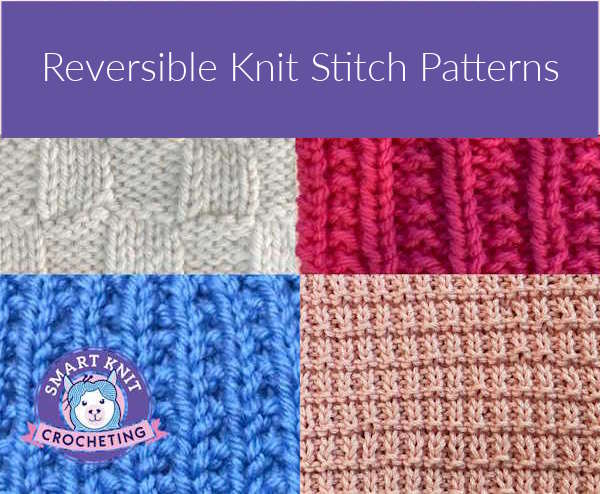
36 Reversible Knit Stitch Glossary
How to Crochet the Second Row
Dog Sweater Patterns
Working with Alpaca Yarn
Free eBooks, Just for You
Get my beginner eBook guides to Knitting and Crocheting, just for signing up for my monthly newsletter.
Choose one or both when you sign up.
About the Author: Please allow me to introduce myself
Janice Jones is a Certified Knitting Instructor and Certified Crochet Instructor through the Craft Yarn Council who focuses on beginner-friendly patterns, stitch guides, and technique tutorials. She has built a library of 389 pages on her website, sharing practical instructions and patterns, and has completed projects ranging from crochet blankets to knit sweaters. You can explore her work on her website. She makes items for Warm Up America and often knits and crochets sweaters for her small dogs.
Thank you for visiting Smart-Knit-Crocheting. I hope this and all of my tutorials will give you the inspiration to continue your knit or crochet journey. For a complete list of all the pages on my site, please visit my table of contents.
I participate in the Amazon Services LLC Associates Program, an affiliate advertising program designed to provide a means for sites to earn advertising fees by advertising and linking to Amazon.com. “As an Amazon Associate I earn from qualifying purchases.” These earnings go towards supporting my website.
Home | Contact | About | Privacy Policy | Disclaimer
I DO NOT SELL ANY PERSONAL INFORMATION FROM THIS WEBSITE. PLEASE SEE MY PRIVACY POLICY FOR MORE DETAILS.
Copyright © 2006-2026 Smart Knit Crocheting. All Rights Reserved
Please Share
Remember, Sharing is Caring