- Home
- Types of Knit Stitches
- Slip Stitch Patterns
- Knit Stamen Stitch Tutorial
Knit Stamen Stitch Tutorial for Beginning Knitters
Knit Stamen Stitch, by Janice |Last Updated February, 2026
This Knit Stamen Stitch Tutorial will guide you in creating a knit pattern that produces a beautiful, thick, textured fabric ideal for a range of projects, including washcloths, pillow covers, and wearables. It has very little stretch and lies flat.
This stitch is ideal for: washcloths, placemats, pillow covers, and other non-stretch projects.
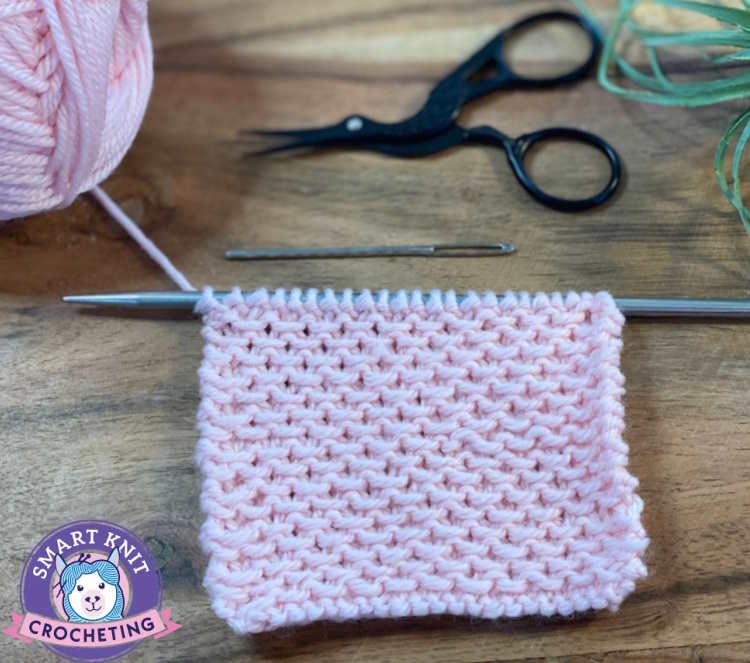 Knit Stamen Stitch Tutorial
Skill Level

Advanced Beginner (comfortable with knit, purl, and slipping stitches)
Abbreviations Used
- RS: Right Side
- WS: Wrong Side
- K: Knit
- P: Purl
- Sl 1 P: Slip one stitch purlwise
- WYIF: place the working yarn in front of needle
- WYIB: place the working yarn in back of the needle
- CO: Cast on
- * *: Repeat the instructions between the two asterisks.
Skills Needed
- Cast on (Using Longtail Cast On)
- Bind off
- Knit Stitch
- Purl Stitch
- Slip Stitch
- Slip one Purlwise with yarn in back
Notes About the Knit Stamen Stitch
- All instructions are written in American terms.
- Cast on an odd number of stitches.
- The pattern consists of a four-row repeat
- To make the Sl1P wyib: Place the yarn behind the needle as if you are going to make a knit stitch, BUT DON'T knit it. With the right needle, insert the right needle into the next stitch as if you are going to purl it, BUT DON'T purl it. Instead, slip the next stitch off the left needle and onto the right needle without working it.
- The fabric lies flat, but it is still a good idea to block your work.
Is This Pattern Reversible?
This is not a reversible pattern, rather it looks similar to the garter pattern or reverse stockinette stitch.
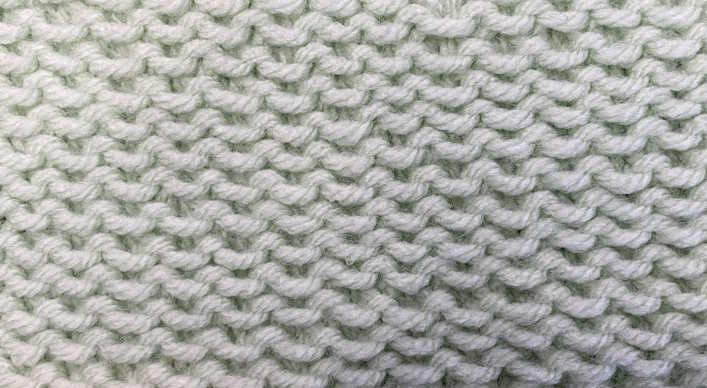 Knit Stamen Stitch Right Side
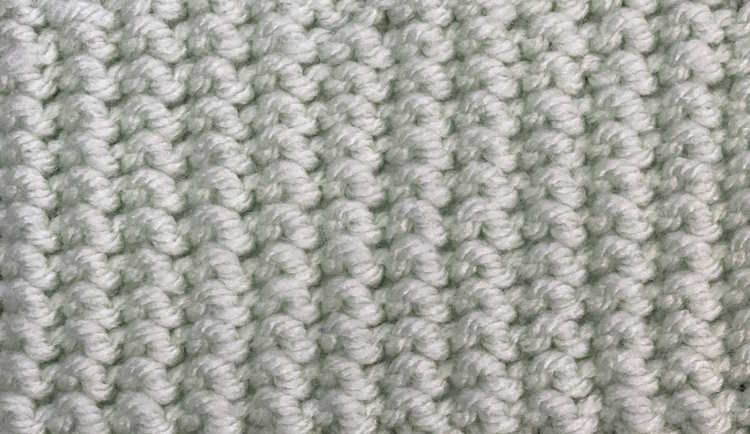 Wrong Side of the Stamen Knit Stitch Pattern
Supplies Needed For This Tutorial
- Yarn
- Knitting needles appropriate for the weight of yarn used
- Scissors
- Yarn needle used for weaving in yarn
I used Cascade Yarns 220 Superwash Merino Yarn (CYC #4) with US 7 (4.5 mm) knitting needles.
Written Directions
Cast on an odd number of stitches.
Pattern Repeat: 4 rows
Row 1: (RS): Knit all stitches across row.
Row 2: (WS): K1, *Sl1P wyib, K1, repeat from * across row.
Row 3: Knit all stitches across row.
Row 4: Sl1P wyib, *K1, Sl1P wyib, repeat from * across row.
Repeat rows 1 through 4 until you reach your desired length. Bind off, weave in ends.
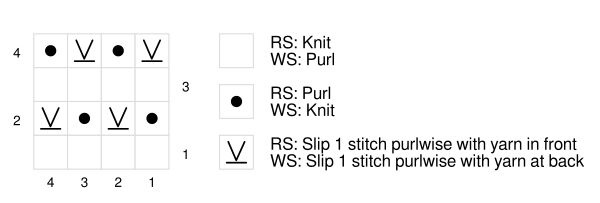
Stamen Stitch Knitting Chart
This is a pattern that can be easily understood by reading the written instructions. Still, it's never too early to learn how to read knitting charts. This is the knitting chart for the Stamen Stitch, Knitting.
What Can You Make With This Stitch
This textured slip-stitch pattern creates a fabric that is thick and textured but does not stretch. These characteristics make it ideal for placemats, cozy scarves or baby blankets. I also like it for washcloths, hand warmers, and boot tops.
Want to practice this stitch in a small, useful project? Try the dishcloth pattern below.
FREE Pattern: Knit Stamen Stitch Dishcloth
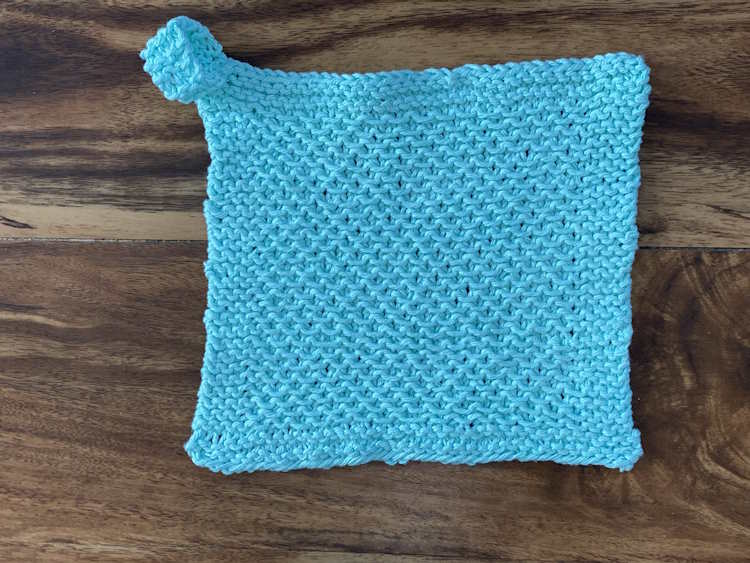
If you prefer to create something useful while learning a new stitch, this is your pattern. Skip the tutorial above and make this springtime discloth that is worked in the knit stamen pattern with a garter stitch border.
Supplies Needed
- Yarn: Lily Sugar n' Cream Solid Variety Assortment 6 Pack Bundle 100 Percent Cotton Medium 4 Worsted (Multicolor)
- Size US 8 (5.0 mm) Knitting Needles
- Scissors
- Tapestry Needle for weaving in ends
Abbreviations and Skills
Please see above for all abbreviations and skills need to complete this dishcloth
Completed Size
8 inches by 8 inches
Dishcloth Directions
Cast On 39 stitches using the longtail cast on method.
Row 1 - 4: Knit across the row.
Row 5: (RS): K5, *Sl1P wyib, K1, repeat from * to last 4 sts. K4.
Row 6: K across row.
Row 7: (WS): K4, Sl1P wyib, *K1, Sl1P wyib, repeat from * across row to last 4 stitches. K4
Row 8: Knit all stitches across row.
Repeat rows 5 through 8 until your project reaches 7.5 inches. Then, work four rows of knit stitches. Bind off until you reach the last four stitches.
Work these four stitches in a garter pattern (knit every stitch) for approximately 3 inches. Bind off leaving a long tail. Use the tail to sew the end of the loop to the washcloth and then weave in the last ends.
Frequently Asked Questions about the Knit Stamen Stitch
Is the stamen stitch good for beginners?
Is the stamen stitch good for beginners?
Yes. The stamen stitch is best suited for advanced beginners who are comfortable with knit and purl stitches and ready to practice slipping stitches. The pattern is easy to memorize and follows a simple four-row repeat.
Does the stamen stitch stretch?
Does the stamen stitch stretch?
No. The stamen stitch creates a dense, textured fabric with very little stretch. Because of this, it works best for projects that don’t need elasticity, such as dishcloths, placemats, pillow covers, and home décor items.
Does the stamen stitch curl?
Does the stamen stitch curl?
No. One of the benefits of the stamen stitch is that it lies flat and does not curl like stockinette stitch. Light blocking can help even out the fabric, but edge curling is not an issue with this pattern.
Is the stamen stitch reversible?
Is the stamen stitch reversible?
No. The stamen stitch is not reversible. The right side features the textured pattern, while the wrong side has a different appearance, similar to garter stitch or reverse stockinette.
Can the stamen stitch be worked in the round?
Can the stamen stitch be worked in the round?
This stitch is written to be worked flat. Because it relies on specific right-side and wrong-side rows, it would need to be modified to work correctly in the round.
What yarn works best for the stamen stitch?
What yarn works best for the stamen stitch?
Smooth, medium-weight yarns work best because they highlight the texture. Cotton yarn is ideal for dishcloths and home projects, while wool or wool blends work well for decorative or wearable items that require structure.
Why do my slipped stitches look loose?
Why do my slipped stitches look loose?
Loose slipped stitches are usually caused by uneven tension. Make sure the yarn is positioned correctly (in back when required) and that you’re not pulling too tightly or leaving excess slack when slipping stitches purlwise.
Which projects are best suited to the stamen stitch?
Which projects are best suited to the stamen stitch?
The stamen stitch works especially well for:
- Dishcloths and washcloths
- Placemats and coasters
- Pillow covers
- Scarves that don’t require stretch
- Structured baby blankets
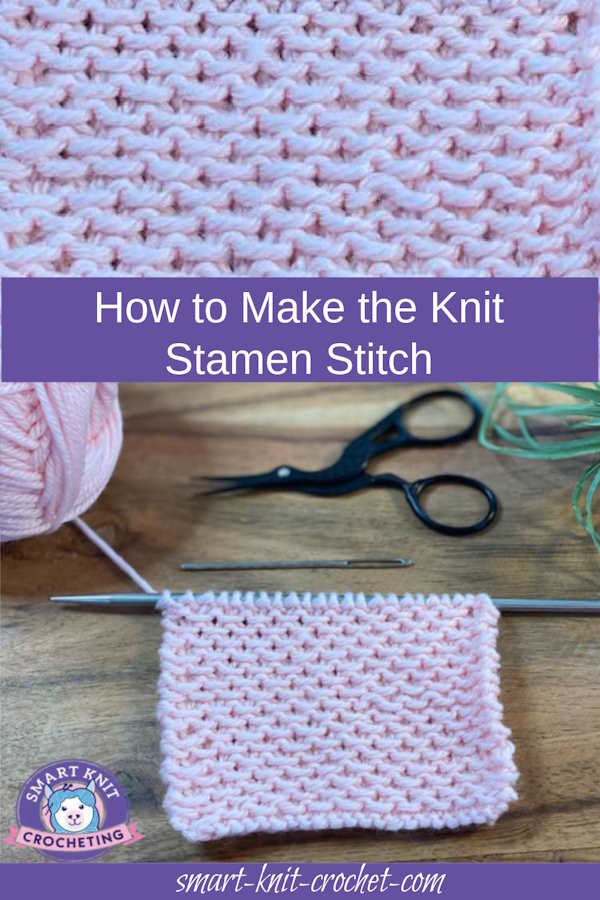
Knit Stamen Stitch Tutorial: Pin for Future Reference

Last Words about the Knit Stamen Stitch
In conclusion, the knit stamen stitch pattern is a versatile and engaging technique for all knitters, from beginners to the most experienced.
It offers a unique texture and appearance to any knitting project, adding depth and dimension. The rhythmic process of creating this pattern can also offer a soothing, meditative practice for those who enjoy the craft.
Happy Knitting, Smart Knitters!
Janice
Knit Stamen Stitch Tutorial: About Janice
Hi, I'm Janice, the person behind this website. I learned to knit and crochet at a very young age but didn’t get serious until obtaining this site in 2021.
Since then, I haven’t stopped creating and learning and now I’m a certified knitting and crocheting instructor through the Craft Yarn Council.
I’m retired and live with my husband and eight Shih Tzu dogs. My three adult children help in various roles. You might see Beth modeling some of my creations.
Disclosure:
This post contains affiliate links. If you buy through them, I may earn a small commission at no extra cost to you.

Janice Jones is a Certified Knitting and Crochet Instructor who creates beginner-friendly patterns and tutorials, backed by a 389-page library of practical knitting and crochet content.
Most Popular Pages
Comprehensive Guide to Yarn

All Types of Crochet Stitches
36 Reversible Knit Stitch Glossary
How to Crochet the Second Row
Dog Sweater Patterns
Working with Alpaca Yarn
Free eBooks, Just for You
Get my beginner eBook guides to Knitting and Crocheting, just for signing up for my monthly newsletter.
Choose one or both when you sign up.
About the Author: Please allow me to introduce myself
Janice Jones is a Certified Knitting Instructor and Certified Crochet Instructor through the Craft Yarn Council who focuses on beginner-friendly patterns, stitch guides, and technique tutorials. She has built a library of 389 pages on her website, sharing practical instructions and patterns, and has completed projects ranging from crochet blankets to knit sweaters. You can explore her work on her website. She makes items for Warm Up America and often knits and crochets sweaters for her small dogs.
Thank you for visiting Smart-Knit-Crocheting. I hope this and all of my tutorials will give you the inspiration to continue your knit or crochet journey. For a complete list of all the pages on my site, please visit my table of contents.
I participate in the Amazon Services LLC Associates Program, an affiliate advertising program designed to provide a means for sites to earn advertising fees by advertising and linking to Amazon.com. “As an Amazon Associate I earn from qualifying purchases.” These earnings go towards supporting my website.
Home | Contact | About | Privacy Policy | Disclaimer
I DO NOT SELL ANY PERSONAL INFORMATION FROM THIS WEBSITE. PLEASE SEE MY PRIVACY POLICY FOR MORE DETAILS.
Copyright © 2006-2026 Smart Knit Crocheting. All Rights Reserved
Please Share
Remember, Sharing is Caring