- Home
- Types of Knit Stitches
- Knitting Stitches for Beginners
- 30 Stitches That Lie Flat
30 Knit Stitches that Lie Flat Without Curling
By Janice Jones Published November 2, 2026
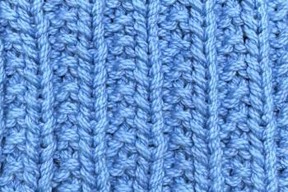
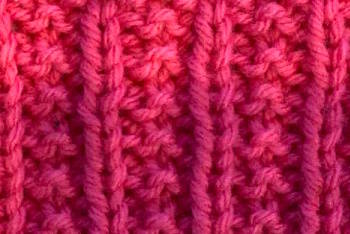
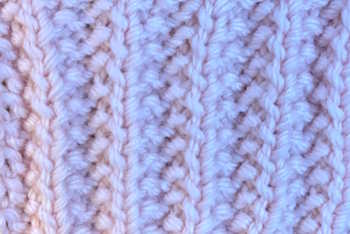
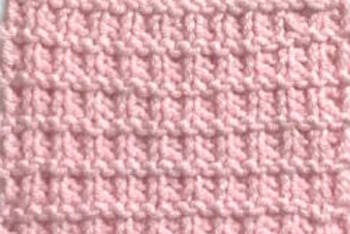
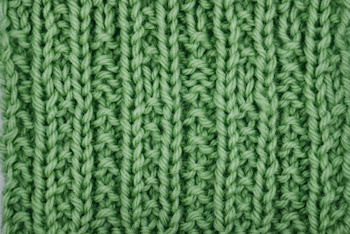
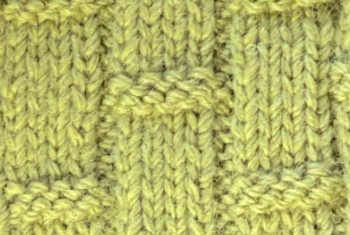
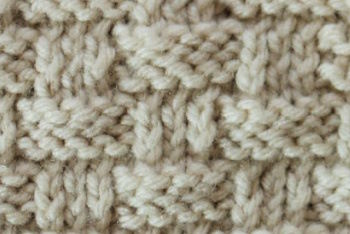
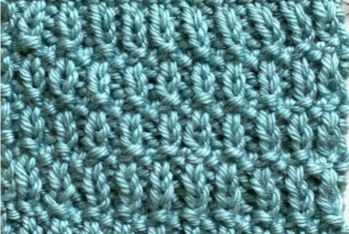
Looking for knitting stitch patterns that lie flat without curling at the edges? I've gathered 30 stitch patterns that naturally resist curling, including simple beginner stitches, textured knit-and-purl patterns, and several types of ribbing.
These stitches are especially useful for scarves, blankets, dishcloths, and other projects where you want the fabric to behave itself without relying on a wide border.
Browse the photographs below to find a stitch you like, then follow the links to the individual tutorials. After the gallery, I'll explain why some stitches curl, why others lie flat, and how yarn, blocking, and borders can affect the finished fabric.
One thing to remember: A stitch that resists curling won't necessarily lie completely flat in every yarn or project. Ribbing, for example, may not curl, but it can draw inward.
30 Knit Stitches that Lie Flat
A note about the stitch samples:
The photographs in this collection show finished, blocked swatches. Most were knitted using 100% wool, which responds particularly well to blocking. I've selected these patterns because their stitch structures suggest they resist curling, although some may draw inward or behave differently depending on the yarn and gauge. As with any stitch pattern, I recommend making a small sample before committing to a larger project.
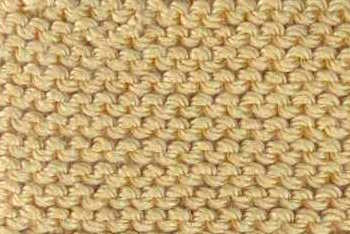
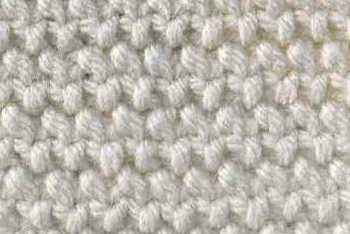
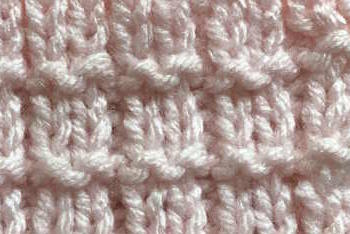
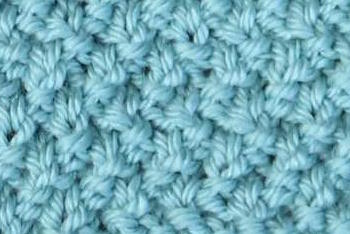
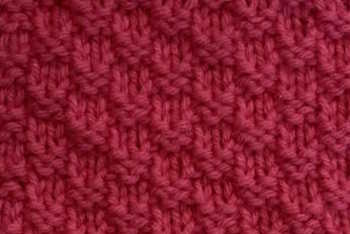
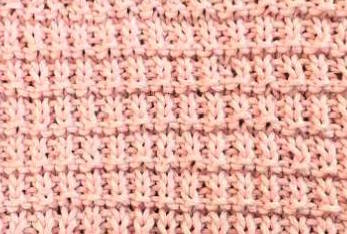
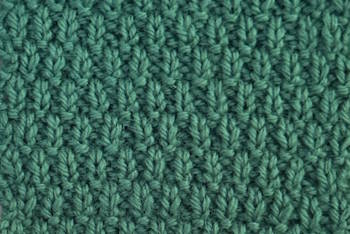
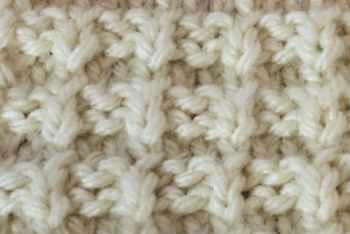
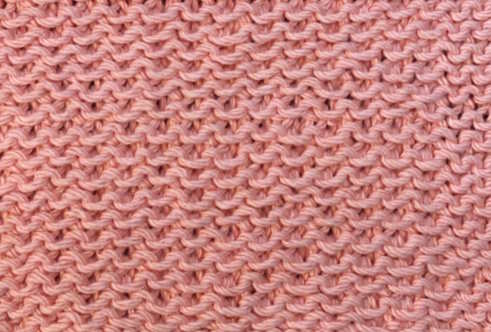

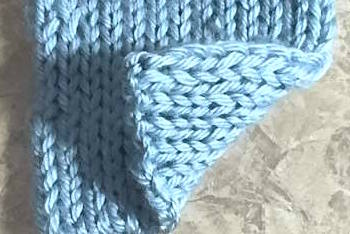
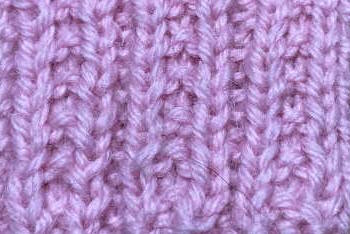
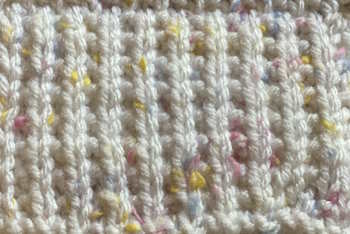
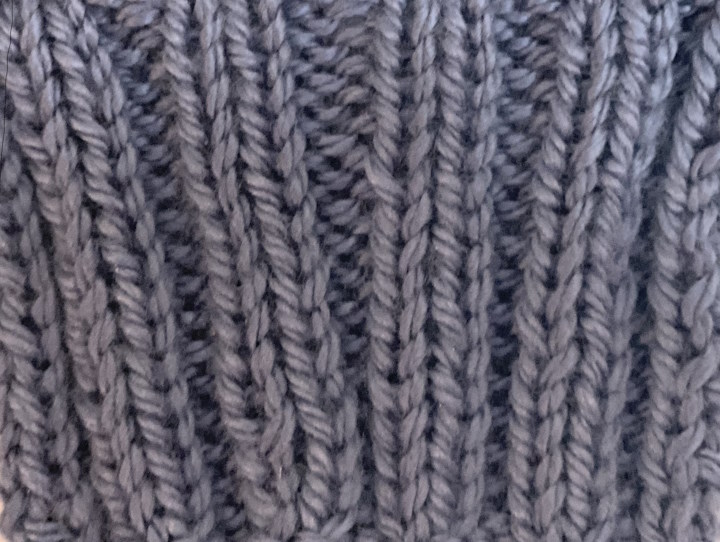
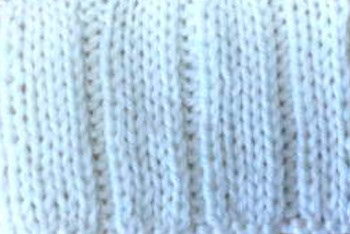 4 x 2
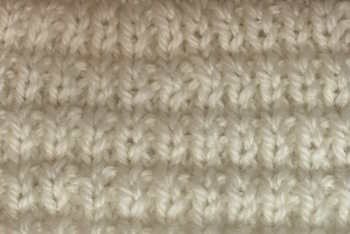
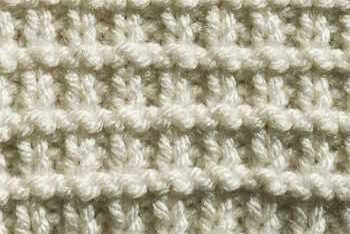
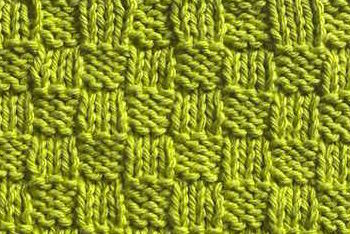
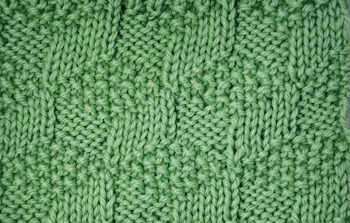
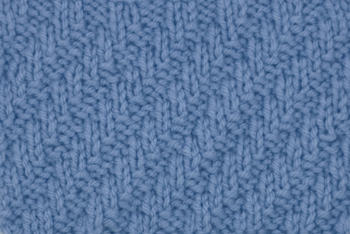
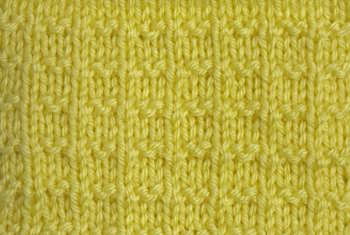

Why Do Some Knitting Stitch Patterns Curl?
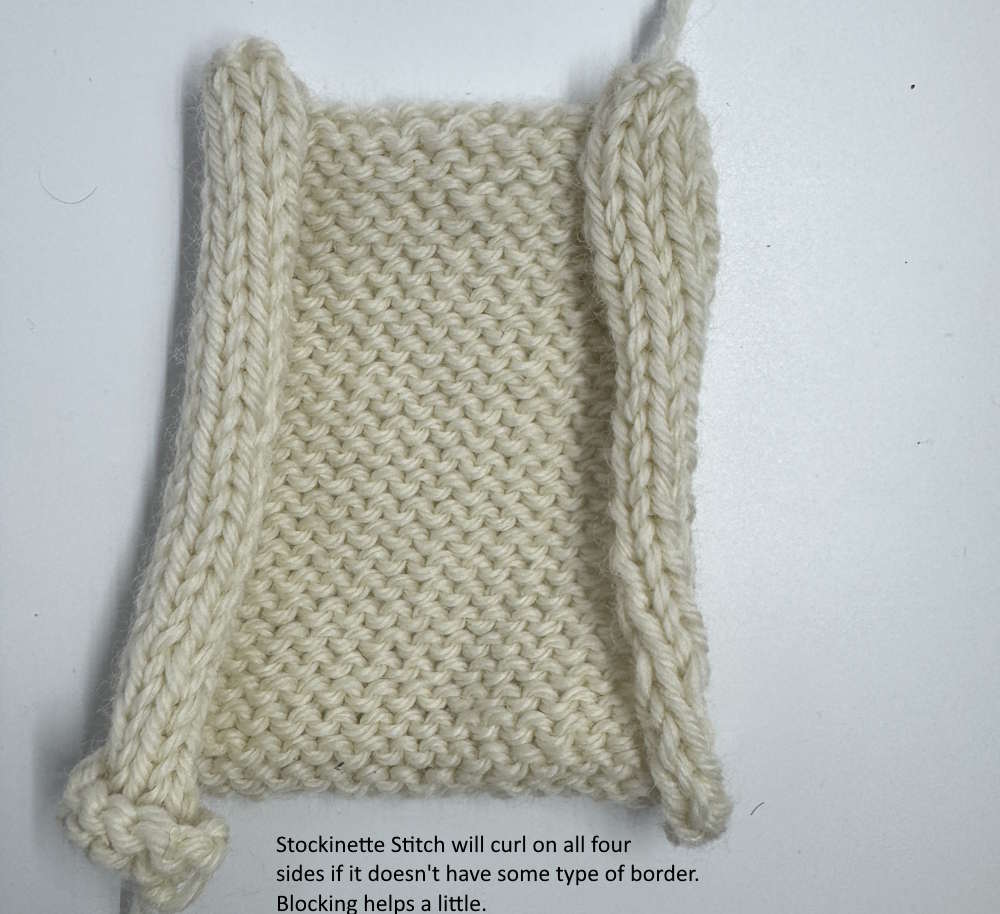
Some knitting stitch patterns curl because the forces created by the stitches aren't balanced across the fabric. When one side of the fabric has a different structure from the other, the stitches can pull the fabric in different directions.
Stockinette stitch is a classic example. It has a smooth face made of knit stitches and a reverse side covered with purl bumps. The knit stitches tend to spread more from side to side, while the purl side takes up more space vertically. This imbalance causes stockinette to curl toward the knit side along the top and bottom edges and toward the purl side along the side edges.
Stitch patterns that distribute knit and purl stitches more evenly often counteract these forces and lie flatter. Garter stitch, seed stitch, moss stitch, and many other balanced knit-and-purl patterns are good examples.
Curl or Lie Flat: Stitch Behavior at a Glance
| What You See in the Stitch Pattern | What It Suggests | Typical Stitches and Examples |
|---|---|---|
| Mostly stockinette | Likely to curl along the sides and at the top and bottom edges. | Stockinette stitch |
| Mostly reverse stockinette | Likely to curl. Turning stockinette over doesn't eliminate its tendency to curl. | Reverse stockinette stitch |
| Alternating knit-and-purl texture | More likely to lie flat because the arrangement of knits and purls can help balance the fabric. | Moss Stitch, Seed Stitch, Close Check Stitch, Simple Checker Knit Stitch |
| Garter-based fabric | Usually lies flat and resists curling. | Garter Stitch and garter-based textures |
| Large stockinette areas within a textured pattern | Some curling may occur, especially when large stockinette sections extend to the edges. | Checkerboard and block patterns combining stockinette and reverse stockinette |
| Balanced knit-and-purl pattern | More likely to lie flat, although the arrangement of the stitches matters more than their total number. | Close Check Stitch, Twin Rib Stitch, Hurdle Stitch |
| Textured knit-and-purl pattern | Don't judge by appearance alone. A textured pattern may lie flat even when its two sides look different. | Tile Stitch |
| Ribbing | Usually resists curling but may draw inward. Narrow ribs, such as 1x1 and 2x2, generally contract more than wider ribs. | 1x1 Rib, 2x2 Rib, 5x2 Rib, Seeded Rib Stitch |
| Border around stockinette | May help control curling, but a narrow border may not be sufficient for a large stockinette area. | Stockinette with garter, seed, or moss stitch borders |
| Reversible stitch pattern | A useful clue, but not a guarantee. Reversible stitches may still curl depending on their structure. | Reversible Knitting Stitch Patterns |
| Yarn weight and fabric density | May affect how noticeable curling becomes. Lighter fabrics can sometimes show more curling, but yarn weight alone doesn't determine whether a stitch will curl. | Compare swatches made with the yarn and needle size you plan to use. |
The First Clue: Look at the Balance of Knits and Purls
A balanced stitch pattern distributes knit and purl stitches to help counteract the forces that cause the fabric to curl. This doesn't necessarily mean there must be an equal number of knits and purls. (50/50 knit-purl count, such as what you see in seed stitch).
What matters is how they are arranged across the rows and on both faces of the fabric. In general, patterns that regularly alternate or combine knit and purl stitches are more likely to lie flat than patterns dominated by stockinette or reverse stockinette.
A Quick Test Before You Knit
This could become the most valuable part of the page. Give the reader a little mental checklist:
- Look at the background fabric. Is it mostly stockinette, reverse stockinette, garter, or a balanced knit-and-purl texture?
- Compare the two sides. Does one side contain substantially more knit-facing fabric than the other?
- Look at the edges of the repeat. Will stockinette stitches run right to the edge of the project?
- Look for large uninterrupted areas of stockinette. Those areas can curl even when other parts of the pattern contain texture.
- Consider the intended project. A little curling may not matter in a seamed sweater but can be quite noticeable in a scarf or blanket.
- Swatch when lying flat matters. Work enough repeats to see how the fabric behaves before committing to the project.
Can a Border Keep a Knitting Pattern From Curling?
Adding a border of garter stitch, seed stitch, or another stitch that naturally lies flat can help control the curling around a stockinette or similar fabric. I normally use a border four stitches wide along each side and four rows deep at the top and bottom.
Four stitches and rows work well for many of my swatches and smaller projects, but I don't consider four a rule. A larger project or a fabric that tends to curl more may need a wider border. The yarn, gauge, and size of the stockinette area can also affect how well the border controls the curl.
Will Blocking Stop Knitting From Curling?
Blocking can help a knitted fabric lie flatter, but how well it works depends partly on the fiber. In my experience, 100% wool responds especially well to wet blocking. Cotton and many cotton blends also respond well, though results vary by yarn and blend.
Superwash wool can behave differently from untreated wool when wet and may relax or grow more than expected, so I always swatch before relying on blocking to control the finished fabric. Acrylic is another fiber I wouldn't count on wet blocking to keep permanently flat.
Most importantly, blocking doesn't change the underlying structure of a curl-prone stitch pattern. It may reduce the curl, sometimes considerably, but if the project needs to lie flat, I prefer to choose a stitch that naturally lies flat or add an appropriate border rather than rely on blocking alone.
Does a Reversible Knitting Stitch Always Lie Flat?
A reversible knitting stitch looks the same, or equally attractive, on both sides of the fabric, but that doesn't automatically mean it will lie flat.
However, many reversible knitting stitch patterns use a balanced arrangement of knit and purl stitches, so reversibility can be a useful clue that a pattern may resist curling. Check the individual stitch pattern, or better yet, knit a swatch, to be sure.
Does Ribbing Always Lie Flat?
Rib stitches generally resist the edge curl associated with stockinette because alternating columns of knit and purl stitches create a more balanced fabric. However, a rib that doesn't curl still may not lie open and flat. Narrow ribs, such as 1×1 and 2×2, tend to contract across their width, while wider or uneven ribs, such as 5×2, may pull inward much less. That is why we often use 1 x 1 and 2 x 2 on cuffs, and necklines.
If you need a fabric that spreads out and lies flat without much encouragement, seed stitch or another balanced knit-and-purl texture may be a better choice. If you want stretch and elasticity, along with resistance to curling, ribbing may be exactly what you need.
Curling = the edges turn or roll away from the fabric
plane.
Drawing in = the fabric contracts across its width because of the stitch
structure.
So, a 2×2 rib can lie flat without lying fully spread out.
Does Yarn Weight Affect How Much Yarn Curls?
Yarn weight can affect how noticeable curling becomes, although it isn't the underlying cause of stockinette curl. The stitch structure is still the main reason the fabric curls.
I've noticed this while knitting cotton swatches in several yarn weights. Each swatch is 28 stitches wide, with four garter stitches along each side and stockinette in the center. My lighter-weight cotton swatches tend to curl more noticeably than the same arrangement worked with worsted-weight cotton.
That doesn't mean lighter yarn will always curl more. Fiber content, yarn construction, gauge, needle size, and finished fabric density can all affect how strongly a knitted piece curls. A heavier or denser fabric may simply have more body to resist the tendency.
This is another reason a swatch can tell you more than the stitch instructions alone. If you're choosing a stitch for a scarf, blanket, or another project where flat edges matter, try it with the yarn and needle size you plan to use.
Can the Yarn Fabric Affect How Much Curling Occurs?
The stitch pattern is the best place to start when predicting whether your knitting will curl, but the yarn can affect how noticeable that curl becomes.
Yarn weight, fiber content, elasticity, yarn construction, gauge, and finished-fabric density can all influence how the fabric behaves. A lightweight fabric may not have enough body to resist curling, while a heavier fabric may lie flatter under its own weight. Fibers also differ in elasticity, stiffness, and drape.
These aren't reliable enough to use as rules, however. Two yarns of the same weight or even the same fiber can behave differently.
That's why I use stitch structure to predict whether a pattern is likely to curl, and the swatch to see how it behaves with a particular yarn and needle size.
Conclusion
You can learn quite a bit about how a knitting stitch pattern will behave before you ever pick up your needles. Start by looking at the stitch structure. Stockinette and reverse stockinette are prone to curling, while balanced combinations of knit and purl stitches are more likely to lie flat.
Then consider the other clues. Ribbing may resist curling but draw inward. A border can help control a curl-prone fabric, and yarn weight, fiber, gauge, and blocking can all influence the finished result.
None of these clues replace a swatch. If lying flat matters to your project, knit a sample using the yarn and needles you plan to use and see what the fabric actually does.
Disclosure:
This post contains affiliate links. If you buy through them, I may earn a small commission at no extra cost to you.

Janice Jones is a Certified Knitting and Crochet Instructor who creates beginner-friendly patterns and tutorials, backed by a 389-page library of practical knitting and crochet content.
Most Popular Pages
Comprehensive Guide to Yarn

All Types of Crochet Stitches
36 Reversible Knit Stitch Glossary
How to Crochet the Second Row
Dog Sweater Patterns
Working with Alpaca Yarn
Free eBooks, Just for You
Get my beginner eBook guides to Knitting and Crocheting, just for signing up for my monthly newsletter.
Choose one or both when you sign up.
About the Author: Please allow me to introduce myself
Janice Jones is a Certified Knitting Instructor and Certified Crochet Instructor through the Craft Yarn Council who focuses on beginner-friendly patterns, stitch guides, and technique tutorials. She has built a library of 389 pages on her website, sharing practical instructions and patterns, and has completed projects ranging from crochet blankets to knit sweaters. You can explore her work on her website. She makes items for Warm Up America and often knits and crochets sweaters for her small dogs.
Thank you for visiting Smart-Knit-Crocheting. I hope this and all of my tutorials will give you the inspiration to continue your knit or crochet journey. For a complete list of all the pages on my site, please visit my table of contents.
I participate in the Amazon Services LLC Associates Program, an affiliate advertising program designed to provide a means for sites to earn advertising fees by advertising and linking to Amazon.com. “As an Amazon Associate I earn from qualifying purchases.” These earnings go towards supporting my website.

Home | Contact | About | Privacy Policy | Disclaimer
I DO NOT SELL ANY PERSONAL INFORMATION FROM THIS WEBSITE. PLEASE SEE MY PRIVACY POLICY FOR MORE DETAILS.
Copyright © 2006-2026 Smart Knit Crocheting. All Rights Reserved
Please Share
Remember, Sharing is Caring